Vietnamese NA helps build institutional foundations for long-term development: Canadian researcher

Pateman described the upcoming election as an important political event that helps reinforce governance mechanisms, enabling the State to mobilise public participation in national governance and development.

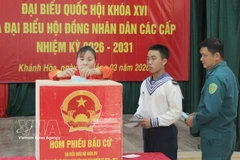
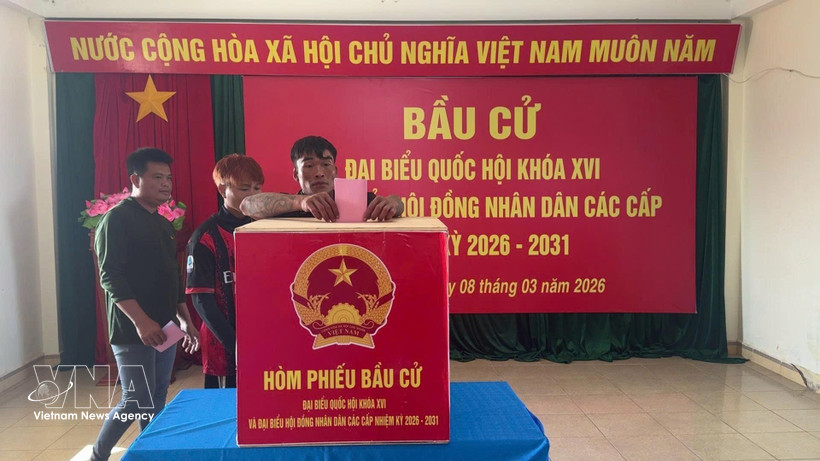
Fishermen cast their ballots at the Da Le polling station in Truong Sa special zone of Khanh Hoa province. (Photo: VNA)

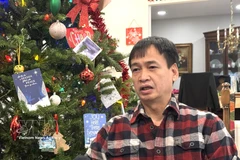
Hanoi (VNA) - Vietnam’s National Assembly plays a key role in institutionalising development orientations and strengthening the political and legal foundations for long-term growth of the country, according to Assistant Professor Joe Pateman from York University in Canada, a researcher in politics and international political economy.

In an interview granted to the Vietnam News Agency (VNA)'s correspondent in Canada ahead of the election of deputies to the 16th National Assembly and People’s Councils at all levels for the 2026–2031 tenure, Pateman described the upcoming election as an important political event that helps reinforce governance mechanisms, enabling the State to mobilise public participation in national governance and development.

Assessing the role of the Vietnamese legislature in institutional reform and economic development in recent years, he said the NA has held a pivotal role in translating policy orientations and development strategies into concrete legal frameworks.

The legislative body has helped build and refine the legal system governing Vietnam’s socialist-oriented market economy, creating a more favourable environment to attract both domestic and foreign investment while improving state governance, he said.

The expert noted that through the adoption of laws on economic management, investment, enterprises and public administration, the legislature has contributed to establishing a stable institutional framework that supports economic growth and deeper international integration of Vietnam.

He observed that beyond its legislative role, the NA has also coordinated policies and overseen law enforcement, ensuring socio-economic policies are implemented effectively and aligned with the country’s long-term development goals.

According to Pateman, the election of deputies to the 16th NA and People’s Councils at all levels serves to renew and consolidate institutional mechanisms while encouraging public participation in governance and national development.

Under the leadership of the Communist Party of Vietnam (CPV), the election helps strengthen the connection between the Party, the State and the people, while enabling state institutions to continue improving the legal framework and supervising policy implementation, he said.

As Vietnam continues its transition and deeper integration into the global economy, political stability, Pateman emphasised, is one of the key factors enabling Vietnam to maintain strong economic growth and pursue long-term development objectives.

Looking ahead to the next term, he suggested that issues related to economic sovereignty, development of strategic industries and social stability are likely to feature prominently on the NA’s agenda.

The NA may prioritise policies aimed at enhancing national industrial capacity, managing foreign investment flows and promoting strategic industries, he said, adding that poverty reduction, expansion of social welfare systems and improvements in public governance are also expected to remain key priorities to ensure that economic growth goes hand in hand with social stability.

The researcher noted that the NA is working to strengthen legal and institutional frameworks to protect Vietnam’s socialist-oriented market economy and improve its adaptability to global economic and geopolitical changes.

Pateman also highlighted the role of parliamentary diplomacy in Vietnam’s foreign policy, saying that it is a vital channel for strengthening understanding and cooperation between the country with international partners.

Greater cooperation between the Vietnamese NA and other legislatures, including the Canadian Parliament, could facilitate policy dialogue, legislative exchanges and joint initiatives in many fields, he stressed, noting that under the CPV’s leadership, parliamentary diplomacy serves as a complementary channel to state diplomacy, helping build long-term and stable foundations for cooperation.

According to the expert, there are significant opportunities to deepen parliamentary cooperation between Vietnam and Canada through exchanges between lawmakers, policy dialogue forums and promoting cooperation in trade, technology and sustainable development. Such cooperation would enhance mutual understanding while creating favourable conditions for expanding economic and trade relations between the two countries, he said.

As Vietnam continues to diversify its international partnerships, stronger legislative cooperation with partners such as Canada could help build a more balanced, stable and constructive bilateral relationship in the future, the expert added./.
VNA

See more

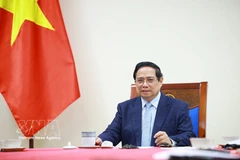
Prime Minister Pham Minh Chinh in the phone talks with Kuwaiti Prime Minister Sheikh Ahmed Abdullah Al-Ahmad Al-Sabah on March 9 (Photo: VNA)

Vietnamese, Kuwaiti PMs hold phone talks

PM Pham Minh Chinh commended Kuwait’s efforts and called on Kuwait and relevant countries to continue exercising restraint, promoting de-escalation efforts and seeking peaceful solutions based on respect for international law and the United Nations Charter, while ensuring the legitimate interests of all parties.

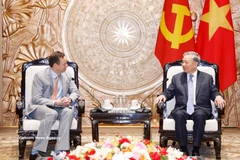
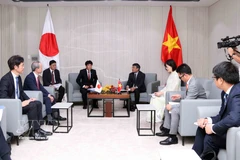
General Secretary of the Communist Party of Vietnam Central Committee To Lam (right) receives Scott Strazik, President and CEO of GE Vernova, in Hanoi on March 9, 2026. (Photo: VNA)

Party leader receives President and CEO of US’s GE Vernova

Vietnam always values and creates favourable conditions for US energy corporations to invest and operate in the country, bringing tangible benefits to the people and businesses of both nations while contributing to the development of bilateral ties, said Party leader To Lam.

NA Vice Chairman Tran Quang Phuong (first, right) examines election preparations at Polling Station No. 1 in Kenh Dao hamlet, Dat Mui commune, Ca Mau province, on March 9. (Photo: VNA)

NA Vice Chairman urges Ca Mau to ensure safe elections

Ca Mau was asked to give special attention to ethnic minority communities, residents in remote and disadvantaged areas, the elderly living alone, and people with disabilities, so they can fully take part in voting.

An overview of the conference to announce a decision of the Politburo and the Secretariat. (Photo: VNA)

Politburo, Secretariat announce inspection of Party Committee of Central Party Agencies

NA Chairman Tran Thanh Man said the inspection and supervision aim to comprehensively evaluate the leadership and direction of the Standing Board of the Party Committee of Central Party Agencies in implementing the Resolution of the 14th National Party Congress – a resolution carrying special significance, as it provides strategic orientation for the country’s development in the new phase.

The 55th session of the National Assembly Standing Committee on March 2, 2026. (Photo: VNA)

📝OP-ED: Streamlining state apparatus: A foundation for rapid, sustainable development

The election is unfolding as Vietnam presses ahead with sweeping administrative reforms, including efforts to streamline the state apparatus and implement a two-tier local government model from the central level to grassroots authorities. Amendments to key laws are also aimed at strengthening decentralisation, improving the management of public assets and accelerating digital transformation, enabling citizens to access information more easily while fostering a leaner, more transparent governance system that better upholds people’s rights.

Prime Minister Pham Minh Chinh (L) at the working session with leaders of the Dien Bien provincial People’s Committee on March 8. (Photo: VNA)

PM asks Dien Bien province to make greater efforts for prosperity, people’s happiness

PM Chinh highlighted Dien Bien’s strategic location, sharing long borders with Laos and China, as well as its large natural area and rich cultural heritage of 19 ethnic groups, and strong growth potential for agriculture, industry, renewable energy, services and tourism, calling for greater efforts to create new momentum for sustainable development.

National Assembly Vice Chairman Tran Quang Phuong (right) inspects election preparations at Polling Station No. 1 in Kenh Dao hamlet, Dat Mui commune, Ca Mau province. (Photo: VNA)

NA Vice Chairman inspects election preparations in southernmost Ca Mau province

The delegation noted that local authorities had launched preparations early and in a well-organised manner, reflecting strong determination and a high sense of responsibility. Communication activities have been carried out in various forms to disseminate official information and create a positive atmosphere ahead of the election.

Voters in Truong Sa special zone cast their ballots to elect deputies to the 16th National Assembly and People’s Councils at all levels for the 2026–2031 term. (Photo: VNA)

Truong Sa voters cast early ballots for NA, local council elections

Voters at 20 out of the 22 polling stations in Truong Sa (Spratly) special zone in the central province of Khanh Hoa cast their ballots on March 8 in early voting for deputies to the 16th National Assembly and People’s Councils at all levels for the 2026–2031 term, one week ahead of the nationwide election day on March 15.

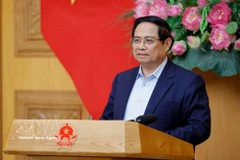
Prime Minister Pham Minh Chinh speaks at the meeting with the Policy Advisory Council in Hanoi on March 7, 2026. Photo: VNA

PM requests flexible, prompt, effective response to all situations

Prime Minister Pham Minh Chinh called for measures to ensure stable supplies of fuel, electricity and energy, while also viewing current challenges as an opportunity to accelerate the green energy transition and better harness the country’s potential and competitive advantages.

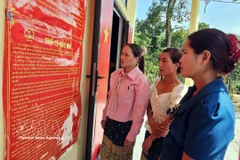
Bru–Van Kieu ethnic minority villagers in Quang Tri province's remote commune of Truong Son are eagerly preparing for early voting. (Photo: VNA)

Bru–Van Kieu community in Quang Tri gear up for early voting

According to the provincial Election Committee, three polling stations in Truong Son commune – located in Hoi Ray, Nuoc Dang and Doc May villages – will organise voting on March 8, seven days before the nationwide election of deputies to the 16th National Assembly and People’s Councils at all levels for the 2026–2031 tenure, to make it easier for residents in remote areas where travel remains difficult to cast their ballots.