Expectations grow for improved lawmaking in 16th National Assembly

Looking ahead to the 16th NA, Thang suggested that further improvements to the legal framework supporting the private sector's development should be prioritised.

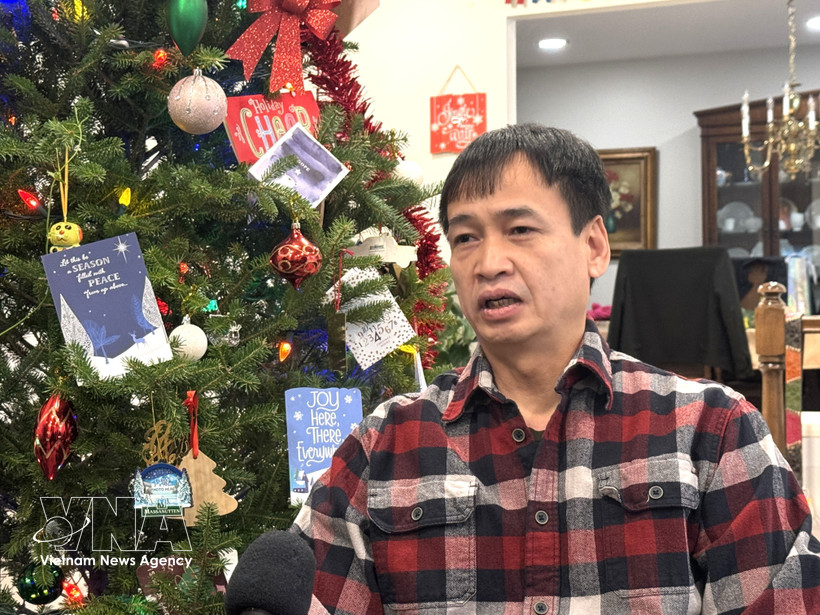
Lawyer Dang Chien Thang, a registered legal adviser in Washington D.C. grants an interview to the Vietnam News Agency. (Photo: VNA)

Washington D.C. (VNA) – The 15th National Assembly (2021–2026) operated through the historic disruption of the COVID-19 pandemic, when Vietnam endured prolonged lockdowns and social distancing but still worked to stabilise society and revive the economy, according to a US-based lawyer.

Speaking to the Vietnam News Agency (VNA)’s correspondent in the US ahead of the election of deputies to the 16th NA and People’s Councils at all levels for the 2026–2031 term, lawyer Dang Chien Thang, a registered legal adviser in Washington D.C., said legislative activities of the 15th NA had been maintained effectively during its term, with 51 laws and dozens of legally-normative resolutions adopted.

These legal documents have largely institutionalised Vietnam’s key policy areas, ranging from national defence and security, justice, civil affairs and economic development to issues related to human rights, including education, healthcare, and the handling of complaints and denunciations.

In addition, the recently adopted laws have addressed emerging sectors such as artificial intelligence, high technology, digital transformation and international financial centre, providing a legal foundation for Vietnam to keep pace with global trends, strengthen international competitiveness and improve the quality of its human resources.

Thang noted that while it is still early to fully assess the effectiveness and stability of laws governing these new sectors, the important point is that Vietnam has begun establishing the necessary legal frameworks. Adjustments and amendments in the future will be inevitable to ensure each law aligns with practical conditions, he said, adding that such revisions will be feasible once a sound legal foundation is in place.

During its working agenda, the 15th NA also addressed immediate governance challenges, including institutional bottlenecks affecting major urban centres, while setting medium-term development targets through the approval of key national projects and maintaining a long-term vision via national target programmes such as new-style rural development and sustainable poverty reduction.

With 51 laws and 31 resolutions adopted, the 15th NA’s legislative efforts have been substantial, Thang said, although some issues related to universality and applicability remain in certain individual laws.

Looking ahead to the 16th NA, Thang suggested that further improvements to the legal framework supporting the private sector's development should be prioritised. The orientation of building a “prosperous people and a strong nation” through the private economic sector's growth is both appropriate and inevitable, he noted, though it also presents challenges for lawmakers.

He also highlighted the issue of transferring the exploitation and use of publicly owned resources to the private sector. In his view, a key question is what legal framework should govern the private sector’s access to these resources in a way that ensures economic efficiency while safeguarding the interests of the entire population.

According to Thang, the law must regulate such transitions carefully to avoid widening wealth disparities or allowing only a small number of private entities to benefit from resources that belong to all citizens. Instead, legal mechanisms should ensure that the broader public shares in those benefits. The management, exploitation and use of publicly owned resources in socio-economic development should therefore be clearly codified during the upcoming term of the legislature.

He also suggested that the NA could develop a more proactive oversight mechanism, tailored to specific subjects of supervision. Under such a framework, the NA could require the Government and ministries to submit periodic oversight reports outside regular NA sessions on major economic groups and key national projects, whether state- or privately-owned, particularly regarding the management and use of public resources.

Such proactive oversight would allow the NA to exercise its supreme authority more effectively on behalf of the people, ensuring transparency in how public interests are protected in large corporations and major projects.

Thang stressed that NA deputies are elected by the people and represent the rights and interests of citizens. The legislature's supervisory functions and mechanisms are therefore grounded in the principle of “by the people and for the people,” relying on petitions and feedback from voters. "People know" and "people supervise" remain a firm foundation for the NA's supervisory activities, he said./.
VNA

See more

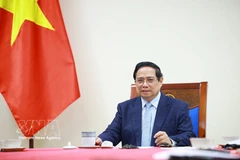
Prime Minister Pham Minh Chinh in the phone talks with Kuwaiti Prime Minister Sheikh Ahmed Abdullah Al-Ahmad Al-Sabah on March 9 (Photo: VNA)

Vietnamese, Kuwaiti PMs hold phone talks

PM Pham Minh Chinh commended Kuwait’s efforts and called on Kuwait and relevant countries to continue exercising restraint, promoting de-escalation efforts and seeking peaceful solutions based on respect for international law and the United Nations Charter, while ensuring the legitimate interests of all parties.

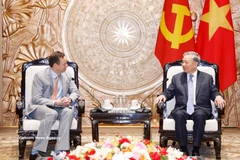
General Secretary of the Communist Party of Vietnam Central Committee To Lam (right) receives Scott Strazik, President and CEO of GE Vernova, in Hanoi on March 9, 2026. (Photo: VNA)

Party leader receives President and CEO of US’s GE Vernova

Vietnam always values and creates favourable conditions for US energy corporations to invest and operate in the country, bringing tangible benefits to the people and businesses of both nations while contributing to the development of bilateral ties, said Party leader To Lam.

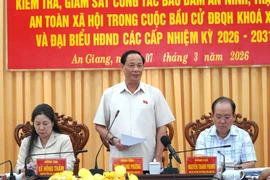
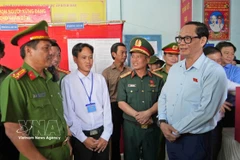
NA Vice Chairman Tran Quang Phuong (first, right) examines election preparations at Polling Station No. 1 in Kenh Dao hamlet, Dat Mui commune, Ca Mau province, on March 9. (Photo: VNA)

NA Vice Chairman urges Ca Mau to ensure safe elections

Ca Mau was asked to give special attention to ethnic minority communities, residents in remote and disadvantaged areas, the elderly living alone, and people with disabilities, so they can fully take part in voting.

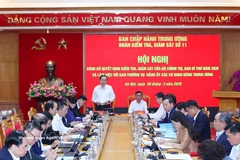
An overview of the conference to announce a decision of the Politburo and the Secretariat. (Photo: VNA)

Politburo, Secretariat announce inspection of Party Committee of Central Party Agencies

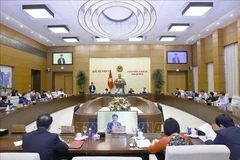
NA Chairman Tran Thanh Man said the inspection and supervision aim to comprehensively evaluate the leadership and direction of the Standing Board of the Party Committee of Central Party Agencies in implementing the Resolution of the 14th National Party Congress – a resolution carrying special significance, as it provides strategic orientation for the country’s development in the new phase.

The 55th session of the National Assembly Standing Committee on March 2, 2026. (Photo: VNA)

📝OP-ED: Streamlining state apparatus: A foundation for rapid, sustainable development

The election is unfolding as Vietnam presses ahead with sweeping administrative reforms, including efforts to streamline the state apparatus and implement a two-tier local government model from the central level to grassroots authorities. Amendments to key laws are also aimed at strengthening decentralisation, improving the management of public assets and accelerating digital transformation, enabling citizens to access information more easily while fostering a leaner, more transparent governance system that better upholds people’s rights.

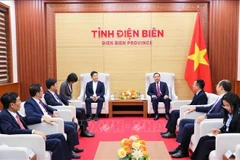
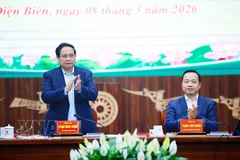
Prime Minister Pham Minh Chinh (L) at the working session with leaders of the Dien Bien provincial People’s Committee on March 8. (Photo: VNA)

PM asks Dien Bien province to make greater efforts for prosperity, people’s happiness

PM Chinh highlighted Dien Bien’s strategic location, sharing long borders with Laos and China, as well as its large natural area and rich cultural heritage of 19 ethnic groups, and strong growth potential for agriculture, industry, renewable energy, services and tourism, calling for greater efforts to create new momentum for sustainable development.

National Assembly Vice Chairman Tran Quang Phuong (right) inspects election preparations at Polling Station No. 1 in Kenh Dao hamlet, Dat Mui commune, Ca Mau province. (Photo: VNA)

NA Vice Chairman inspects election preparations in southernmost Ca Mau province

The delegation noted that local authorities had launched preparations early and in a well-organised manner, reflecting strong determination and a high sense of responsibility. Communication activities have been carried out in various forms to disseminate official information and create a positive atmosphere ahead of the election.

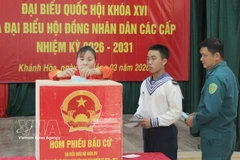
Voters in Truong Sa special zone cast their ballots to elect deputies to the 16th National Assembly and People’s Councils at all levels for the 2026–2031 term. (Photo: VNA)

Truong Sa voters cast early ballots for NA, local council elections

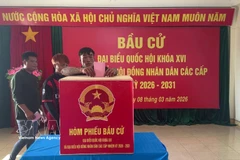
Voters at 20 out of the 22 polling stations in Truong Sa (Spratly) special zone in the central province of Khanh Hoa cast their ballots on March 8 in early voting for deputies to the 16th National Assembly and People’s Councils at all levels for the 2026–2031 term, one week ahead of the nationwide election day on March 15.

Prime Minister Pham Minh Chinh speaks at the meeting with the Policy Advisory Council in Hanoi on March 7, 2026. Photo: VNA

PM requests flexible, prompt, effective response to all situations

Prime Minister Pham Minh Chinh called for measures to ensure stable supplies of fuel, electricity and energy, while also viewing current challenges as an opportunity to accelerate the green energy transition and better harness the country’s potential and competitive advantages.

Bru–Van Kieu ethnic minority villagers in Quang Tri province's remote commune of Truong Son are eagerly preparing for early voting. (Photo: VNA)

Bru–Van Kieu community in Quang Tri gear up for early voting

According to the provincial Election Committee, three polling stations in Truong Son commune – located in Hoi Ray, Nuoc Dang and Doc May villages – will organise voting on March 8, seven days before the nationwide election of deputies to the 16th National Assembly and People’s Councils at all levels for the 2026–2031 tenure, to make it easier for residents in remote areas where travel remains difficult to cast their ballots.