Vietnam–China cooperation committee meeting helps deepen stable, substantive bilateral ties

The Vietnam–China Steering Committee for Bilateral Cooperation is the highest-level mechanism coordinating cooperation between the two governments. It plays an important role in implementing and concretising common perceptions reached by the top leaders of the two Parties and countries.

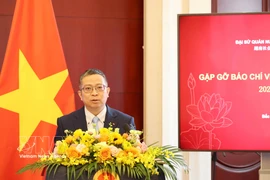
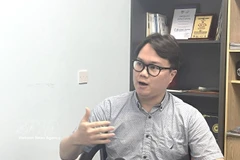
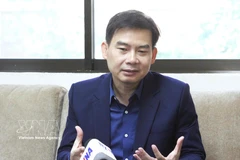
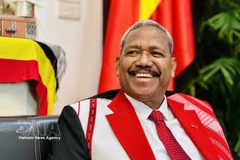
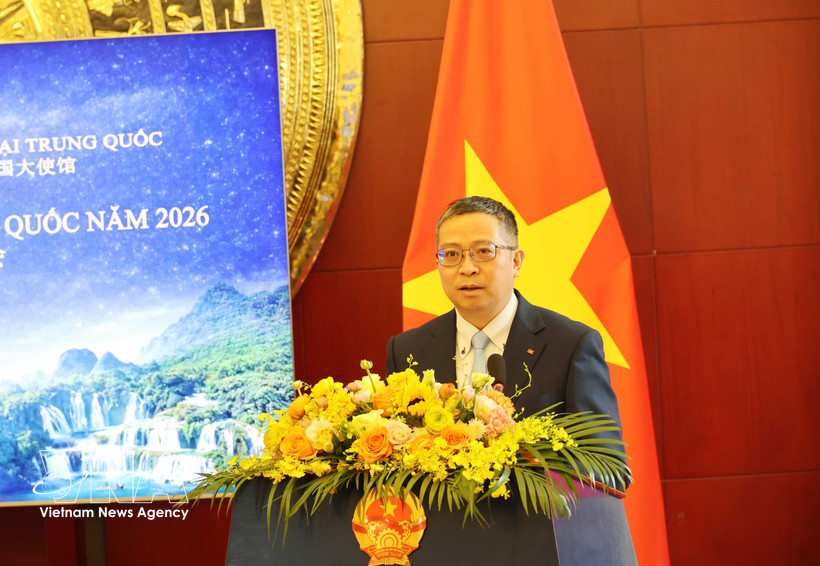
Vietnamese Ambassador to China Pham Thanh Binh (Photo: VNA)

Beijing (VNA) - Maintaining and enhancing the effectiveness of the Vietnam–China Steering Committee for Bilateral Cooperation demonstrates the importance both countries attach to their ties, and contributes to strengthening political trust and developing the partnership in a more stable and practical manner, according to Vietnamese Ambassador to China Pham Thanh Binh.

In an interview granted to Vietnam News Agency correspondents in Beijing on the occasion of the steering committee’s 17th meeting in Hanoi, Binh said that the committee is the highest-level mechanism coordinating cooperation between the two governments. It plays an important role in implementing and concretising common perceptions reached by the top leaders of the two Parties and countries.

Over the course of 16 previous sessions, the mechanism has proven effective as a central platform for coordinating bilateral collaboration across sectors while reviewing and urging ministries, sectors and localities of both sides to effectively implement cooperation agreements.

The 17th meeting provides an opportunity for the two sides to comprehensively review progress in bilateral cooperation since the previous session and further implement high-level common perceptions.

As a practical step to implement the foreign policy outlined at the 14th Party Congress of the Communist Party of Vietnam, and boost bilateral relations towards the “six major orientations,” the meeting is expected to boost political, defence, security and judicial cooperation, people-to-people exchanges, local-level collaboration and coordination at multilateral forums. The two sides will also hold candid and constructive exchanges to address existing challenges in bilateral ties in a spirit of friendship and mutual respect, consistent with common perceptions reached by high-ranking leaders of both countries.

Regarding the first ministerial-level Strategic Dialogue among the foreign, defence and public security ministries of Vietnam and China - known as the “3+3 Dialogue,” the ambassador described the mechanism as an important form of inter-sectoral cooperation. Notably, this is the first 3+3 dialogue mechanism that each country has established with a foreign partner. The dialogue had previously been conducted at the deputy-ministerial level in 2024 alongside the 16th meeting of the Steering Committee, yielding positive outcomes. The decision to upgrade the mechanism to the ministerial level reflects the growing political trust between the two sides and highlights the importance both attach to strengthening strategic exchanges in key sectors.

For two countries sharing a long land border such as Vietnam and China, an inter-agency cooperation mechanism plays an important role in border management, crime prevention and control, and addressing non-traditional security challenges, Binh stated.

Regarding bilateral ties, the ambassador expressed confidence that the potential and scope for cooperation remain substantial, providing a solid basis for translating the common perceptions of the high-level leaders into concrete outcomes, thereby contributing to the development of the Comprehensive Strategic Cooperative Partnership and the building of a Vietnam–China community with a shared future which carries strategic significance.

In terms of strategic connectivity, the two sides will accelerate infrastructure linkages, prioritising railway and expressway connections as well as border gate infrastructure. Key projects include standard-gauge railway routes linking Lao Cai–Hanoi–Hai Phong, Lang Son–Hanoi and Mong Cai–Ha Long–Hai Phong.

Economically, the two countries aim to make better use of free trade agreements such as the ASEAN–China Free Trade Area 3.0 and the Regional Comprehensive Economic Partnership (RCEP), improve the business environment and enhance institutional and standard connectivity to facilitate balanced and sustainable trade growth.

Vietnam also encourages Chinese enterprises to expand investment in priority sectors including high-tech manufacturing, strategic infrastructure, the digital and green economies, renewable energy and smart urban development, he added./.
VNA

See more

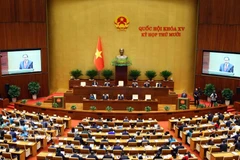
An overview of the opening of the 10th session of the 15th National Assembly. (Photo: VNA)

Indian scholar highlights Vietnamese NA’s legislative role and renovation

He noted that during its tenure, the legislature adopted 51 laws and 39 resolutions aimed at stabilising the national economy after the COVID-19 pandemic, reforming roughly 30% of the legal framework. Eight of the resolutions were normative, focusing on areas such as economic growth, education, healthcare and digital transformation.

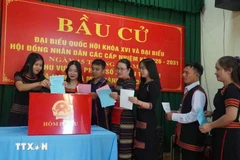
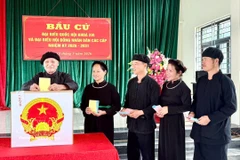
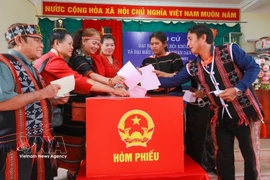
Tay ethnic voters in Na O hamlet of An Lac commune, Bac Ninh province, cast their ballots on March 15. (Photo: VNA)

Voter turnout reaches 99.64% as of 22:00 on March 15

Lao Cai was the locality that completed voting the earliest (at 17:45) and, together with the central city of Hue, was one of two out of 34 localities to reach 100% voter participation. Notably, Lao Cai province has 173 voters aged 100 and above (31 men and 142 women).

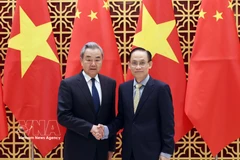
Vietnamese Politburo member and Minister of Foreign Affairs Le Hoai Trung (right) welcomes Chinese Politburo member and Minister of Foreign Affairs Wang Yi in Hanoi on March 15. (Photo: VNA)

Vietnamese, Chinese FMs agree to make new breakthroughs in substantive cooperation

Vietnam and China should meticulously prepare for coming visits and meetings at all levels while working with ministries, sectors, and localities to make new breakthroughs in substantive cooperation, thereby bringing the relationship between the two Parties and the two countries to a new level, their foreign ministers said.

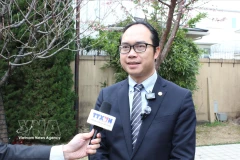
Dr. Nguyen Hong Son, Chairman of the Union of Vietnamese Associations in Japan (Photo: VNA)

Notable progress seen during legislature's 15th tenure

The overseas Vietnamese community always closely follows information related to the election and, where possible, will directly exercise their civic rights, said Dr. Nguyen Hong Son, Chairman of the Union of Vietnamese Associations in Japan.

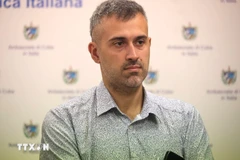
Giulio Chinappi, Asia Regional Director of Italian publishing house Anteo Edizioni (Photo: VNA)

NA election ushers Vietnam into new era of rise: Italian expert

NA and People’s Council deputies must have strong political and moral qualities, professional competence, proven execution ability and a genuine commitment to public service. They must therefore serve as exemplary figures of integrity, responsibility and dedication to national interests and citizens’ well-being.

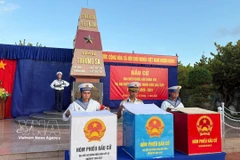
Soldiers examine ballot boxes before voting at a polling station in Truong Sa special zone, Khanh Hoa province. (Photo: VNA)

Voter turnout exceeds 80% nationwide by mid-afternoon

Many localities have recorded high voter turnout, particularly several northern mountainous provinces such as Lao Cai, Dien Bien, Lai Chau, and Tuyen Quang. Other localities, including Ha Tinh, Da Nang, Lang Son, Nghe An, and Thai Nguyen, have also reported a rate of more than 90%.

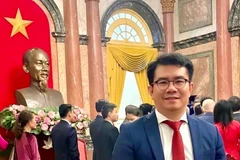
Pham Khanh Nam, Editor-in-Chief of Huong Viet Magazine in Germany (Photo published by VNA)

Voters place trust in new generation of representatives

The choosing of capable and dedicated representatives is expected to further strengthen public trust and lay a solid institutional foundation for Vietnam to advance towards rapid, sustainable development and deeper global integration in the coming period.

Ambassador of Timor Leste to Vietnam João Pereira (Photo: VNA)

Vietnam’s election marks peace, trust, democracy: Timor-Leste Ambassador

The representatives chosen through the 14th National Party Congress and the March 15 election will continue promoting the country's stature in the international arena and build on the foundation laid by earlier generations of Vietnamese leaders guided by President Ho Chi Minh’s thought, said Ambassador of Timor Leste João Pereira.

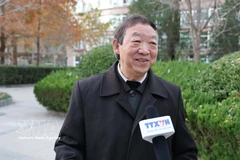
Beni Sukadis, Senior Coordinator at Indonesia’s Institute for Defence and Strategic Studies (Lesperssi), grants an interview to the Vietnam News Agency. (Photo: VNA)

Parliamentary diplomacy bolsters ASEAN cohesion: Indonesian expert

The Vietnamese legislature has been instrumental in shaping the legal foundations for economic growth, via the adoption and revision of laws governing investment, public–private partnerships, land management and digital governance as key steps in building a more stable regulatory environment, strengthening investor confidence and supporting Vietnam’s transition toward a market-oriented economy.