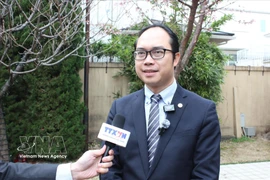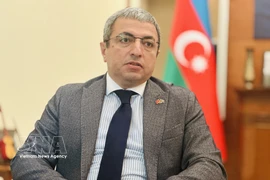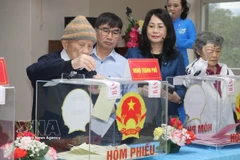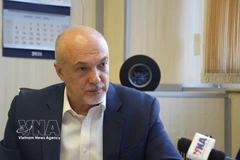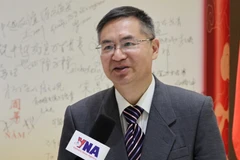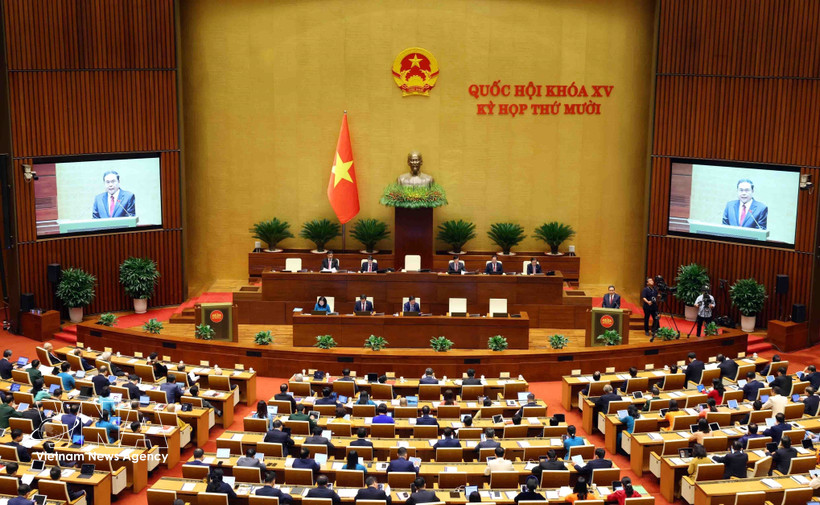
New Delhi (VNA) – Professor Dr. Anmol Mukhia at South Asian University in India has praised the renovation and legislative role of the Vietnamese National Assembly and highlighted the significance of the election of deputies to the NA and People’s Councils at all level for the 2026–2031 tenure.
Professor Mukhia said the 15th NA for the 2021–2026 tenure has been widely recognised for its proactive, reform-oriented and development-facilitating approach rather than a purely administrative role.
He noted that during its tenure, the legislature adopted 51 laws and 39 resolutions aimed at stabilising the national economy after the COVID-19 pandemic, reforming roughly 30% of the legal framework. Eight of the resolutions were normative, focusing on areas such as economic growth, education, healthcare and digital transformation.
The Professor noted that these legislative outcomes helped institutionalise key policy areas ranging from defence, security and justice to economic development and human rights-related issues such as education, healthcare and grievance settlement. Major amendments to the Laws on Education, Higher Education and Vocational Education were also approved, along with policies including free textbooks and a unified education programme, which took effect on January 1, 2026.
The NA has also accelerated digital transformation in its operations, gradually building a modern and digital legislature. Newly adopted laws address emerging sectors such as artificial intelligence, high technology and digital transformation. Meanwhile, Resolution No. 222 on the development of an International Financial Centre provides a legal foundation to enhance Vietnam’s global competitiveness and human resources capacity.
Digital platforms have also been used to collect public feedback on draft laws, attracting hundreds of millions of contributions and improving transparency, efficiency and citizens' participation in the legislative process.
Regarding the decision to hold the election two months earlier than usual, Professor Mukhia described the move as a “second wave of reforms” aimed at quickly consolidating a new leadership apparatus capable of implementing ambitious development goals, including Vietnam’s aspiration to become a developed economy by 2045.
The early consolidation of the NA and People’s Councils, he said, helps avoid governance gaps during a critical transition period, ensuring leadership continuity while accelerating decision-making on priorities such as infrastructure development and economic growth.
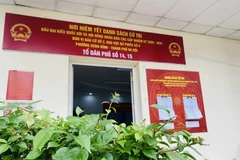
He also highlighted that this will be the first election conducted under a streamlined two-tier local administration model, replacing the previous structure that included district-level administration. The new system is expected to enhance governance efficiency and representation as deputies will oversee larger and more complex administrative units. The use of digital platforms for voter verification and information provision also helps streamline procedures and improve efficiency.
According to Professor Mukhia, deputies in the next tenure will face higher expectations, requiring strong political credentials, professional expertise and digital skills. Lawmakers are expected to demonstrate integrity, effectiveness and readiness to take responsibility while serving as genuine representatives of the people and bridging policy with local realities.
Under the Resolution of the 14th National Party Congress, the NA and People’s Councils will prioritise institutionalising the Party's guidelines and building a modern, high-quality legal framework to support rapid development. Key tasks include removing bottlenecks in land, administrative and investment regulations, strengthening policy implementation oversight, and advancing socio-economic goals for 2026–2030 such as sustaining high growth, promoting green transition, achieving carbon neutrality by 2050 and reducing multidimensional poverty to below 1%.
On international parliamentary cooperation, Professor Mukhia emphasised the importance of regular high-level exchanges and deeper legislative dialogue on security and economic issues amid global uncertainties. He suggested Vietnam and India further strengthen cooperation in defence, technology and parliamentary friendship activities while making greater use of multilateral platforms such as the Inter-Parliamentary Union (IPU).
He noted that Vietnam–India parliamentary relations remain strong, built on the Comprehensive Strategic Partnership established in 2016 and guided by a shared vision of “three Ps” - Peace, Prosperity and People. The partnership aligns with India’s Act East Policy and Indo-Pacific vision and is supported by the 2024–2028 Action Plan focusing on economic, defence, security and digital connectivity cooperation.
In addition, people-to-people exchanges and cultural initiatives, including activities of the Swami Vivekananda Indian Cultural Centre in Hanoi, continue to enhance mutual understanding and friendship between the two countries, he added./.
See more
Vietnamese PM holds phone talks with Angolan President
Based on the two countries' traditional friendship, fraternal solidarity, equal partnership and mutual trust, PM Pham Minh Chinh suggested Angola provide additional crude oil and gas supplies for Vietnam.
Final results of 16th NA election expected on March 22
Local authorities are currently compiling and verifying election data before submitting their reports to the council, which will meet on on March 22 to review the figures and announce the official election results, Tran Thanh Man, Chairman of the NA and President of the Vietnam National Election Council, said.
Vietnam places top priority on ties with China: PM
PM Pham Minh Chinh asked the foreign affairs, defence and public security ministries of both countries to play a more proactive role in unceasingly strengthening political trust and mutual understanding between the two Parties, countries and peoples, and in making full use of existing cooperation mechanisms, particularly the 3+3 strategic dialogue.
Party chief hosts Chinese ministers of foreign affairs, national defence, public security
Party General Secretary To Lam welcomed the Chinese ministers’ joint visit and the inaugural “3+3” dialogue mechanism, stressing its importance in strengthening political trust, enhancing strategic cohesion, and promoting the stable development of Vietnam–China relations.
Institutional, legal reform key strategic breakthrough for development: NA Chairman
Chairing the fourth meeting of the NA Party Committee for the 2025–2030 term in Hanoi on March 16, NA Chairman Tran Thanh Man, who is also Secretary of the NA Party Committee, said the legislature must play a pivotal role in building and perfecting development institutions as Vietnam enters a new stage of strong, comprehensive and sustainable development.
Voter turnout nears 100% as authorities begin reviewing election results
The National Election Council is scheduled to meet on March 22 to review the data and announce the official election results.
General election marks renewal in building modern Vietnamese state
The decision to hold the election two months earlier than usual represents not merely a technical adjustment but a historic and well-considered step, reflecting long-term vision in building, consolidating and operating the state apparatus, said Tran Thang, an aeronautical engineer and commentator in the US.
☕ Afternoon briefing on March 16
The following is a brief review of the day’s events as reported by the Vietnam News Agency.
Mexican lawmaker confident in Vietnamese legislature’s enhanced role
Ana Karina Rojo Pimentel, a congresswoman from the Labour Party (PT) of Mexico and Chairwoman of the Mexican Chamber of Deputies’ Welfare Committee, said the new representatives will help further strengthen the legislature’s role in policymaking and national development orientation.
Expert highlights National Assembly’s role in shaping foreign policy
According to Cuong, as the Southeast Asian country aspires to become a high-income developed nation in the new era, legislative diplomacy must serve as an institutional pathfinder.
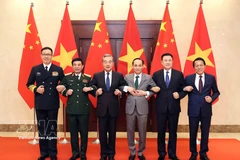
Vietnam, China hold first ministerial-level 3+3 strategic dialogue
The 3+3 Strategic Dialogue mechanism is important for implementing high-level common perceptions and promoting the role of key agencies in advancing Vietnam–China relations as well as sectoral cooperation in various fields, thereby enhancing political trust and contributing to peace, stability and development in the region and the world.
Hai Phong must become modern industrial, seaport hub: Party chief
During a working session with the Hai Phong Party Committee on March 16, Party General Secretary To Lam urged the northern city to sustain high, long-term growth closely tied to modernisation, green transition, digitalisation, and better life quality.
Vietnamese business leader in Malaysia hopes for streamlined, effective governance
Voters and the business community demand above all a unified, forward-looking legal framework, which resolves near-term frictions while anchoring sustained progress. NA and People's Council deputies must sustain their role as an effective bridge between constituents and authorities, converting grassroots input into meaningful policies.
NA, People’s Council election to create legal foundation for Vietnam’s new development era
Dr. Oleg Ghermanovich Rumyantsev from the Russian Federal Bar Association, who is also head of the working group in charge of drafting Russia's Constitution, said the elections mark a new step forward in Vietnam’s institutional development.
Early election seen as strategic step to implement Party's goals: expert
Dr. Nguyen Quoc Hung, Vice President of the Union of Vietnamese Organisations in Russia, underscored the significance of advancing the election schedule by two months to promptly consolidate personnel work following the CPV’s 14th National Congress, describing the move as a timely and strategic decision that helps translate the congress’s objectives into action without delay.
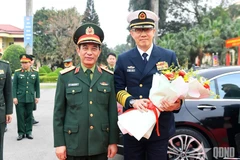
Chinese defence minister visits Commando Brigade 113
According to the ministry, the visit took place as Dong led a high-level Chinese defence delegation to attend the first meeting of the Vietnam–China strategic dialogue at the foreign, defence and public security minister level, as well as the 17th session of the Vietnam–China Steering Committee for Bilateral Cooperation.
Vietnam’s election contributes to strengthening development orientation: Argentinean journalist
Vietnam has been widely recognised by the international community for its stable socio-political environment, an increasingly complete legal framework and expanding opportunities for private sector development. Combined with an extensive network of trade relations with major economies, these factors help position Vietnam as a reliable partner in international cooperation and support its long-term strategy for sustainable socio-economic growth.
Holding election early a highly pragmatic step: Chinese scholar
Looking ahead, the National Assembly will continue to shoulder major responsibilities and face new challenges. It will pursue comprehensive reforms to enhance its legislative, supervisory and decision-making capacity on key national issues
Vietnamese community in Laos expects 16th NA to drive development
Early election also serves as an important test to select capable deputies suited to the new governance model, helping policies reach citizens and overseas communities more efficiently. For overseas Vietnamese in Laos, stable and proactive leadership arrangements at home strengthen confidence and support sustained bilateral cooperation.
Vietnam’s NA, People’s Council election affirms people’s power: Cuban expert
Talking to the Vietnam News Agency (VNA)'s resident correspondent in Havana, the Cuban expert described the election as a significant milestone, noting that since the country’s reunification, Vietnam has made continuous efforts to honour and strengthen the people’s power.