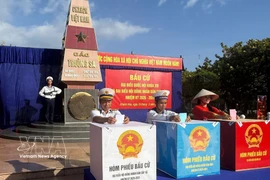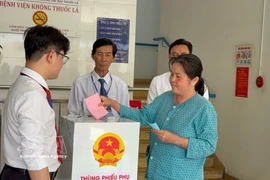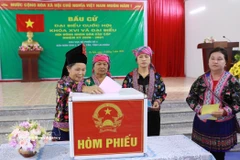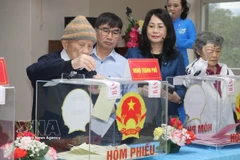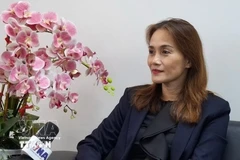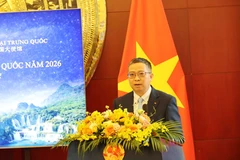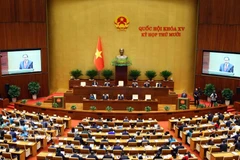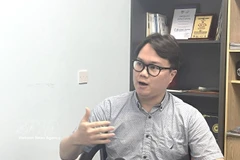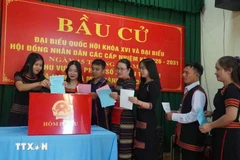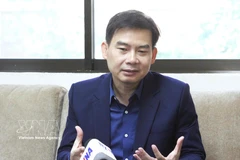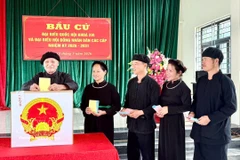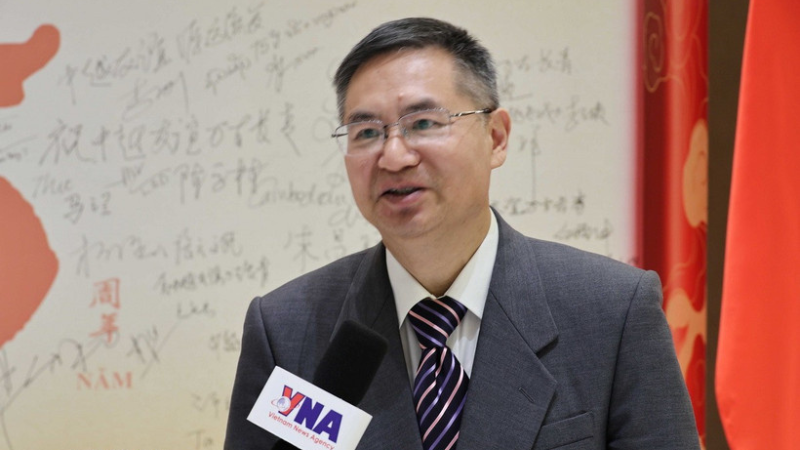
Hanoi (VNA) – Vietnam's decision to hold the election of deputies to the 16th National Assembly and People’s Councils at all levels in the 2026-2031 tenure two months earlier than usual represents a highly practical move, according to Prof. Dr. Cheng Hanping, Executive Director of the Institute for Regional and National Studies and Director of the Vietnam Studies Centre at Zhejiang University of Technology in China.
In an interview with a Vietnam News Agency correspondent in Beijing, the scholar said the decision carries even greater practical significance in the current context. Following organisational streamlining at both central and local levels, particularly the implementation of a two-tier local administration model, newly established provincial and local authorities are entering operation with personnel arrangements gradually being finalised.
This process requires thorough preparation, timely implementation and effective coordination among administrative levels to ensure Party policies and guidelines are fully carried out, he noted, adding that organising the elections early is therefore a necessary and practical measure reflecting the pragmatic governance approach of the Communist Party of Vietnam’s leadership.
Professor Cheng said that amid unprecedented global changes, the Party has introduced the concept of a new era of national rise, outlining strategic orientations and priorities for Vietnam’s long-term development aspirations. These new concepts need to be consistently translated into practice through legislative action by the National Assembly and People’s Councils, making the early election essential to accelerate implementation.
He added that the concept of national rise proposed by the Party Central Committee helps maximise public support, strengthen trust and unity, and mobilise collective strength toward achieving ambitious national goals.
The scholar also pointed to rapidly evolving global uncertainties, including challenges related to energy supply, economic stability and supply chain disruptions, stressing that the strategic vision of national advancement plays an important role in maintaining social cohesion and strategic focuses amid a complex international environment.
Assessing the performance of the 15th National Assembly and People’s Councils for the 2021–2026 tenure, Professor Cheng said the elected bodies have played an exceptionally important role during a historic period, leaving a lasting institutional legacy. The National Assembly consistently reflected both Party orientations and the aspirations of the people.
During its sessions, the legislature adopted a resolution amending and supplementing several provisions of the Constitution of the Socialist Republic of Vietnam with unanimous approval from attending deputies, alongside numerous legal documents and resolutions that established a solid legal foundation for implementing the two-tier local government model and enabling newly formed institutions to operate effectively.
According to the Chinese scholar, many decisions and laws adopted by the 15th National Assembly carry transformative significance. Notably, at its ninth session, the legislature passed 34 laws, marking a new phase of institutional reform and strategic orientation for Vietnam’s development in the new development phase.
He noted that the tenure coincided with a historic restructuring of Vietnam’s organisational system, requiring legislative support to safeguard reforms, facilitate implementation and maintain social stability and harmony. These achievements, he said, have created a strong legal foundation for future development.
Professor Cheng also highlighted that despite leadership personnel changes during the term, the National Assembly maintained smooth, orderly operations and achieved positive results without disruption.
Looking ahead, he said the National Assembly will continue to shoulder major responsibilities and face new challenges. As National Assembly Chairman Tran Thanh Man has emphasised, the legislature will pursue comprehensive reforms to enhance its legislative, supervisory and decision-making capacity on key national issues./.
See more
☕ Afternoon briefing on March 16
The following is a brief review of the day’s events as reported by the Vietnam News Agency.
Mexican lawmaker confident in Vietnamese legislature’s enhanced role
Ana Karina Rojo Pimentel, a congresswoman from the Labour Party (PT) of Mexico and Chairwoman of the Mexican Chamber of Deputies’ Welfare Committee, said the new representatives will help further strengthen the legislature’s role in policymaking and national development orientation.
Expert highlights National Assembly’s role in shaping foreign policy
According to Cuong, as the Southeast Asian country aspires to become a high-income developed nation in the new era, legislative diplomacy must serve as an institutional pathfinder.
Vietnam, China hold first ministerial-level 3+3 strategic dialogue
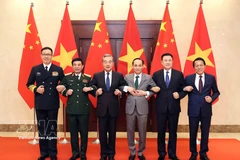
The 3+3 Strategic Dialogue mechanism is important for implementing high-level common perceptions and promoting the role of key agencies in advancing Vietnam–China relations as well as sectoral cooperation in various fields, thereby enhancing political trust and contributing to peace, stability and development in the region and the world.
Hai Phong must become modern industrial, seaport hub: Party chief
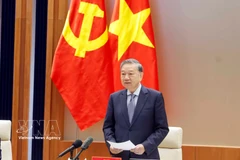
During a working session with the Hai Phong Party Committee on March 16, Party General Secretary To Lam urged the northern city to sustain high, long-term growth closely tied to modernisation, green transition, digitalisation, and better life quality.
Vietnamese business leader in Malaysia hopes for streamlined, effective governance
Voters and the business community demand above all a unified, forward-looking legal framework, which resolves near-term frictions while anchoring sustained progress. NA and People's Council deputies must sustain their role as an effective bridge between constituents and authorities, converting grassroots input into meaningful policies.
NA, People’s Council election to create legal foundation for Vietnam’s new development era
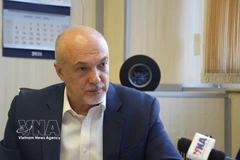
Dr. Oleg Ghermanovich Rumyantsev from the Russian Federal Bar Association, who is also head of the working group in charge of drafting Russia's Constitution, said the elections mark a new step forward in Vietnam’s institutional development.
Early election seen as strategic step to implement Party's goals: expert
Dr. Nguyen Quoc Hung, Vice President of the Union of Vietnamese Organisations in Russia, underscored the significance of advancing the election schedule by two months to promptly consolidate personnel work following the CPV’s 14th National Congress, describing the move as a timely and strategic decision that helps translate the congress’s objectives into action without delay.
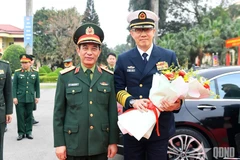
Chinese defence minister visits Commando Brigade 113
According to the ministry, the visit took place as Dong led a high-level Chinese defence delegation to attend the first meeting of the Vietnam–China strategic dialogue at the foreign, defence and public security minister level, as well as the 17th session of the Vietnam–China Steering Committee for Bilateral Cooperation.
Vietnam’s election contributes to strengthening development orientation: Argentinean journalist
Vietnam has been widely recognised by the international community for its stable socio-political environment, an increasingly complete legal framework and expanding opportunities for private sector development. Combined with an extensive network of trade relations with major economies, these factors help position Vietnam as a reliable partner in international cooperation and support its long-term strategy for sustainable socio-economic growth.
Vietnamese community in Laos expects 16th NA to drive development
Early election also serves as an important test to select capable deputies suited to the new governance model, helping policies reach citizens and overseas communities more efficiently. For overseas Vietnamese in Laos, stable and proactive leadership arrangements at home strengthen confidence and support sustained bilateral cooperation.
Vietnam–China cooperation committee meeting helps deepen stable, substantive bilateral ties
The Vietnam–China Steering Committee for Bilateral Cooperation is the highest-level mechanism coordinating cooperation between the two governments. It plays an important role in implementing and concretising common perceptions reached by the top leaders of the two Parties and countries.
Indian scholar highlights Vietnamese NA’s legislative role and renovation
He noted that during its tenure, the legislature adopted 51 laws and 39 resolutions aimed at stabilising the national economy after the COVID-19 pandemic, reforming roughly 30% of the legal framework. Eight of the resolutions were normative, focusing on areas such as economic growth, education, healthcare and digital transformation.
Digital transformation helps shorten timeline, improve election quality: NA Vice Chairwoman
The use of digital platforms has facilitated many stages of the process, including candidate nominations and consultations. Candidates have been able to submit application dossiers electronically, which has made procedures more convenient and efficient.
☀️ Morning digest on March 16
Parliamentary diplomacy enhances Vietnam’s global standing: Malaysian researcher
Despite different political systems, Vietnam and Malaysia have successfully shared legislative and governance practices, thus strengthening the democratic foundation while expanding avenues for collaboration, according to researcher Enzo Sim Hong Jun.
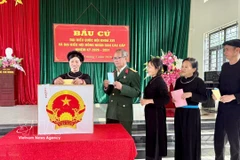
Voter turnout hits 99.68% as of 23:23 on March 15
As of 23:23 on March 15, official data from the National Election Council showed that 76,188,544 voters had cast their ballots, representing nearly all registered voters.
Vietnam’s election key to advancing reforms: Cambodian scholar
Cambodia always considers Vietnam a close and important neighbour, with the two countries' legislative bodies maintaining strong and effective collaboration.
Voter turnout reaches 99.64% as of 22:00 on March 15
Lao Cai was the locality that completed voting the earliest (at 17:45) and, together with the central city of Hue, was one of two out of 34 localities to reach 100% voter participation. Notably, Lao Cai province has 173 voters aged 100 and above (31 men and 142 women).
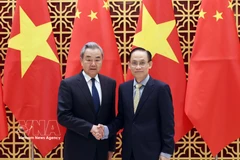
Vietnamese, Chinese FMs agree to make new breakthroughs in substantive cooperation
Vietnam and China should meticulously prepare for coming visits and meetings at all levels while working with ministries, sectors, and localities to make new breakthroughs in substantive cooperation, thereby bringing the relationship between the two Parties and the two countries to a new level, their foreign ministers said.