Early election seen as strategic step to implement Party's goals: expert

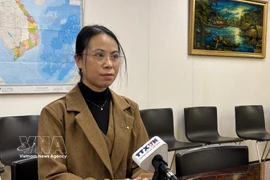
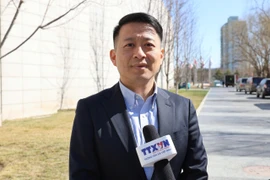
Dr. Nguyen Quoc Hung, Vice President of the Union of Vietnamese Organisations in Russia, underscored the significance of advancing the election schedule by two months to promptly consolidate personnel work following the CPV’s 14th National Congress, describing the move as a timely and strategic decision that helps translate the congress’s objectives into action without delay.
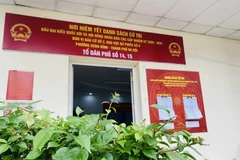
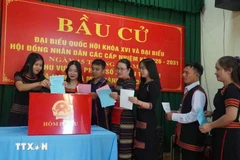
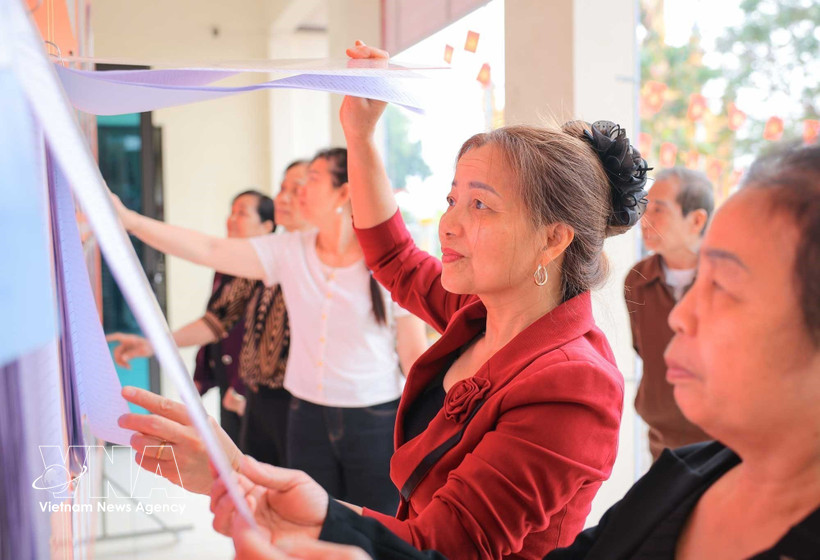
People read information about candidates at polling station No. 6 in Hanoi. (Photo: VNA)

Moscow (VNA) – The decision to move forward the election of deputies to the 16th National Assembly and People’s Councils at all levels for the 2026–2031 tenure by two months compared with previous practice is a highly strategic move aimed at promptly consolidating personnel following the 14th National Congress of the Communist Party of Vietnam (CPV), helping to concretise the congress’s ambitious goals, said Dr. Nguyen Quoc Hung, Vice President of the Union of Vietnamese Organisations in Russia.

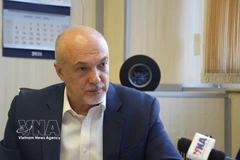
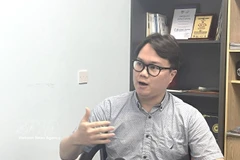
In an interview with the Vietnam News Agency’s resident correspondent in Moscow, Hung said the 15th National Assembly has handled an enormous workload with a proactive and constructive legislative spirit, describing the tenure as one that has “ignited momentum” through the adoption of a number of fundamental laws, including the revised Land Law, the amended Law on Real Estate Business, and the Housing Law.

He highlighted the legislature’s flexibility in organising extraordinary sessions to address urgent national matters, showing a more responsive and dynamic system in line with contemporary developments. At the same time, strengthened parliamentary diplomacy and the use of online consultation mechanisms have helped narrow the distance between the legislature and overseas Vietnamese, reinforcing confidence in a rule-of-law state “of the people, by the people and for the people."

Hung said the supervisory role of People’s Councils could be further enhanced in implementing policies supporting overseas Vietnamese and international investment, ensuring that laws are enforced effectively and consistently. He also stressed the need to accelerate the digitalisation of public administrative procedures to enable overseas voters to exercise their rights and obligations more conveniently and transparently.

Hung particularly underscored the significance of advancing the election schedule by two months to promptly consolidate personnel work following the CPV’s 14th National Congress, describing the move as a timely and strategic decision that helps translate the congress’s objectives into action without delay.

vnanet-russia.jpg
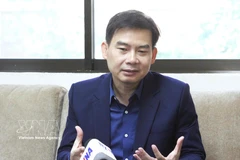
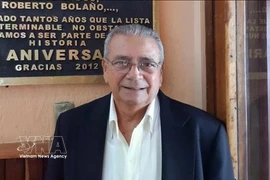
Nguyen Quoc Hung, Vice President of the Union of Vietnamese Organisations in Russia. (Photo: VNA)

With the introduction of a two-tier local administration model and a streamlined, more professional administrative apparatus, early elections will allow sector leaders and local authorities to begin implementing their tasks with renewed responsibility, he said. The restructuring of the administrative system also reflects the determination of Party and State leaders to ensure smooth governance without delays or power vacuums, sending a strong message about a proactive government and boosting confidence among Vietnamese businesses in Russia in a transparent investment environment.

Hung added that overseas Vietnamese (OV) expect elected deputies to strengthen their role as bridges between the legislature and citizens at home and abroad, particularly the more than six million Vietnamese living overseas. This would help translate policies on talent attraction, citizen protection and knowledge transfer from the OVs into tangible growth drivers, contributing to realising Vietnam’s aspiration of becoming a developed nation by 2045.

In a rapidly changing and increasingly multipolar world, legislative diplomacy has become an important tool to safeguard national interests and promote development, Hung noted. Vietnam, he suggested, should further strengthen its engagement in multilateral parliamentary mechanisms such as the Inter-Parliamentary Union and the ASEAN Inter-Parliamentary Assembly, as well as parliamentary friendship groups with key partners like Russia.

He added that stronger exchanges between specialised committees of Vietnam’s National Assembly and the State Duma of the Russian Federation would help harmonise legal frameworks and facilitate cooperation between businesses and citizens of the two countries, contributing to advancing the Vietnam–Russia comprehensive strategic partnership to a new height./.
VNA

See more

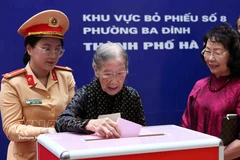
Doan Thi Thuan, a 101-year-old voter, casts her ballot at Polling Station No. 8 in Ba Dinh ward, Hanoi, on March 15. (Photo: VNA)

General election marks renewal in building modern Vietnamese state

The decision to hold the election two months earlier than usual represents not merely a technical adjustment but a historic and well-considered step, reflecting long-term vision in building, consolidating and operating the state apparatus, said Tran Thang, an aeronautical engineer and commentator in the US.

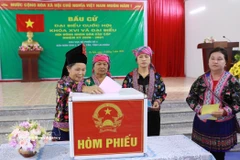
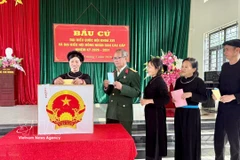
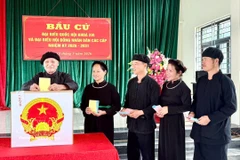
Voters in Nam Sao 2 village, Pa Tan commune of Lai Chau cast their ballots on March 15 (Photo: VNA)

Mexican lawmaker confident in Vietnamese legislature’s enhanced role

Ana Karina Rojo Pimentel, a congresswoman from the Labour Party (PT) of Mexico and Chairwoman of the Mexican Chamber of Deputies’ Welfare Committee, said the new representatives will help further strengthen the legislature’s role in policymaking and national development orientation.

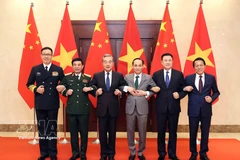
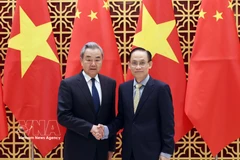
Vietnamese and Chinese ministers pose for a photo at the first ministerial-level Strategic Dialogue among their foreign affairs, defence and public security ministries. (Photo: VNA)

Vietnam, China hold first ministerial-level 3+3 strategic dialogue

The 3+3 Strategic Dialogue mechanism is important for implementing high-level common perceptions and promoting the role of key agencies in advancing Vietnam–China relations as well as sectoral cooperation in various fields, thereby enhancing political trust and contributing to peace, stability and development in the region and the world.

Vice President of the Vietnam – Malaysia Business Association Nguyen Thi Thanh Van. (Photo: VNA)

Vietnamese business leader in Malaysia hopes for streamlined, effective governance

Voters and the business community demand above all a unified, forward-looking legal framework, which resolves near-term frictions while anchoring sustained progress. NA and People's Council deputies must sustain their role as an effective bridge between constituents and authorities, converting grassroots input into meaningful policies.

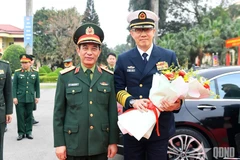
Defence Minister General Phan Van Giang welcomes Chinese Defence Minister Senior Lieutenant General Dong Jun during his visit to Commando Brigade 113. (Photo: qdnd.vn)

Chinese defence minister visits Commando Brigade 113

According to the ministry, the visit took place as Dong led a high-level Chinese defence delegation to attend the first meeting of the Vietnam–China strategic dialogue at the foreign, defence and public security minister level, as well as the 17th session of the Vietnam–China Steering Committee for Bilateral Cooperation.

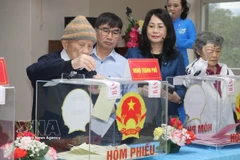
Vietnamese voters cast their ballots (Photo: VNA)

Vietnam’s election contributes to strengthening development orientation: Argentinean journalist

Vietnam has been widely recognised by the international community for its stable socio-political environment, an increasingly complete legal framework and expanding opportunities for private sector development. Combined with an extensive network of trade relations with major economies, these factors help position Vietnam as a reliable partner in international cooperation and support its long-term strategy for sustainable socio-economic growth.

The election of deputies to the 16th NA and People's Councils at all levels for the 2026-2031 tenure takes place on March 15. (Photo: VNA)

Vietnamese community in Laos expects 16th NA to drive development

Early election also serves as an important test to select capable deputies suited to the new governance model, helping policies reach citizens and overseas communities more efficiently. For overseas Vietnamese in Laos, stable and proactive leadership arrangements at home strengthen confidence and support sustained bilateral cooperation.

An overview of the opening of the 10th session of the 15th National Assembly. (Photo: VNA)

Indian scholar highlights Vietnamese NA’s legislative role and renovation

He noted that during its tenure, the legislature adopted 51 laws and 39 resolutions aimed at stabilising the national economy after the COVID-19 pandemic, reforming roughly 30% of the legal framework. Eight of the resolutions were normative, focusing on areas such as economic growth, education, healthcare and digital transformation.

Tay ethnic voters in Na O hamlet of An Lac commune, Bac Ninh province, cast their ballots on March 15. (Photo: VNA)

Voter turnout reaches 99.64% as of 22:00 on March 15

Lao Cai was the locality that completed voting the earliest (at 17:45) and, together with the central city of Hue, was one of two out of 34 localities to reach 100% voter participation. Notably, Lao Cai province has 173 voters aged 100 and above (31 men and 142 women).

Vietnamese Politburo member and Minister of Foreign Affairs Le Hoai Trung (right) welcomes Chinese Politburo member and Minister of Foreign Affairs Wang Yi in Hanoi on March 15. (Photo: VNA)

Vietnamese, Chinese FMs agree to make new breakthroughs in substantive cooperation

Vietnam and China should meticulously prepare for coming visits and meetings at all levels while working with ministries, sectors, and localities to make new breakthroughs in substantive cooperation, thereby bringing the relationship between the two Parties and the two countries to a new level, their foreign ministers said.