General election marks renewal in building modern Vietnamese state

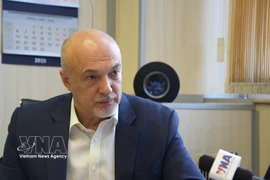
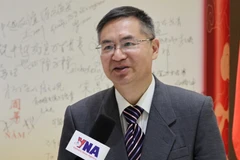
The decision to hold the election two months earlier than usual represents not merely a technical adjustment but a historic and well-considered step, reflecting long-term vision in building, consolidating and operating the state apparatus, said Tran Thang, an aeronautical engineer and commentator in the US.

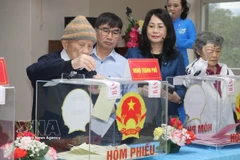
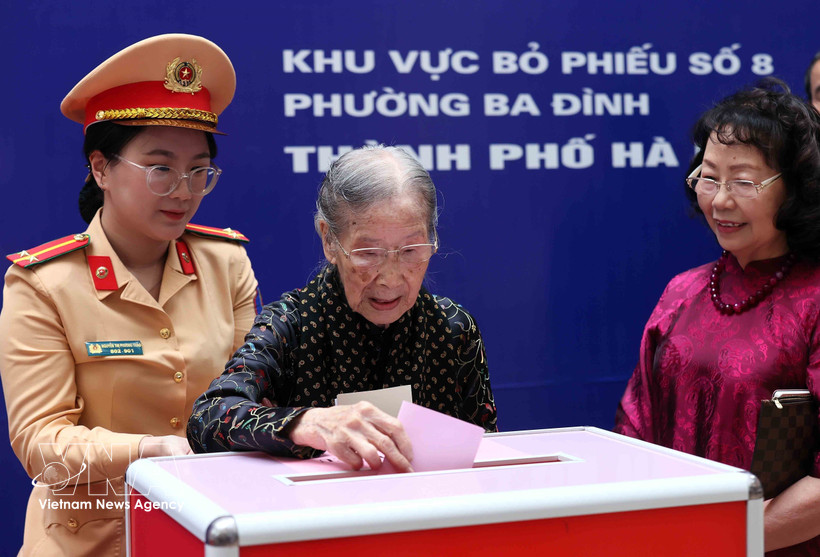
Doan Thi Thuan, a 101-year-old voter, casts her ballot at Polling Station No. 8 in Ba Dinh ward, Hanoi, on March 15. (Photo: VNA)

New York (VNA) – The election of deputies to the 16th National Assembly (NA) and People’s Councils at all levels for the 2026–2031 term symbolises Vietnam’s strong spirit of renewal and adaptation in a new development phase, Tran Thang, an aeronautical engineer and commentator in the US, has assessed.

In an interview with Vietnam News Agency correspondents in New York, he said the decision to hold the election two months earlier than usual represents not merely a technical adjustment but a historic and well-considered step, reflecting long-term vision in building, consolidating and operating the state apparatus.

Thang noted that in recent years, elections, Party congresses at all levels, and the consolidation of the NA, Government and the Vietnam Fatherland Front have taken place at different times, creating a degree of lag in policy formulation, governance and coordination among central agencies. Bringing the election forward in 2026, he said, is therefore a highly appropriate and rational move to synchronise the operational rhythm of the entire political system.

According to him, aligned terms will enable national policies to be implemented more swiftly and effectively, particularly amid unpredictable global developments in the economy, security and environment. Moving closer to a modern governance model is an inevitable trend to enhance national competitiveness and economic resilience.

He also noted that Vietnam is operating a two-tier local administration model, a major reform aimed at building a modern, streamlined, and efficient system that functions smoothly and serves citizens more effectively. In his view, this model aligns with international trends and reflects a strong determination to clarify decentralisation and delegation of authority, thereby encouraging local initiative while strengthening accountability at each level.

The expert emphasised that three key factors are essential for the effective operation of the two-tier system, namely human resources, technology and coordination mechanisms.

As Vietnam enters a phase of accelerated national advancement, he added, the role of NA deputies and People’s Council representatives becomes increasingly important. They serve as a trusted bridge between the people and the State, and between social realities and public policy.

Professionalising the cadre of elected representatives, together with greater application of technology in parliamentary activities, will be crucial to ensuring that the NA and People’s Councils truly function as centres of people’s power within Vietnam’s socialist rule-of-law state, Thang recommended.

He also emphasised the growing importance of parliamentary diplomacy. Unlike traditional diplomacy led by governments, this approach, rooted in legislative and people-to-people connections, plays a larger role in international relations by building understanding, trust, and cooperation among lawmakers, civil society, academic circles, and local communities.

The expert stressed that the election is not merely a routine political and legal exercise but a concrete step in realising the Party’s and State’s strategic vision of building a truly enabling, effective and people-centred socialist rule-of-law state. Vietnam, he said, is making steady progress towards a modern, transparent governance system that serves its citizens and integrates deeply with the world./.

VNA
See more

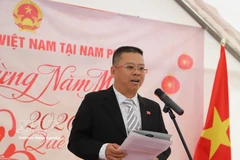
Le Hoai Nam, head of the liaison board of the Vietnamese community in South Africa (Photo: VNA)

Vietnamese community in South Africa confident in 16th NA’s leadership

Regarding the fact that this year’s election of deputies to the NA and People’s Councils at all levels for the 2026–2031 tenure is held two months earlier than usual, a representative of the Vietnamese community in South Africa said that as Vietnam enters a new stage of development with many major goals, organising the election earlier is a proactive and strategic move.

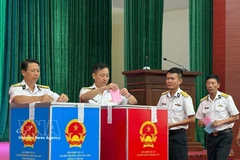
The atmosphere during voting for deputies to the 16th National Assembly and People’s Councils for the 2026–2031 term at Polling Station No. 20, Brigade 957, Naval Region 4, in Khanh Hoa. (Photo: VNA)

Final results of 16th NA election expected on March 22

Local authorities are currently compiling and verifying election data before submitting their reports to the council, which will meet on on March 22 to review the figures and announce the official election results, Tran Thanh Man, Chairman of the NA and President of the Vietnam National Election Council, said.

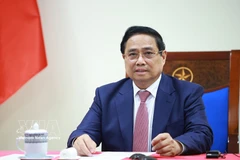
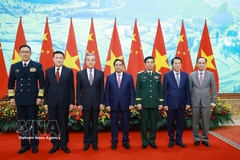
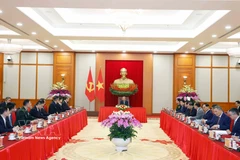
Prime Minister Pham Minh Chinh (centre) and the Vietnamese and Chinese ministers of foreign affairs, national defence and public security at the meeting in Hanoi on March 16. (Photo: VNA)

Vietnam places top priority on ties with China: PM

PM Pham Minh Chinh asked the foreign affairs, defence and public security ministries of both countries to play a more proactive role in unceasingly strengthening political trust and mutual understanding between the two Parties, countries and peoples, and in making full use of existing cooperation mechanisms, particularly the 3+3 strategic dialogue.

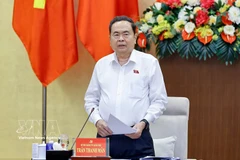
Chairman of the National Assembly (NA) Tran Thanh Man speaks at the fourth meeting of the NA Party Committee for the 2025–2030 term in Hanoi on March 16. (Photo: VNA)

Institutional, legal reform key strategic breakthrough for development: NA Chairman

Chairing the fourth meeting of the NA Party Committee for the 2025–2030 term in Hanoi on March 16, NA Chairman Tran Thanh Man, who is also Secretary of the NA Party Committee, said the legislature must play a pivotal role in building and perfecting development institutions as Vietnam enters a new stage of strong, comprehensive and sustainable development.

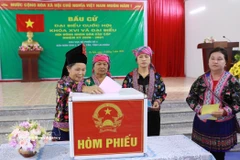
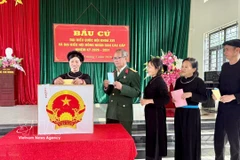
Voters in Nam Sao 2 village, Pa Tan commune of Lai Chau cast their ballots on March 15 (Photo: VNA)

Mexican lawmaker confident in Vietnamese legislature’s enhanced role

Ana Karina Rojo Pimentel, a congresswoman from the Labour Party (PT) of Mexico and Chairwoman of the Mexican Chamber of Deputies’ Welfare Committee, said the new representatives will help further strengthen the legislature’s role in policymaking and national development orientation.

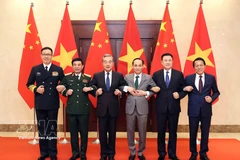
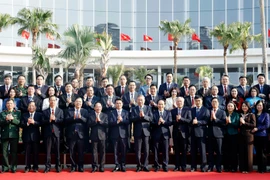
Vietnamese and Chinese ministers pose for a photo at the first ministerial-level Strategic Dialogue among their foreign affairs, defence and public security ministries. (Photo: VNA)

Vietnam, China hold first ministerial-level 3+3 strategic dialogue

The 3+3 Strategic Dialogue mechanism is important for implementing high-level common perceptions and promoting the role of key agencies in advancing Vietnam–China relations as well as sectoral cooperation in various fields, thereby enhancing political trust and contributing to peace, stability and development in the region and the world.

Vice President of the Vietnam – Malaysia Business Association Nguyen Thi Thanh Van. (Photo: VNA)

Vietnamese business leader in Malaysia hopes for streamlined, effective governance

Voters and the business community demand above all a unified, forward-looking legal framework, which resolves near-term frictions while anchoring sustained progress. NA and People's Council deputies must sustain their role as an effective bridge between constituents and authorities, converting grassroots input into meaningful policies.

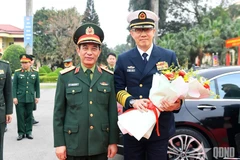
Defence Minister General Phan Van Giang welcomes Chinese Defence Minister Senior Lieutenant General Dong Jun during his visit to Commando Brigade 113. (Photo: qdnd.vn)

Chinese defence minister visits Commando Brigade 113

According to the ministry, the visit took place as Dong led a high-level Chinese defence delegation to attend the first meeting of the Vietnam–China strategic dialogue at the foreign, defence and public security minister level, as well as the 17th session of the Vietnam–China Steering Committee for Bilateral Cooperation.

Vietnamese voters cast their ballots (Photo: VNA)

Vietnam’s election contributes to strengthening development orientation: Argentinean journalist

Vietnam has been widely recognised by the international community for its stable socio-political environment, an increasingly complete legal framework and expanding opportunities for private sector development. Combined with an extensive network of trade relations with major economies, these factors help position Vietnam as a reliable partner in international cooperation and support its long-term strategy for sustainable socio-economic growth.

The election of deputies to the 16th NA and People's Councils at all levels for the 2026-2031 tenure takes place on March 15. (Photo: VNA)

Vietnamese community in Laos expects 16th NA to drive development

Early election also serves as an important test to select capable deputies suited to the new governance model, helping policies reach citizens and overseas communities more efficiently. For overseas Vietnamese in Laos, stable and proactive leadership arrangements at home strengthen confidence and support sustained bilateral cooperation.

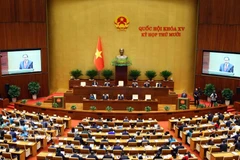
An overview of the opening of the 10th session of the 15th National Assembly. (Photo: VNA)

Indian scholar highlights Vietnamese NA’s legislative role and renovation

He noted that during its tenure, the legislature adopted 51 laws and 39 resolutions aimed at stabilising the national economy after the COVID-19 pandemic, reforming roughly 30% of the legal framework. Eight of the resolutions were normative, focusing on areas such as economic growth, education, healthcare and digital transformation.