Ho Chi Minh City (VNA) – As Vietnam’s economy faces new requirements to sustain growth, Ho Chi Minh City’s industrial sector is attracting increasing attention from foreign enterprises seeking technology transfer opportunities.
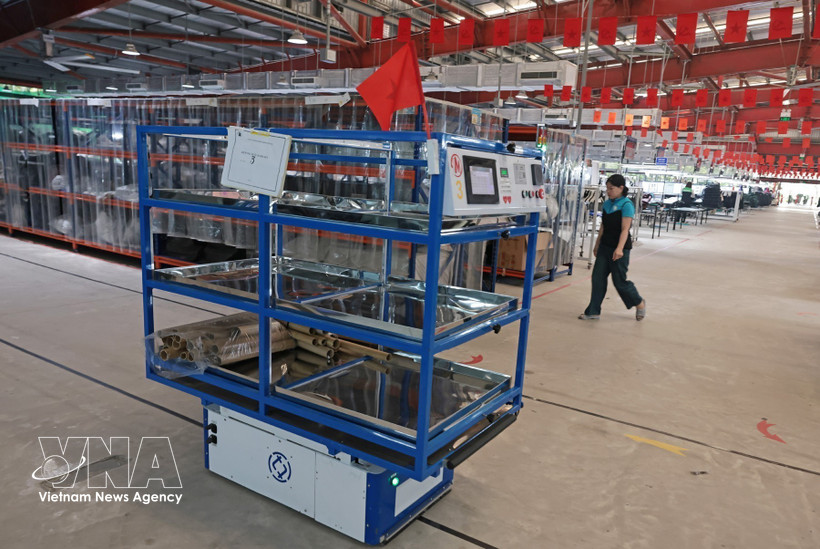
The trend enables domestic firms to access advanced machinery and supports sustainable industrial development, particularly in digital transformation and greener production.
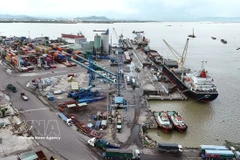
Since the beginning of this year, the municipal Department of Industry and Trade has rolled out policies to support manufacturers, develop the domestic market, and implement the city’s logistics service development strategy for 2025–2035 with a vision to 2050. Efforts have also been stepped up to promote exports, innovation, and digital transformation towards smart and green production.
In early 2026, the city’s Index of Industrial Production (IIP) maintained positive growth, led by the processing and manufacturing sector with stable orders. Amid the global supply chain shift, Vietnam, particularly Ho Chi Minh City, is emerging as an attractive destination for foreign investors.
Vietnam’s processing and packaging sector is entering a restructuring phase as firms face rising costs, stricter standards, and growing demand for data-driven productivity. Competitive advantages now depend more on operational efficiency, measured through indicators such as defect rates, energy use, and total cost of ownership over equipment lifecycles.
Many businesses are shifting from “buying machines” to “buying performance,” focusing on efficiency, sustainable technologies, and value chain integration to optimise costs and meet market requirements.
The packaging industry is among the fastest-growing sectors in Vietnam, with projected annual growth of 15–20%. Over the past time, Ho Chi Minh City has captured great attention from Italy, a global leader in packaging machinery known for its advanced technology and high-quality solutions.
According to the Italian Trade Agency (ITA) in Vietnam, Italian firms are also leading in environmentally friendly packaging solutions that help meet environmental, social and governance (ESG) standards, with a focus on recycled materials and reusable packaging.
For many years, ITA has organised a dedicated pavilion at ProPak Vietnam (the international exhibition for processing and packaging technology), which is expected to host 15 leading companies from Italy’s processing and packaging machinery sector in 2026. Visitors to this year’s exhibition will have the opportunity to engage directly and connect with Italian packaging and processing equipment manufacturers, exploring a wide range of packaging solutions tailored to various industries.
ProPak Vietnam 2026 is set to be an important milestone, not only showcasing advanced packaging technologies but also fostering stronger trade partnerships between Italian and Vietnamese firms.
Alongside ProPak Vietnam, a series of international exhibitions such as DrinkTech Vietnam 2026, Plastics & Rubber Vietnam 2026, and Food & Hospitality Vietnam 2026 will take place in the city in March and April. Experts said these events provide important platforms for businesses to seek technology transfer opportunities and expand international cooperation.
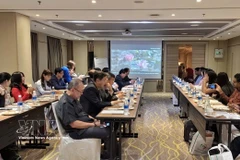
Director of the municipal Department of Industry and Trade Bui Ta Hoang Vu said the city targets a 10.5% increase in the IIP in 2026. To this end, the sector will roll out measures such as promoting industrial trade in overseas markets, strengthening supply-demand linkages, supporting supporting industries to raise localisation rates, and organising supplier-matching events.
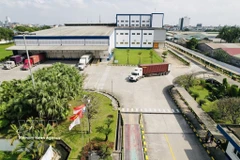
The city also plans to attract investment to develop five to seven new industrial clusters, while prioritising high-tech, supporting, and green industries, and enhancing linkages between supporting industry firms and foreign-invested enterprises.
Vice Chairman of the municipal People’s Committee Nguyen Cong Vinh hailed the sector’s recent performance but urged greater preparedness amid global uncertainties, including measures to ensure energy security and stable supply for production.
He stressed the need for stronger coordination to guarantee fuel supply, contributing to inflation control, macroeconomic stability, and national energy security./.

Ho Chi Minh City steers remittances into technology, innovation
Ho Chi Minh City targets mobilising at least 500 billion VND from remittances and social resources by 2026, while supporting at least 100 enterprises in accessing preferential credit. By 2027, the figure is expected to reach at least 1 trillion VND, with the number of supported firms doubling, including at least 30% of projects in green technology, energy efficiency, and emissions reduction.