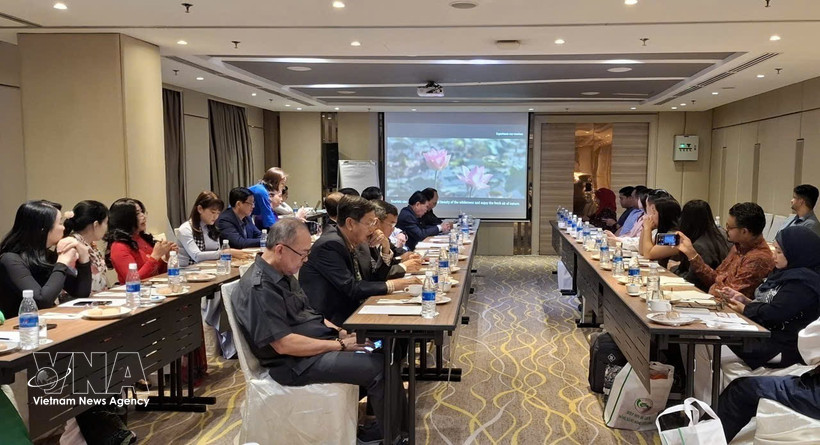
Kuala Lumpur (VNA) - A tourism promotion conference for the Mekong Delta was held in Malaysia’s capital, Kuala Lumpur, on March 18, aiming to introduce the region’s potential, cultural space, and tourism offerings to international friends.
This was not only an economic diplomacy event but also marked a new chapter in cooperation between Vietnam’s riverine southwestern region and multicultural Malaysia.
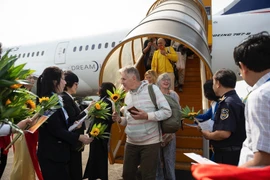
In the Mekong Delta’s tourism marketing strategy, Malaysia has long been identified as one of the top priority markets. Recent statistics have validated this strategic vision. Speaking at the conference, Tran Viet Phuong, Vice Chairman of the Vietnam Tourism Association and Chairman of the Mekong Delta Tourism Association, stated that in 2025, Malaysia continued to maintain its position as a key international market. With nearly 574,000 arrivals to Vietnam, it ranked among the top source markets.
Beyond impressive numbers, Malaysian tourists have earned the appreciation of Vietnam’s tourism sector for their behaviour. According to Phuong, they are highly regarded for their “discipline, civility, politeness, friendliness, and mutual respect.” These shared traits of hospitality and warmth have naturally strengthened the bond between the people of the two countries.
The conference painted a vivid picture of the Mekong Delta, the southernmost region of Vietnam located at the lower reaches of the Mekong River. With its unique natural advantages, key tourism products were prominently introduced, including river-based lifestyle experiences, eco-tourism in orchards, cultural heritage exploration, and coastal and island resort travel.
Phuong emphasised that this promotion is not only to showcase the region’s image and distinctive destinations, highlighting safe, friendly, attractive, and high-quality locations, but also to exchange experience in tourism management, destination development, and human resource training to prepare for increased arrivals from Malaysia.
Duong Hoang Sum, Director of the Department of Culture, Sports, and Tourism of Vinh Long province, noted the special significance of the event amid the comprehensive development of Vietnam–Malaysia strategic cooperation. He stressed that the conference serves as a platform to strengthen connections and information sharing between management agencies and business communities of both sides. With similarities in culture, cuisine, and favourable geographical proximity, cooperation potential remains vast.
Nornatasha Ahmad, a senior official of Tourism Malaysia, said the conference offers dual benefits for both countries. It provides Malaysian businesses with deeper insights into the Mekong Delta while giving Vietnam a closer look at the Malaysian market.
She suggested that such promotional activities should be organised more frequently to strengthen ties, not only between Malaysia and Vietnam but also within ASEAN and globally. The event comes at a significant time as Malaysia is stepping up its Visit Malaysia Year 2026 campaign, welcoming tourists from neighbouring countries, especially Vietnam.
From a tour operator’s perspective, Nurul Ain Syazwi, Chief Operating Officer of TMTours & Travel, highlighted practical demands of Malaysian travelers. She noted that destinations such as Da Nang and Phu Quoc are currently trending among Malaysian tourists, while Da Lat and Sapa also rank among top choices. However, to truly attract Malaysian visitors, tourism services in the Mekong Delta must pay close attention to cuisine.
She pointed out that Malaysian tourists, particularly Muslims, are highly concerned about the availability of Halal food. This is considered a “key” for Mekong Delta provinces to effectively welcome Muslim travellers.
The event also witnessed the signing of cooperation agreements between tourism businesses from the Mekong Delta and partners in Kuala Lumpur. The 2026 tourism promotion conference in Malaysia is expected to open new travel routes, attracting more Malaysian visitors to explore and experience the Mekong Delta in the near future./.
Mekong Delta repositions as global tourism hub
As the country enters a new era of development, experts shared the view that green transformation is no longer optional but a necessity for the region that is heavily impacted by climate change. By repositioning its image through conservation and high-value experiences, the Mekong Delta is choosing a path of "slow but steady" growth.