Mekong Delta repositions as global tourism hub

As the country enters a new era of development, experts shared the view that green transformation is no longer optional but a necessity for the region that is heavily impacted by climate change. By repositioning its image through conservation and high-value experiences, the Mekong Delta is choosing a path of "slow but steady" growth.

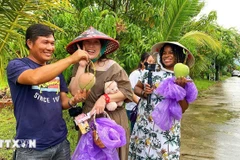
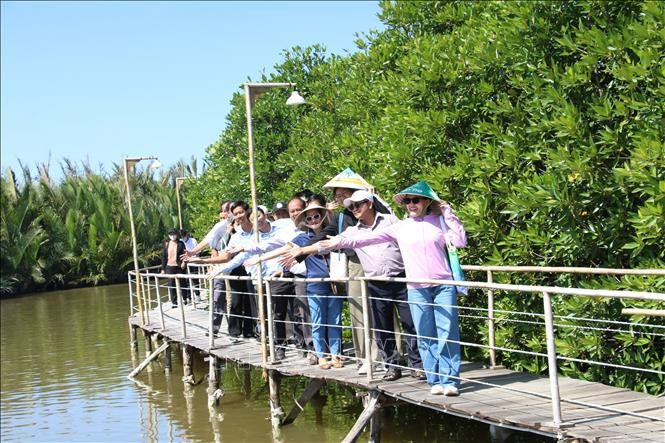
Tourists visit mangrove forests in the coastal commune of An Hoa, Vinh Long province. (Photo: VNA)

Can Tho (VNA) — As one of Vietnam's primary tourism regions, the Mekong Delta is pivoting toward a sustainable future centred on green tourism, environmental protection, and the preservation of cultural heritage.

This strategic shift aims to uplift living standards while elevating the region’s status on the international tourism map.Spanning nearly 40,000 sq.km, the Mekong Delta is the nation’s agricultural powerhouse, contributing 50% of rice output, 65% of aquaculture, 70% of fruit production, 95% of rice exports, and 60% of fish exports.

Beyond being a "national food basket," the region serves as a strategic gateway to the East Sea and the Mekong Sub-region.

This dense network of rivers and canals provides an unparalleled foundation for riverine, agricultural, and community-based tourism.

Dr Tran Huu Hiep, Vice Chairman of the Mekong Delta Tourism Association, asserted that the region is a unique ecological and cultural space.

The core issue is not just having resources, but how to exploit them sustainably while balancing economic benefits with environmental responsibility, he noted.He emphasised that the region’s indigenous knowledge and rich agricultural ecosystems allow for a natural transition to integrated green tourism models.

In Vinh Long, located in the heart of the Delta, the shift is tangible.

Ho Trung Nhan, Director of the Vinh Long provincial Tourism Promotion Centre, highlighted that modern travellers now seek environmental commitment over mass commercialism.

The province is developing a "Green Heritage Corridor," linking the lush orchards of Vinh Long, the red ceramic heritage of Mang Thit, the coconut groves of Ben Tre, and the ancient Khmer pagodas of Tra Vinh.Innovative models are already gaining international recognition.

These include Sokfarm’s plastic-free organic coconut flower nectar tours and the "Net Zero tours" in Ben Tre. Notably, the Con Chim (Bird Islet) community tourism model recently secured the ASEAN Community Tourism Award 2025 for its "nature-compliant" approach.
danh-thang-210126.jpg
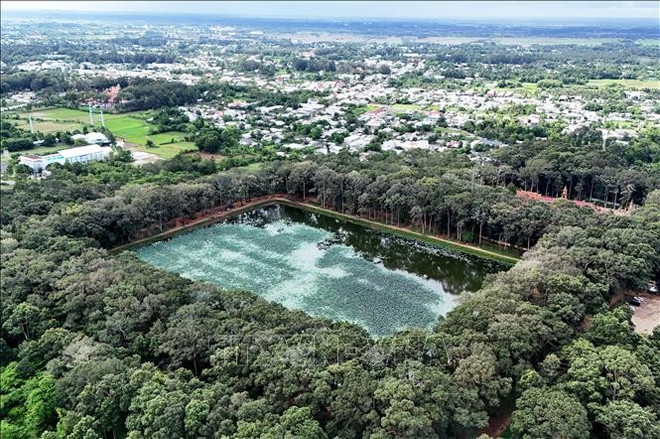
The Ao Ba Om National Scenic Area is an attractive tourist destination in former province of Tra Vinh ( now Vinh Long province). (Photo: VNA)

Vo Van Phong, Director of C2T Tourism and Media, suggested that green tourism is about "doing things differently," ensuring that resources like forests and water continue to generate value after every visitor experience.

Meanwhile, Can Tho, the regional hub, is focusing on its 12 traditional craft villages to diversify its offerings. Destinations such as the Thuan Hung rice paper village and the Pho Tho - Ba Bo flower village are being upgraded to meet green standards.

Sam Long Giang, Deputy Director of the Can Tho city’s Department of Culture, Sports, and Tourism, stated that the city is actively creating a friendly investment environment to attract strategic partners.

By integrating traditional crafts with professional tourism services, the city aims to provide sustainable livelihoods for locals while maintaining its reputation as a safe, hospitable destination.

As the country enters a new era of development, experts shared the view that green transformation is no longer optional but a necessity for the region that is heavily impacted by climate change.

By repositioning its image through conservation and high-value experiences, the Mekong Delta is choosing a path of "slow but steady" growth.

This strategy ensures the region remains distinct and competitive, preserving the soulful identity of Southern Vietnam's riverine culture for generations to come./.
VNA

See more

A lion dance performance on Ong Lang street. Can Tho welcomes visitors to the city during the Lunar New Year holiday. (Photo: VNA)

Tet 2026 sends positive signals, setting the pace for tourism growth

Around three weeks ahead of Tet, the domestic travel market has become noticeably more vibrant. Data from online searches and social media platforms point to a sharp rise in interest, particularly in destinations offering pleasant weather, well-developed tourism infrastructure and family-friendly appeal.

Sun World attracts domestic and international visitors through international-standard live shows. (Photo: Sun Group)

Theme parks emerge as a defining travel trend for 2026

In Vietnam, Sun World, recently named “Vietnam’s Leading Attraction and Entertainment Brand 2025” by Klook, is widely seen as a representative of this trend, with a network of theme parks stretching from mountainous regions to coastal and island destinations.

A view of the tourism village in Huu Lien commune, Lang Son province. (Photo: Nhan Dan)

Revitalising cultural identity through community-based tourism

For many households, tourism has brought additional income, created jobs for younger generations and reinforced the value of maintaining traditional ways of life. Rather than eroding cultural practices, tourism has turned them into key attractions, strengthening community pride and cultural continuity.

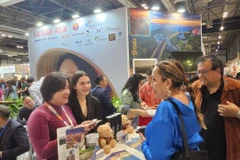
Visitors seek information on Vietnam’s tourist destinations at the 2026 FITUR International Tourism Fair. (Photo published by VNA)

Vietnam shines at FITUR int’l tourism fair in Spain

The main goal of Vietnam’s participation in FITUR is to highlight its growing presence among top global tourism destinations while introducing new offerings and the potential of the country as a travel destination for the Spanish-speaking community.

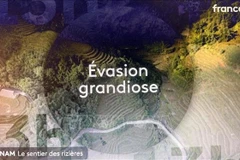
A report on Sa Pa broadcast on France 2 - a channel of France’s national television. (Photo: VNA)

Sa Pa captivates French audiences as a standout Northwest destination

The report portrays Sa Pa as a landscape shaped by generations, highlighting the terraced fields that have been carefully carved and maintained by residents over centuries. A local guide told the programme that some of the oldest terraces in the area are around 250 years old.

French newspapers Le Figaro and Ouest-France publish features introducing SJourney, a luxury rail tourism service offering a trans-Vietnam travel experience. (Photo: Sjourney

Luxury trans-Vietnam rail journey captures French media attention

The SJourney itinerary is Vietnam’s first luxury rail cruise, jointly operated by PYS Travel and Vietnam Railways. The product is expected to open up a new direction for high-end tourism, built around slow-paced, immersive and emotionally rich travel experiences.

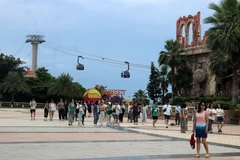
Tourists visit and experience the Hon Thom cable car in Phu Quoc (Photo: VNA)

Phu Quoc tourism heats up in 2026 with near-full bookings

Savouring Tet on Phu Quoc allows visitors to dive into the island's pristine natural assets, from stunning beaches and untouched primary forests to nearby islets, all wrapped in an effortlessly festive, sun-kissed holiday vibe.

Visitors at the newly launched Pho Museum in Ben Thanh ward, Ho Chi Minh City. (Photo: sggp.org.vn)

Lunar New Year tours boom

Since the beginning of 2026, many travel agencies have reported an increase in Lunar New Year tour bookings compared with the same period last year. Notably, tours focusing on cultural immersion, local lifestyles, and early spring festivals are gaining popularity, rather than purely leisure-oriented trips as seen in previous years.

A visitor climb the 90-metre “Great Wall of Vietnam” during an adventure tour of Son Đoong Cave. (Photo: VNA)

Plans to expand unilateral visa waivers to attract high-quality tourists

The Ministry of Public Security was assigned to further accelerate the application of information technology and digital transformation to improve electronic visa issuance procedures, simplify processes and shorten immigration clearance times at border checkpoints, creating maximum convenience for travellers.

An exhibition space that recounts the story of pho from a socio-historical perspective, blending documentary films, artefacts and installation art. (Photo: thethaovanhoa.vn)

Cultural, culinary tourism heightens Tet allure in Ho Chi Minh City

A notable new attraction is the Pho (rice noodle soup) Museum in Ben Thanh ward, which officially opened in mid-January. As the country’s first museum dedicated to culinary heritage, it is designed to preserve, develop and spread the values of Vietnamese cuisine to both domestic and international visitors.