Hanoi (VNA) – As Vietnam steps up efforts to fulfil its green growth commitments and respond to climate change, financial and technological cooperation with international partners is entering a new phase marked by higher requirements in terms of speed, scale and effectiveness.
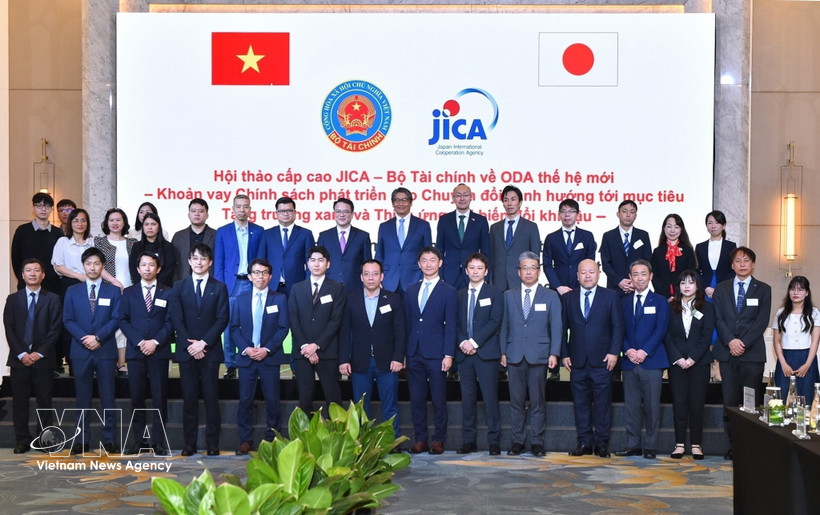
The Japan International Cooperation Agency (JICA), in coordination with Vietnam’s Ministry of Finance, held a workshop on March 18 to introduce a "Programme Loan for Green Transformation towards Green Growth and Climate Resilience”. The loan, valued at 50 billion JPY (about 320 million USD), has been approved by the governments of both countries and is expected to be signed later this month.
This marks the second budget support loan provided by the Japanese Government to Vietnam since 2023 and is regarded as a model of “new-generation” official development assistance (ODA), characterised by streamlined preparation procedures, faster disbursement and closer alignment with policy reform and resource mobilisation for sustainable development.
On the sidelines of the workshop, Kobayashi Yosuke, Chief Representative of JICA Vietnam, told the Vietnam News Agency (VNA) that the programme aims to support Vietnam’s green transition and enhance climate resilience through a combination of financial assistance and policy dialogue.
He explained that the programme is built on three main pillars. The first is about setting up policy frameworks for fiscal incentives and investment promotion to boost the growth of green economic sectors. This covers promoting green bonds, updating corporate income tax policies to attract private sector investment in green industries, improving rules for managing and using ODA and concessional loans, and making it easier to tap into foreign funding for climate-resilient and green infrastructure projects.
The second pillar is designed to help Vietnam implement its nationally determined contributions (NDCs), with priority given to institutional development and the establishment of a carbon market.
Measures include issuing lists of greenhouse gas emitters subject to inventory requirements, providing calculation guidelines, and developing policies to support energy transition and the circular economy.
The third pillar aims to strengthen climate adaptation measures, including the implementation of the National Climate Change Adaptation Plan for 2021–2030 with a vision to 2050, alongside the development and enforcement of legal frameworks on disaster risk prevention and management.
Kobayashi noted that the programme differs from traditional ODA in several respects, particularly in preparation speed, larger loan scale and a stronger market-oriented approach. Beyond financing, it is expected to contribute to the formation of a green market with a value comparable to or exceeding the loan itself.
He added that the initiative is delivered within a comprehensive strategic framework that will create opportunities for Vietnamese agencies to expand cooperation with Japanese companies possessing strengths in science, technology and innovation in green transition fields. Such cooperation is expected to facilitate technology transfer through business linkages and project development, benefiting both private and state-owned enterprises in Vietnam.
Kobayashi said that “new-generation ODA” represents a shift from the traditional focus on funding individual infrastructure projects towards a broader, more strategic approach that integrates policy support, market creation and technology connectivity. Combining these elements is essential to ensure a sustainable green transition, he stressed.
Looking ahead, he expressed his confidence in the prospects for Vietnam–Japan cooperation, noting Vietnam’s commitment to climate action and green growth. JICA will continue to work closely with the Vietnamese Ministry of Finance, the Japanese Government and other partners to promote stronger public–private cooperation and make full use of its extensive cooperation networks./.