Vietnam, Australia boost cooperation in agriculture, food sectors

In 2025, two-way trade between Vietnam and Australia reached approximately 23 billion AUD (16.18 billion USD), making each country the other’s 11th-largest trading partner.

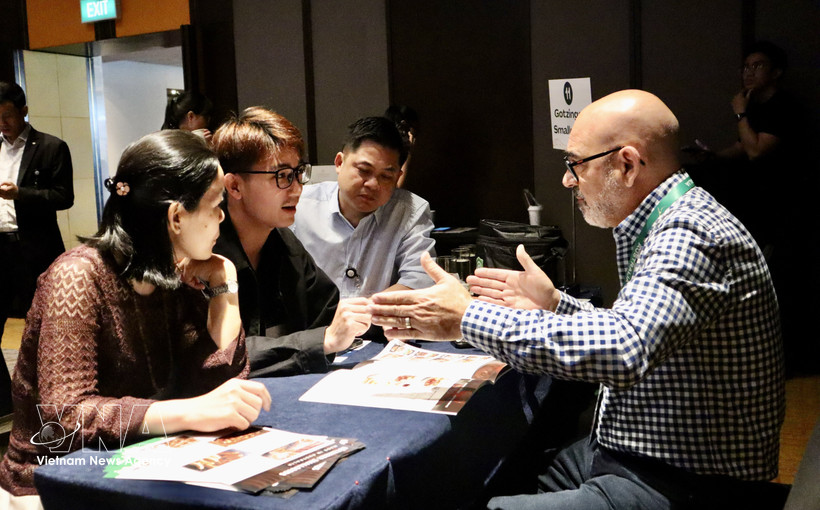
Australian and Vietnamese food enterprises discuss partnership on March 19. (Photo: VNA)

Ho Chi Minh City (VNA) – The Australian Trade and Investment Commission (Austrade) on March 19 led a delegation of 28 Australian agriculture and food enterprises to Ho Chi Minh City to attend a Vietnam-Australia trade and investment forum.

The event formed part of the Australia–Southeast Asia Business Exchange (A-SEABX), running from March 16–20. It marked one of the largest recent Australian agrifood business missions to Vietnam, reflecting growing interest among Australian firms in diversifying partnerships and expanding engagement with the Vietnamese market.

Sarah Hooper, Australian Consul General in Ho Chi Minh City, said bilateral relations have developed strongly since diplomatic ties were established in 1973. The upgrade to a Comprehensive Strategic Partnership in March 2024 represented a significant milestone, elevating cooperation to a new level.

Australia remains committed to building a positiive and sustainable relationship with Vietnam while strengthening economic connectivity through its Southeast Asia Economic Strategy to 2040, she noted. In 2025, two-way trade reached approximately 23 billion AUD (16.18 billion USD), making each country the other’s 11th-largest trading partner.

Both nations also participate in major free trade agreements, including ASEAN-Australia-New Zealand Free Trade Area (AANZFTA), the Comprehensive and Progressive Agreement for Trans-Pacific Partnership (CPTPP) and the Regional Comprehensive Economic Partnership (RCEP), enabling tariff preferences for more than 95% of goods.

In agriculture, Vietnam ranked as Australia’s seventh-largest market for agricultural, forestry and fisheries products, with turnover reaching 2.6 billion AUD (1.82 billion USD) in 2025. Active engagement by businesses from both countries has played a key role in driving bilateral trade growth.
vnanet-potal-dien-dan-ket-noi-thuong-mai-va-dau-tu-australia-viet-nam-8650920.jpg
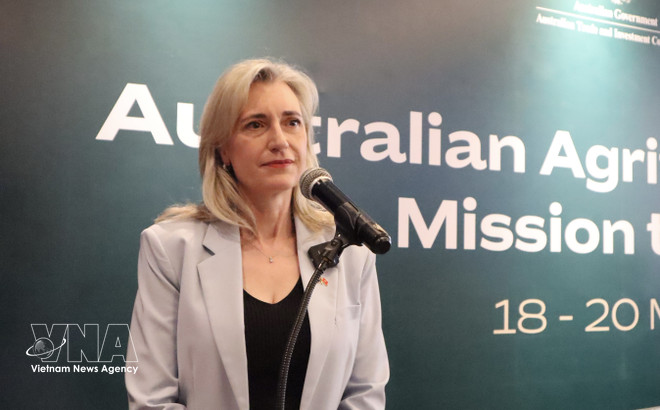
Emma McDonald, Austrade’s Senior Trade and Investment Commissioner to Vietnam, addresses the forum. (Photo: VNA)

Australian enterprises view Vietnam as one of Southeast Asia’s most dynamic economies, with a rapidly expanding middle class and rising demand for high-quality, safe and traceable food products. This creates opportunities for Australian exporters in meat, seafood, dairy, fruit and vegetables, wine and processed foods.

Vietnam, meanwhile, is modernising its agriculture and food industries towards higher value-added production, stronger standard compliance and climate adaptation, opening new avenues for cooperation in technology transfer, innovation and investment.

The transformation is driving demand for high-quality breeding stock, feed grains, advanced farm management practices, high-tech solutions and traceability systems, alongside investment opportunities in modern processing and value-added production facilities.

Emma McDonald, Austrade’s Senior Trade and Investment Commissioner to Vietnam, said the business delegation also met leading Vietnamese retailers and agribusinesses to better understand local supply chains, consumer trends and emerging market opportunities.

Internationally recognised for high-quality, safe and sustainable food systems supported by strict biosecurity and traceability frameworks, Australia is well positioned to serve as a strategic partner for Vietnam in upgrading agriculture-food value chains, she added.

Beyond premium food trade, both countries have significant potential to expand cooperation in technology transfer, innovation and investment to support Vietnam’s goals of high-value, standards-compliant and climate-resilient agricultural production.

The forum also featured specialised parallel sessions on food and beverages, seafood and animal feed, attracting enterprises, industry associations and agricultural experts from both countries, and offering practical insights into Vietnam’s regulatory environment, market trends and emerging investment models to further strengthen bilateral trade and investment cooperation./.
VNA

See more

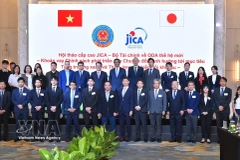
Delegates at the workshop to introduce a "Programme Loan for Green Transformation towards Green Growth and Climate Resilience”. (Photo: VNA)

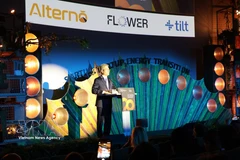
New-generation ODA supports green transition: JICA

Kobayashi said that “new-generation ODA” represents a shift from the traditional focus on funding individual infrastructure projects towards a broader, more strategic approach that integrates policy support, market creation and technology connectivity.

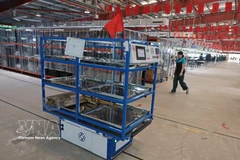
Robots automatically transport materials from the warehouse to the production line at Maxport Limited Vietnam (Photo: VNA)

Ho Chi Minh City’s industrial sector draws wave of technology investment

Ho Chi Minh City targets a 10.5% increase in the Index of Industrial Production (IIP) in 2026. To this end, the sector will roll out measures such as promoting industrial trade in overseas markets, strengthening supply-demand linkages, supporting supporting industries to raise localisation rates, and organising supplier-matching events.

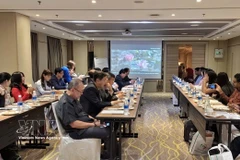
At the tourism promotion conference for the Mekong Delta held in Malaysia on March 18. Photo: VNA)

Mekong Delta tourism targets Malaysian market

To truly attract Malaysian visitors, tourism services in the Mekong Delta must pay close attention to cuisine. Malaysian tourists, particularly Muslims, are highly concerned about the availability of Halal food. This is considered a “key” for Mekong Delta provinces to effectively welcome Muslim travellers.

FrieslandCampina’s plant – one of Asia's pioneering facilities in adopting a green production model. (Photo: VNA)

Green exports reshape rules of global trade

Vietnam is gradually recalibrating its overseas market development strategy to align export expansion with sustainable development goals. Market development should not only sustain export growth but also help unlock new growth spaces while strengthening the long-term sustainability of exports.

Overseas remittances are viewed as an important resource for socio-economic development. (Photo: VNA)

Ho Chi Minh City steers remittances into technology, innovation

Ho Chi Minh City targets mobilising at least 500 billion VND from remittances and social resources by 2026, while supporting at least 100 enterprises in accessing preferential credit. By 2027, the figure is expected to reach at least 1 trillion VND, with the number of supported firms doubling, including at least 30% of projects in green technology, energy efficiency, and emissions reduction.

A key highlight of the new social housing framework is a range of incentives designed to attract private sector participation. (Photo: VNA)

New policy framework boosts social housing development

The adjusted decree provides detailed and synchronised regulations covering the entire lifecycle of social housing projects, from project preparation and investor selection to incentive mechanisms, as well as procedures for sale, lease-purchase and operational management. It also applies to worker accommodation and housing for armed forces personnel.

The domestic market, with over 100 million people, holds great potential for Vietnamese businesses. (Photo: VNA)

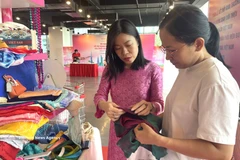
“Vietnamese Goods Vitality” event boosts domestic consumption, digital outreach

The event is among a series of initiatives planned for 2026 to stimulate the consumption of locally made products. Beyond serving as a showcase for goods, it is designed as a platform connecting businesses, consumers and key opinion leaders (KOLs), thereby enhancing the visibility of Vietnamese brands amid rapid digital transformation.