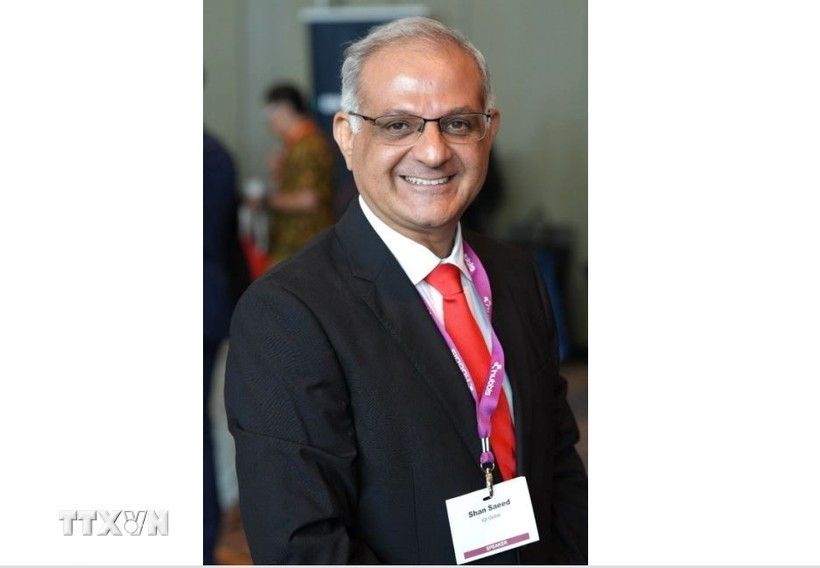
Hanoi (VNA) – The conflict in the Middle East is a major shock to the global energy market, pushing prices skyward and making supply security a top concern, said Shan Saeed, Global Chief Economist at Malaysia-based international real estate firm IQI Juwai, adding that the impact on Vietnam remains cyclical and manageable.
Saeed pointed out that with Brent crude hovering around 112 USD per barrel, the market is factoring in a built-in risk premium tied to the Strait of Hormuz, a vital passage for about 20% of the world’s oil and LNG shipments. Any disruption at this chokepoint could spark a global reassessment of energy risks.
Under a baseline scenario, Brent prices are expected to fluctuate between 100-120 USD per barrel, with the possibility of exceeding 150 USD if tensions escalate. Meanwhile, the gas market remains structurally tight. LNG prices in Asia stand at about 25 USD per mmBtu, up 68% since early 2026, reflecting supply disruptions in Qatar, cargo diversions to Europe, and limits in liquefaction and shipping capacity.
At the macro level, the oil market is undergoing sustained geopolitical risk repricing, while the gas market faces tightening caused by supply constraints and logistical bottlenecks - a structural rather than cyclical shift.
Saeed noted that Vietnam may experience short-term cost-push inflation through transport, logistics and industrial input costs. Inflation could rise to around 4% but remain within the control of the current policy framework.
Vietnam’s economy has nevertheless maintained strong macroeconomic fundamentals and resilience among emerging Asian economies. Supporting indicators included GDP growth of 8.02% in 2025, inflation at 3.31%, trade turnover exceeding 930 billion USD, a trade surplus of about 20 billion USD, and foreign exchange reserves reaching 85.4 billion USD.
In energy, Vietnam faces manageable constraints. In 2025, the country imported about 14.2 million tonnes of crude oil, with Kuwait as a key strategic partner, while domestic output is projected to decline to 5.8–8 million tonnes annually during 2026–2030.
These pressures are unlikely to alter Vietnam’s long-term growth trajectory. The country continues to benefit from double-digit export growth in early 2026, high-value FDI inflows into electronics, semiconductors and advanced manufacturing, and deeper integration into global supply chain restructuring.
At the same time, policies are being adjusted to rebalance the energy mix by expanding LNG imports and regasification capacity while accelerating renewable energy development, targeting renewables to account for about 30% of the energy structure by 2030.
The expert said Vietnam is moving from being a passive price-taker to actively building resilience. Instead of seeing the current shock as a barrier to growth, it should be viewed as a push for stronger energy security, industrial upgrades, and higher productivity.
Saeed recommended a cautious, market-oriented and long-term policy approach that balances short-term stability with structural reform. Key measures include targeted fuel reserves and appropriate fiscal tools to contain inflation spillovers, diversification of supply sources to reduce reliance on routes linked to the Strait of Hormuz, expansion of strategic oil reserves, and greater flexibility in refining and storage systems.
The expert stressed the importance of boosting energy efficiency, cutting the energy intensity of production, keeping the economy stable, and managing inflation and exchange-rate expectations. He also pointed out the need to work closely with the International Monetary Fund (IMF), World Bank (WB), and Asian Development Bank (ADB) to build financial resilience and support the shift to cleaner energy. Stronger ties with oil-producing nations are seen as the key to maintaining steady energy supplies./.
See more
Quang Tri strengthens fleet oversight to curb IUU fishing
Quang Tri province currently has about 4,600 fishing vessels measuring 6 metres or longer. All have met requirements on registration, inspection and licensing, and have installed vessel monitoring systems (VMS), a key tool to enhance oversight of offshore activities.
Vietnam considers listing silver bullion on commodity exchange
Under the proposal, the rollout would take place in two phases. The first would involve a pilot listing in the domestic market with physical transactions. In the second phase, after operations stabilise, the exchange could be linked with regional and international commodity exchanges.
Belavia Belarusian Airlines launches Minsk – Nha Trang service
The route is the longest in Belavia’s network, covering nearly 9,300km with an estimated flight duration of around 11 hours.
Vietnam, Italy deepen economic diplomacy to boost trade, investment
Deputy Prime Minister Nguyen Chi Dung encouraged Italian businesses to scale up investment in Vietnam, particularly in high-potential sectors such as manufacturing, high technology, industrial infrastructure, innovation and clean energy.
Vietnam rises as key market for Australian capital: official
Australian firms and investors are showing particularly strong interest in Vietnam, drawn by its large market, consistent high growth, youthful demographics, and rapidly expanding middle class, said a representative of the Vietnam Trade Office in Australia.
Vietnam, Japan sign exchange of notes for ODA loans to support green transition
The funding, totaling approximately 90 billion JPY (around 609 million USD), will be allocated to three key projects, namely budget support for green growth and climate adaptation, disaster-resilient rural development, and climate-adaptive infrastructure to support production in northern mountainous regions, particularly for ethnic minority communities.
Vitality of Vietnamese Goods programme opens
The event, organised by the Agency for Domestic Market Surveillance and Development in coordination with the Hoan Kiem ward People’s Committee, TikTok Shop and the National Payment Corporation of Vietnam, aims to support enterprises in promoting and selling products while expanding digital distribution channels. It also forms part of activities marking the 95th anniversary of the Ho Chi Minh Communist Youth Union (March 26, 1931–2026).
PM gives green light to advance from state budget for fuel price stabilisation fund
PM Chinh stressed that the top priority is to ensure no shortages of energy or fuel in any circumstances; minimise negative impacts from the energy crisis on macroeconomic management; and prevent disruptions to supply chains, production, business activities, and people’s consumption.
JLL: Vietnam data centres poised for growth
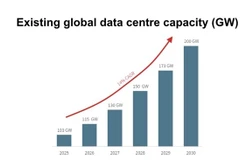
Hanoi and Ho Chi Minh City have a combined operational capacity of around 60 MW. While this is currently lower than regional hubs such as Jakarta, Kuala Lumpur, Bangkok, and Manila (74 MW), it demonstrates strong potential for future scaling.
Vietjet recognised among world’s best low-cost airlines with two international awards in 2026
The awards focus on in-flight product and passenger experience, using measurable onboard criteria. AirlineRatings experts highlighted Vietjet’s highly competitive fares, innovative approach, and products tailored to customer needs. The airline has maintained its title as the World’s Best Ultra Low-Cost Carrier since 2018 and has consistently ranked among the world’s leading low-cost airlines.
Noi Bai jumps to 71st in world’s top 100 airports: Skytrax
The airport climbed eight positions from 79th in 2025, marking one of its strongest performances to date. This is also the eighth consecutive year that Noi Bai, the capital’s main aviation gateway, has been named among the world’s top 100 airports.
Vietnam Airlines strengthens ties with travel agents in Australia
The national flag carrier reaffirmed its commitment to expanding cooperation with partners in Australia, enhancing service quality, and offering passengers safe, comfortable journeys imbued with Vietnamese identity.
Vietnam Report announces Top reputable real estate companies in 2026
The Top 10 reputable developers include Vinhomes, Nam Long Investment Corporation, Khang Dien House Trading and Investment JSC, Ecopark Group, Van Phu Invest, Taseco Land Investment JSC, Phat Dat Real Estate Development Corporation, DIC Corporation, BIM Land, and Phu Long Real Estate Corporation.
Flexible shifts made to sustain growth momentum in tuna export
According to data from the Vietnam Association of Seafood Exporters and Producers, total tuna export value in the period reached 129 million USD, equivalent to the same period last year. Although overall growth stood at 0%, the export landscape has undergone significant structural shifts in market distribution.
Karnataka emerges as new destination for Vietnamese businesses in India
Vietnamese enterprises are also shifting from trade to direct investment in India, with notable projects already underway in Tamil Nadu and Telangana. The Vietnam Trade Office pledged continued support and connectivity for Vietnamese investors exploring opportunities in Karnataka and the wider Indian market.
Reference exchange rate up 13 VND on March 20
The State Bank of Vietnam set the daily reference exchange rate at 25,085 VND/USD on March 20, up 13 VND from the previous day.
Ho Chi Minh City develops green satellite urban areas
Ho Chi Minh City is planning to develop green satellite urban areas as part of its vision of becoming a multi-centre and multi-functional megacity.
Ca Mau intensifies vessel management to prevent IUU fishing
The provincial People’s Committee has directed departments, sectors and localities to strengthen coordination among the Department of Agriculture and Environment, border guards, fisheries surveillance and public security forces to detect and handle violations early and from afar.
India’s 2026 Budget unlocks broad opportunities for Vietnamese enterprises: Seminar
India's 2025 Income Tax Act, alongside streamlined and more transparent customs procedures, is a positive sign, creating favourable conditions for Vietnamese enterprises to scale up investment and business operations in the market.
New-generation ODA supports green transition: JICA
Kobayashi said that “new-generation ODA” represents a shift from the traditional focus on funding individual infrastructure projects towards a broader, more strategic approach that integrates policy support, market creation and technology connectivity.