India’s 2026 Budget unlocks broad opportunities for Vietnamese enterprises: Seminar

India's 2025 Income Tax Act, alongside streamlined and more transparent customs procedures, is a positive sign, creating favourable conditions for Vietnamese enterprises to scale up investment and business operations in the market.

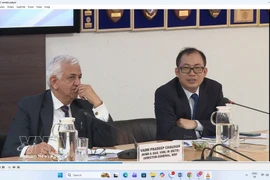
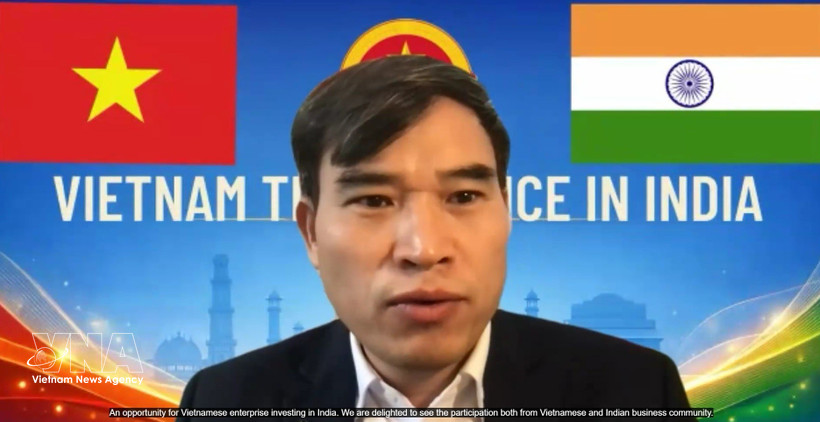
Vietnamese Trade Counsellor in India Bui Trung Thuong speaks at the online seminar. (Photo: VNA)

New Delhi (VNA) – India’s 2026–2027 union budget is opening up promising prospects for Vietnamese businesses, particularly as the South Asian economy accelerates reforms toward trust-based governance, according to Vietnamese Trade Counsellor in India Bui Trung Thuong.

Speaking at an online seminar titled “India’s 2026 Budget and Opportunities for Vietnamese Businesses,” organised by the Vietnam Trade Office in India on March 19, Thuong highlighted that India's 2025 Income Tax Act, alongside streamlined and more transparent customs procedures, is a positive sign, creating favourable conditions for Vietnamese enterprises to scale up investment and business operations in the market.

Providing in-depth analysis, Manan Agarwal, Partner at KrayMan Consultants LLP, outlined four key pillars underpinning India’s development strategy. These include sustaining growth through high-tech sectors such as semiconductors, biopharmaceuticals, finance, tourism and education; strengthening growth foundations; advancing human-centred development through job creation and skills training; and promoting trust-based governance reform through digital transformation and artificial intelligence.

The budget also prioritises investment in strategic sectors, including data centres, digital services, semiconductor manufacturing, biotechnology and renewable energy, while reviewing the Foreign Exchange Management Act (FEMA) to facilitate smoother international capital flows.

He noted that India is undergoing a structural shift from reliance on fiscal incentives to building a trust-based, stable and transparent business environment. For Vietnamese enterprises, reforms such as simplified tax procedures and AI-enabled customs systems are expected to reduce compliance costs and shorten clearance times.

Beyond procedural improvements, India’s focus on high-growth industries opens new avenues for Vietnamese firms to participate in emerging global value chains. The extension of advance ruling mechanisms to five years further enhances legal certainty, enabling investors to plan long-term strategies with reduced risk.

As India sustains robust growth and continues to refine its legal framework for international investment, the current period is widely viewed as a “window of opportunity” for Vietnamese businesses to deepen market engagement, particularly in manufacturing, services and export-oriented sectors.

During the discussion session, enterprises raised practical concerns regarding company establishment procedures, tax obligations and access to government support schemes. The Vietnam Trade Office reaffirmed its commitment to providing ongoing guidance and support to Vietnamese businesses seeking to explore and invest in this dynamic market./.

VNA
See more

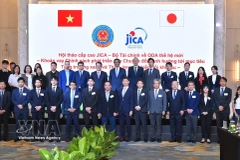
Delegates at the workshop to introduce a "Programme Loan for Green Transformation towards Green Growth and Climate Resilience”. (Photo: VNA)

New-generation ODA supports green transition: JICA

Kobayashi said that “new-generation ODA” represents a shift from the traditional focus on funding individual infrastructure projects towards a broader, more strategic approach that integrates policy support, market creation and technology connectivity.

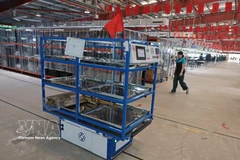
Robots automatically transport materials from the warehouse to the production line at Maxport Limited Vietnam (Photo: VNA)

Ho Chi Minh City’s industrial sector draws wave of technology investment

Ho Chi Minh City targets a 10.5% increase in the Index of Industrial Production (IIP) in 2026. To this end, the sector will roll out measures such as promoting industrial trade in overseas markets, strengthening supply-demand linkages, supporting supporting industries to raise localisation rates, and organising supplier-matching events.

At the tourism promotion conference for the Mekong Delta held in Malaysia on March 18. Photo: VNA)

Mekong Delta tourism targets Malaysian market

To truly attract Malaysian visitors, tourism services in the Mekong Delta must pay close attention to cuisine. Malaysian tourists, particularly Muslims, are highly concerned about the availability of Halal food. This is considered a “key” for Mekong Delta provinces to effectively welcome Muslim travellers.

FrieslandCampina’s plant – one of Asia's pioneering facilities in adopting a green production model. (Photo: VNA)

Green exports reshape rules of global trade

Vietnam is gradually recalibrating its overseas market development strategy to align export expansion with sustainable development goals. Market development should not only sustain export growth but also help unlock new growth spaces while strengthening the long-term sustainability of exports.

Overseas remittances are viewed as an important resource for socio-economic development. (Photo: VNA)

Ho Chi Minh City steers remittances into technology, innovation

Ho Chi Minh City targets mobilising at least 500 billion VND from remittances and social resources by 2026, while supporting at least 100 enterprises in accessing preferential credit. By 2027, the figure is expected to reach at least 1 trillion VND, with the number of supported firms doubling, including at least 30% of projects in green technology, energy efficiency, and emissions reduction.

A key highlight of the new social housing framework is a range of incentives designed to attract private sector participation. (Photo: VNA)

New policy framework boosts social housing development

The adjusted decree provides detailed and synchronised regulations covering the entire lifecycle of social housing projects, from project preparation and investor selection to incentive mechanisms, as well as procedures for sale, lease-purchase and operational management. It also applies to worker accommodation and housing for armed forces personnel.

The domestic market, with over 100 million people, holds great potential for Vietnamese businesses. (Photo: VNA)

“Vietnamese Goods Vitality” event boosts domestic consumption, digital outreach

The event is among a series of initiatives planned for 2026 to stimulate the consumption of locally made products. Beyond serving as a showcase for goods, it is designed as a platform connecting businesses, consumers and key opinion leaders (KOLs), thereby enhancing the visibility of Vietnamese brands amid rapid digital transformation.