Sun Group, Changi Airports International sign strategic partnership to operate Phu Quoc Airport

With this partnership, Phu Quoc International Airport will become one of the first airports in Vietnam to be operated by an international partner under “Changi standards” – a benchmark associated with the pioneering “airport destination” model.

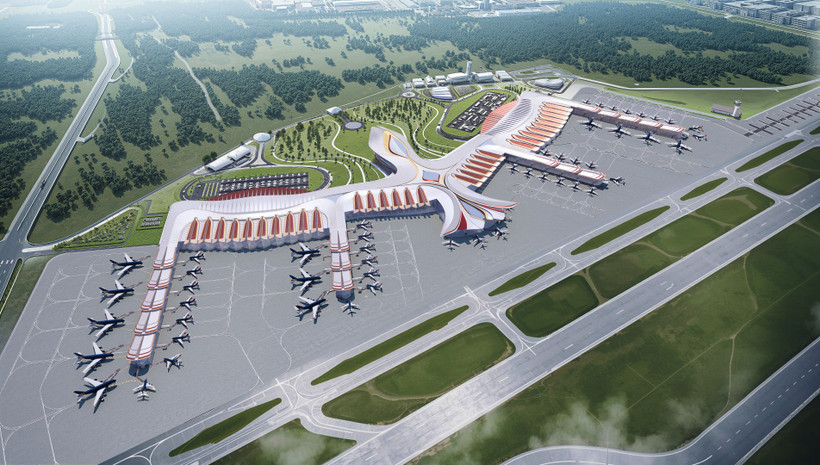
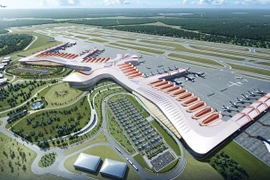
A perspective of Phu Quoc International Airport (Photo: Sun Group)

Hanoi (VNA) - Sun Group and Changi Airports International (CAI) of Singapore on March 21 officially signed a strategic partnership agreement, under which CAI will cooperate to manage Phu Quoc International Airport, delivering operations to international 5-star standards and introducing Vietnam’s first “airport destination” model.

CAI, a member of Changi Airport Group (Singapore), the operator behind the world-renowned Changi Airport, partners with Sun Group throughout the entire lifecycle of Phu Quoc International Airport, from design advisory and embedding the airport’s operational “DNA” through a comprehensive Concept of Operations (CONOPS), to operational readiness and system implementation, and ultimately to full operational management and performance optimization after opening.
canh-quan-nha-ga-t2-cang-hkqt-phu-quoc.png
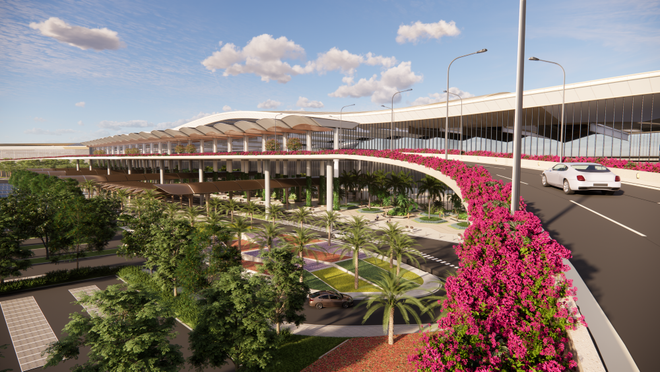
Landscape of Terminal 2, Phu Quoc International Airport (Photo: Sun Group)

CAI will also develop international flight networks, working with airlines to expand connectivity, while building a world-class non-aeronautical ecosystem featuring leading global retail, F&B and duty-free brands.

Pioneering “airport destination” model in Vietnam

With this partnership, Phu Quoc International Airport will become one of the first airports in Vietnam to be operated by an international partner under “Changi standards” – a benchmark associated with the pioneering “airport destination” model. This model redefines airports beyond transport infrastructure, transforming them into destinations in their own right, offering a diverse mix of attractions, entertainment, cultural experiences, retail, dining and iconic architecture, and even large-scale events.

This approach has been successfully realised at Singapore Changi Airport, consistently ranked among the world’s top 3 airports, with more than 670 international awards and approximately 70 million passengers served in 2025 alone. The “Changi standard” has also been exported globally by CAI, with experience spanning over 20 countries and more than 60 airports, including major international hubs such as Tom Jobim (Brazil), Chongqing (China), Fukuoka (Japan) and Clark (Philippines).

ngoai-that-nha-ga-t2-cang-hkqt-phu-quoc-1.jpg
Exterior of Terminal 2 (T2) at Phu Quoc International Airport (Photo: Sun Group)

Leveraging this global expertise, the partnership is expected to elevate Phu Quoc International Airport to world-class standards, positioning it as Vietnam’s third major international gateway and delivering a distinctive, premium passenger experience from the very first point of arrival on the island.

Establishing an integrated aviation ecosystem

The partnership with CAI represents a critical step in enhancing Phu Quoc’s international-standard gateway infrastructure, in preparation for APEC 2027 and the island’s long-term growth trajectory.
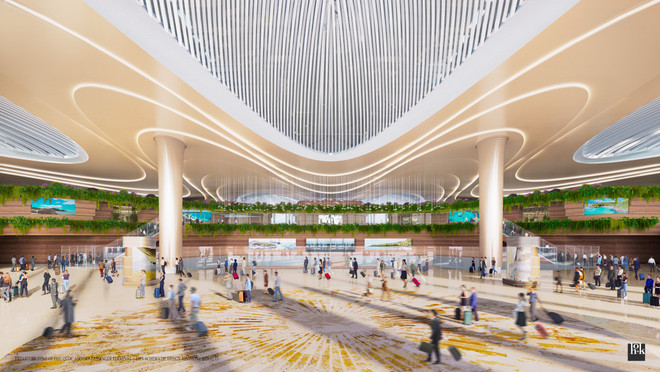
sanh-di-nha-ga-t2-cang-hkqt-phu-quoc.jpg
Terminal 2 at Phu Quoc International Airport (Photo: Sun Group)

In preparation for a major national-level external event, Sun Group is accelerating the expansion of Phu Quoc International Airport (spanning over 1,050 hectares, ICAO 4E standard). The project includes a second runway, the new international Terminal 2, a VIP terminal, as well as the expansion of aircraft aprons and supporting infrastructure. Upon completion, the airport’s capacity is expected to reach 24 million passengers per year, with the potential to expand to 50 million passengers in the long term, laying a solid foundation for sustained growth of both the tourism industry and the regional economy.
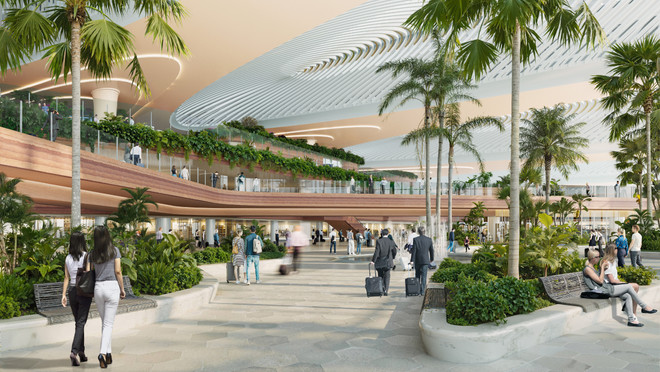
sanh-di-nha-ga-t2-cang-hkqt-phu-quoc-1.jpg
Terminal 2 at Phu Quoc International Airport (Photo: Sun Group)

Terminal 2, the centerpiece of this expansion, features a design inspired by the mythical Phoenix and is developed by leading international consultants including CPG Consultants (Singapore) and Artelia Airport (France). The terminal will integrate advanced airport technologies such as Total Airport Management (TAM), biometric-enabled seamless passenger journeys, advanced baggage handling systems (ICS), and other automation solutions, aiming to become one of the world’s leading smart airport terminals.
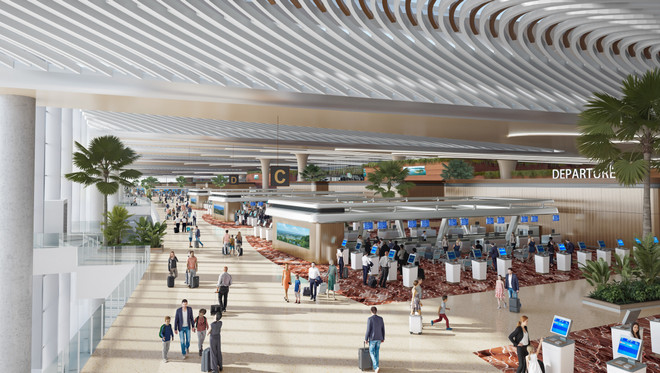
sanh-di-nha-ga-t2-cang-hkqt-phu-quoc-2.jpg
Terminal 2 at Phu Quoc International Airport (Photo: Sun Group)

Once operational, and supported by Sun Group’s broader aviation–tourism ecosystem in Phu Quoc, including Sun PhuQuoc Airways, luxury resorts, entertainment complexes and signature shows, the airport will evolve beyond a transit hub into the starting point of a unique, end-to-end travel experience. This is expected to extend visitor stays, increase tourism spending, and position Phu Quoc as a new aviation and tourism hub in the Asia-Pacific region.

Eugene Gan, Chief Executive Officer of CAI, said: “We are impressed by Sun Group’s vision for developing Phu Quoc as the next upcoming travel destination. Its integrated tourism and entertainment eco-system provides a strong foundation for the long-term development of Phu Quoc International Airport as a key gateway for the island. We look forward to contributing our expertise to enable Sun Group to create a world-class airport experience.”
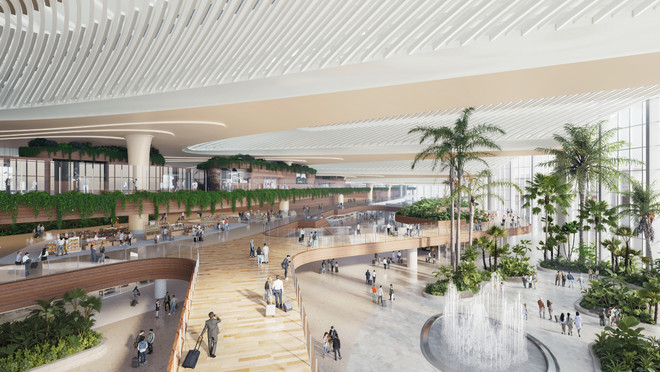
sanh-di-nha-ga-t2-cang-hkqt-phu-quoc-3.jpg
Terminal 2 at Phu Quoc International Airport (Photo: Sun Group)

This partnership also reflects Sun Group’s long-term vision of building an integrated aviation–tourism ecosystem. The model is expected to serve as a foundation for future airport developments, including projects in Phan Thiet and master planning for airports in Con Dao and Rach Gia, with a synchronized approach to infrastructure, operations and passenger experience, contributing to setting new standards for Vietnam’s aviation and tourism industry on the global map./.
VNA

See more

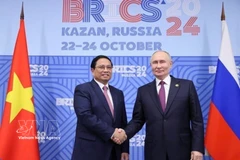
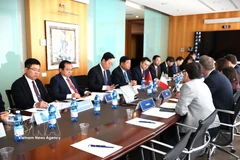
Prime Minister Pham Minh Chinh (L) and Russian President Vladimir Putin, Chair of BRICS in 2024, meets on October 24, 2024, on the sidelines of the expanded BRICS Leaders’ Summit in Kazan. (Photo: VNA)

Vietnam, Russia expand room for, elevate trade cooperation

According to the Department of Foreign Market Development under the Ministry of Industry and Trade (MoIT), Russia remains one of Vietnam’s key economic partners, particularly in industry and energy. Despite global economic and geopolitical uncertainties, bilateral trade has maintained a positive growth trend.

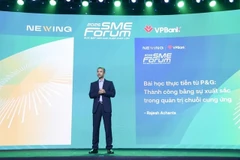
Rajesh Achanta, former vice president of Asia-Pacific supply chain operations at P&G, speaks at the SME Forum 2026 held in Ho Chi Minh City on March 20. (Photo courtesy of the organiser)

Execution gap holds back Vietnam’s SMEs

Vietnamese small and medium-sized enterprises (SMEs) may not lack strategy or ambition, but many struggle to turn plans into results, business leaders and experts said at SME Forum 2026 in Ho Chi Minh City on March 20.

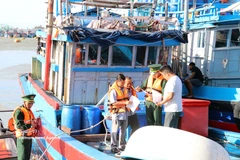
Training sessions and dialogues have improved fishermen’s understanding of regulations and the risks associated with IUU fishing. (Photo: VNA)

Quang Tri strengthens fleet oversight to curb IUU fishing

Quang Tri province currently has about 4,600 fishing vessels measuring 6 metres or longer. All have met requirements on registration, inspection and licensing, and have installed vessel monitoring systems (VMS), a key tool to enhance oversight of offshore activities.

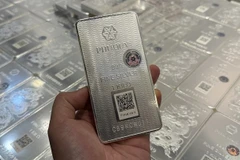
In Vietnam, silver bullion prices even touched 111 million VND (4,200 USD) per kilogramme, reflecting growing interest among individuals and investors. (Photo: vietnamnet.vn)

Vietnam considers listing silver bullion on commodity exchange

Under the proposal, the rollout would take place in two phases. The first would involve a pilot listing in the domestic market with physical transactions. In the second phase, after operations stabilise, the exchange could be linked with regional and international commodity exchanges.

Head of the Vietnam Trade Office in Australia Tran Thi Thanh My (Photo: VNA)

Vietnam rises as key market for Australian capital: official

Australian firms and investors are showing particularly strong interest in Vietnam, drawn by its large market, consistent high growth, youthful demographics, and rapidly expanding middle class, said a representative of the Vietnam Trade Office in Australia.

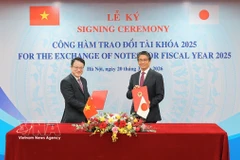
Deputy Minister of Finance Tran Quoc Phuong (left) and Japanese Ambassador to Vietnam Ito Naoki sign the exchange of notes on behalf of the governments of the two countries. (Photo: VNA)

Vietnam, Japan sign exchange of notes for ODA loans to support green transition

The funding, totaling approximately 90 billion JPY (around 609 million USD), will be allocated to three key projects, namely budget support for green growth and climate adaptation, disaster-resilient rural development, and climate-adaptive infrastructure to support production in northern mountainous regions, particularly for ethnic minority communities.

The third “Vietnamese Goods Vitality” programme themed “Vietnamese youth proud of Vietnamese goods”. (Photo: VNA)

Vitality of Vietnamese Goods programme opens

The event, organised by the Agency for Domestic Market Surveillance and Development in coordination with the Hoan Kiem ward People’s Committee, TikTok Shop and the National Payment Corporation of Vietnam, aims to support enterprises in promoting and selling products while expanding digital distribution channels. It also forms part of activities marking the 95th anniversary of the Ho Chi Minh Communist Youth Union (March 26, 1931–2026).

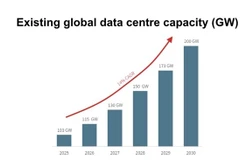
Global data centre capacity. (Photo Courtesy of JLL)

JLL: Vietnam data centres poised for growth

Hanoi and Ho Chi Minh City have a combined operational capacity of around 60 MW. While this is currently lower than regional hubs such as Jakarta, Kuala Lumpur, Bangkok, and Manila (74 MW), it demonstrates strong potential for future scaling.

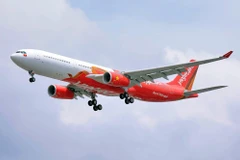
Vietjet operates a modern, fuel-efficient fleet and continues to expand its international network, offering year-round promotions across destinations. (Photo: Vietjet)

Vietjet recognised among world’s best low-cost airlines with two international awards in 2026

The awards focus on in-flight product and passenger experience, using measurable onboard criteria. AirlineRatings experts highlighted Vietjet’s highly competitive fares, innovative approach, and products tailored to customer needs. The airline has maintained its title as the World’s Best Ultra Low-Cost Carrier since 2018 and has consistently ranked among the world’s leading low-cost airlines.