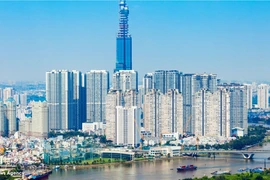
Ho Chi Minh City (VNA) - Ho Chi Minh City’s growing and rapidly ageing population is placing increasing pressure on improving quality of life and healthcare services for older residents.
According to the National Statistics Office, the southern city officially entered the “ageing population” phase in 2017, when people aged 60 and above accounted for 10.28% of the population (889,178 people). Although ageing began about six years later than the national average, the pace has accelerated quickly. By 2025, the elderly population had risen to 11.4%, or more than 1.57 million people - the largest in Vietnam, increasing by nearly 684,000 over eight years, or about 85,000 annually.
The rapid rise has exceeded earlier forecasts, creating urgent demand for expanded healthcare, social services and infrastructure tailored to senior citizens.
Rising health, social challenges
According to Dr Nguyen Van Vinh Chau, Deputy Director of the municipal Department of Health, population ageing presents major healthcare challenges as disease patterns shift from infectious illnesses to chronic non-communicable diseases such as diabetes and hypertension. Elderly patients typically live with multiple conditions, averaging more than two lifelong illnesses, affecting mental wellbeing, daily activities and social participation.
Many elderly people face financial hardship, with unstable or no income and dependence on family support. The city currently operates 16 social protection centres, 12 of which house elderly residents, including around 6,000 homeless or mentally ill individuals.
Health authorities have begun reviewing resources and developing strategies to respond to demographic ageing pressures.
Access to counselling and healthcare services remains limited, while the healthcare system has yet to fully keep pace with rapid ageing.
Average life expectancy reached 76.7 years in 2025. The city has established 102 elderly mutual-support clubs and volunteer care teams. All hospitals, except paediatric facilities, provide treatment beds for elderly patients; 12 hospitals operate geriatric departments, six have specialised geriatric units, and others integrate geriatric care within internal medicine departments. However, Ho Chi Minh City still lacks a dedicated geriatric hospital.
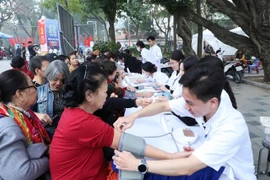
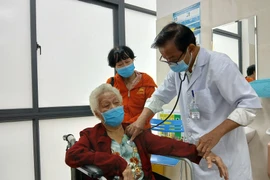
Each year, elderly patients account for about 5–6 million outpatient visits and 320,000–380,000 inpatient cases, with 70–80% treated at public hospitals. Community health stations now maintain health records, provide regular check-ups, manage chronic diseases and supply essential medicines covered by health insurance.
By 2030, the health sector aims to raise life expectancy to 77 years, ensure all elderly citizens receive periodic health screenings and chronic disease management, pilot day-care centres, develop suitable nursing home models and establish specialised geriatric hospitals while applying digital technologies in healthcare management.
Removing bottlenecks in elderly care development
The city is drafting a long-term plan to develop elderly care facilities through 2030 and beyond, based on a four-tier care ecosystem prioritising home- and community-based care, followed by support for independent living, specialised nursing and dementia care, and hospital-based treatment combined with workforce training.
Nguyen Tang Minh, Vice Director of the municipal Department of Health said that the city aims to establish more than 30 new elderly care facilities by 2030, including 15 residential and 15 day-care centres, alongside 168 community healthcare satellite networks across local wards. Plans also include training 2,500 specialised caregivers and nursing staff.
The official stresses the need to expand public–private partnerships, investment incentives, tax and land policies, preferential loans and long-term care insurance mechanisms. Proposals also include integrating elderly care services into residential apartment complexes.
Experts note that socialisation of elderly care is essential, as the state alone cannot meet rising demand. However, unclear planning regulations, limited land access, financial constraints and a shortage of trained personnel remain major barriers. Current training targets remain insufficient, and the lack of unified professional standards continues to hinder sector development.
Policy experts also highlight the need for clearer incentives for private investment in nursing homes, as existing health development policies have yet to fully address this area./.
See more
Smart border gates to be developed at Lao Cai’s custom clearance points
The project seeks to build and apply a model based on advanced technologies, including artificial intelligence (AI), the Internet of Things (IoT), and fully automated smart transport systems, while modernising multimodal logistics infrastructure in a synchronised manner.
Resolution 79: Social housing needs state-owned “locomotive”
The Politburo's Resolution No. 79-NQ/TW on the development of the state economic sector affirms its leading role as a key material force for guiding, regulating, and stabilising the economy. In social housing, which is closely tied to social welfare and labour market stability, this role must be reflected in concrete projects and measurable outcomes.
International Francophonie Day celebrated in Hanoi
Under the theme “Generation Peace: The Contribution of Youth to a More Peaceful World”, this year’s celebration delivered a strong message about the youth’s pioneering role in fostering social cohesion and peacebuilding.
Top 10 Vietnamese Outstanding Young Faces of 2025 announced
The Vietnamese Outstanding Young Faces award, presented by the Ho Chi Minh Communist Youth Union, honours individuals under 35 with exceptional achievements and strong social impact, contributing to the promotion of learning, research, innovation and workforce development among the country’s youth.
Gov't leader directs expanding beneficiaries of social housing policies
PM Chinh instructed relevant agencies to continue revising the decree toward expanding beneficiaries and adjusting income ceilings. Proposed thresholds include a maximum average monthly income of 25 million VND (950 USD) for single individuals, 35 million VND (1,330 USD) for single parents raising minor children, and a combined monthly income of up to 50 million VND (1,900 USD) for married applicants.
Over 200,000 visitors expected at fourth Vietnam bread festival
This year’s festival is set to feature around 150 booths, with nearly 100 already registered. Visitors will have opportunities to explore diverse culinary experiences, enjoy promotional programmes at sponsor booths, and participate in various cultural and trade activities.
Vietnam advances people-centred policies to turn happiness into measurable outcomes
Vietnam climbed to the 46th place in the World Happiness Report 2025, its highest position since the ranking was introduced in 2012.
Investing in people and culture key to happiness in Vietnam: UNESCO representative
Vietnam has been widely recognised for its remarkable progress in improving the well-being and happiness of its people, UNESCO Representative to Vietnam Jonathan Baker said in an interview to the Vietnam News Agency on the occasion.
📝OP-ED: Responsibility, trust demonstrated in general election
The success of the election of deputies to the 16th National Assembly and People’s Councils at all levels for the 2026–2031 term goes beyond the scope of a routine political event. It is an occasion for people nationwide to exercise their right to mastery and place their trust in the representatives chosen for the country’s new stage of development.
23% of Vietnamese users faced web-borne threats in 2025: Kaspersky
Though Vietnam’s rate is comparatively lower than some regional peers, nearly one in four users was still affected, underscoring the continued need for strong web security practices.
Belgian fund proposes investment, support projects in Hung Yen
Belgium and the Aquitara ecosystem called on the province to facilitate the implementation of their programmes and projects, including allocating cleared land with full legal status within planned eco-industrial parks or economic development zones.
Ho Chi Minh City pushes forward e-court development under Resolution 57
Citizens and litigants can now access case information and monitor handling progress through online platforms, reducing the need for in-person visits to courts, saving time and costs, and enhancing public supervision of judicial activities.
Early overseas study pathways opened for Vietnamese secondary students
The initiative aims to create an educational bridge that will enable students to access Canada’s public school system at an earlier stage and better adapt to global learning environments.
Vietnam has potential for integrated urban development
Industry insiders said the country’s urbanisation processes are being reshaped, with focus shifting from simple expansion to integrated urban development linked by modern infrastructure and higher value creation.
Vietnamese youth forum amplifies young voices for action in new era
Huy emphasised that Vietnam’s new development phase requires rapid yet sustainable growth, mastery of science and technology, and enhanced innovation and digital transformation. In this context, young people are expected to play a pioneering role, and the youth union must strengthen its guidance and support mechanisms.
More boarding schools to support border students in An Giang, Nghe An
The projects are expected to improve educational quality, raise intellectual standards, develop local human resources and contribute to national defence and security safeguarding in border regions.
Vietnam, India strengthen cooperation on religion, ethnic minority affairs
Vietnam’s view is that unity among ethnic groups is a strategic issue within the broader framework of national solidarity. Stability is an important foundation for sustainable and faster development.
Party chief, PM attend groundbreaking ceremony for inter-level boarding schools
The Politburo's decision to fund 248 inter-level boarding schools across 248 mainland border communes is both strategic and humane, reflecting the Party and State’s special attention to those living in border, remote, and disadvantaged areas, said Party leader To Lam.
Surplus state assets turned into resource for development after streamlining
According to the Ministry of Finance (MoF), 34 localities nationwide have completed the arrangement and handling of state-owned housing and land after restructuring under their management.
Work starts on more inter-level boarding schools in border communes
The construction carries profound political and social significance, reflecting the State’s attentiveness to the educational needs of students in those areas, an effort to secure equitable access to education, narrow regional disparities, and bolster national defence – security.