Investing in people and culture key to happiness in Vietnam: UNESCO representative

Vietnam has been widely recognised for its remarkable progress in improving the well-being and happiness of its people, UNESCO Representative to Vietnam Jonathan Baker said in an interview to the Vietnam News Agency on the occasion.

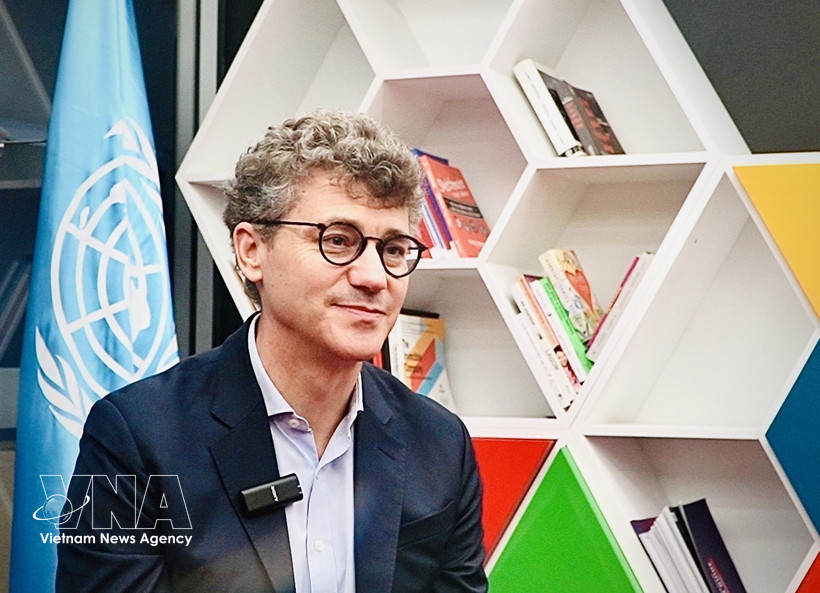
UNESCO Representative to Vietnam Jonathan Baker. (Photo: VNA)

Hanoi (VNA) – Investing in people and culture is key to the happiness of the Vietnamese people, UNESCO Representative to Vietnam Jonathan Baker said as the country joins the global celebration of the International Day of Happiness (March 20).

Vietnam has been widely recognised for its remarkable progress in improving the well-being and happiness of its people, Baker said in an interview to the Vietnam News Agency on the occasion.

This reflects an approach to development that goes beyond economic growth alone, placing strong emphasis on sustainable and holistic human development, he said.

Vietnam’s leaders do not view the country merely as an abstract entity, but through the lives and well-being of its people.

“In the two years that I have been here, I have consistently heard leaders underscore the importance of supporting the Vietnamese people and investing in their future,” Baker said.

At the core of Vietnam’s success in improving happiness levels is this strong and sustained investment in people, he emphasised, adding that it includes increased financial investment in the education system, as well as support for teachers and learners.

At the same time, Vietnam stands out globally for recognising culture as a fundamental component of development. Investment in culture and national identity has made a meaningful contribution to people’s sense of well-being and happiness.

“Vienam is a success story, and it is one that I have witnessed firsthand during my time working here,” he said.

He added that one of the most encouraging signals that can be observed is Vietnam’s sustained investment in culture, education, science, technology, and innovation. This is clearly reflected across key policy directions, from Resolution No. 57-NQ/TW, which places science, technology and innovation at the center of growth, to Resolution No. 80-NQ/TW, which reaffirms culture as both a foundation and a driver of sustainable development.

At the same time, Resolution No. 71 on education and Resolution No. 72 on public health extend this vision by strengthening human capabilities through more inclusive, quality education and improved access to healthcare and well-being. For example, Vietnam is launching the construction of inter-level boarding schools in border communes, helping to expand access to education for children in disadvantaged and remote areas.

Taken together, these resolutions point to a coherent, integrated approach that combines economic transformation with investments in human development, social cohesion, and quality of life.

“The Government’s continued and consistent investment across these sectors is a highly positive sign. It demonstrates a clear understanding of the core priorities needed to sustain progress and enable Vietnam to advance further in the years ahead,” Baker said.

Looking ahead, the UNESCO representative expressed confidence in Vietnam’s development trajectory, particularly its ambition to become a high-income country by 2045.

To sustain this momentum, he emphasised the importance of continuing to prioritise key sectors such as education, science, technology, innovation, and culture. “Vietnam’s recognition of the importance of these areas is critical to maintaining its development trajectory,” he said.

He also underscored the need to ensure that the benefits of growth are shared equitably across society. UNESCO, he added, will continue to work closely with Vietnam and its cities to promote sustainable and inclusive development.

“We are committed to supporting efforts to ensure that the benefits of science, technology, and innovation are equitably shared, so that all people, including those in remote and disadvantaged areas, can access and benefit from the remarkable progress that Vietnam is experiencing,” he said./.
VNA

See more

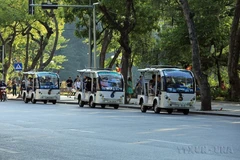
Electric vehicles are used to serve tourists in Hanoi. (Photo: VNA)

Vietnam accelerates roadmap for green energy transition

According to a report from the Traffic Police Department under the Ministry of Public Security, thousands of modern specialised vehicles and technical devices have been deployed to support traffic law enforcement in Vietnam.

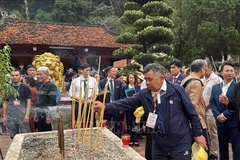
Delegates offer incense at Thien Tru pagoda, one of the most prominent architectural structures within the Huong Son scenic area in Hanoi. (Photo: VNA)

Friendship spring excursion promotes Vietnam’s historical, cultural values

Participants included 15 ambassadors and chargés d’affaires together with their spouses, more than 200 diplomatic staff from embassies, representatives of international organisations and foreign non-governmental organisations in Vietnam, as well as leaders from ministries, agencies and the municipal administration.

Ho Chi Minh City officially enters the “ageing population” phase in 2017, when people aged 60 and above accounted for 10.28% of the population (889,178 people). (Photo: VNA)

Ho Chi Minh City provides care for more than 1.5 million elderly residents

Ho Chi Minh City is drafting a long-term plan to develop elderly care facilities through 2030 and beyond, based on a four-tier care ecosystem prioritising home- and community-based care, followed by support for independent living, specialised nursing and dementia care, and hospital-based treatment combined with workforce training.

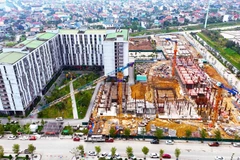
A social housing complex in My Hao ward, Hung Yen province, has been put into operation. (Photo: VNA)

Resolution 79: Social housing needs state-owned “locomotive”

The Politburo's Resolution No. 79-NQ/TW on the development of the state economic sector affirms its leading role as a key material force for guiding, regulating, and stabilising the economy. In social housing, which is closely tied to social welfare and labour market stability, this role must be reflected in concrete projects and measurable outcomes.

A performance at the celebration of the International Francophonie Day in Hanoi on March 20 (Photo: VNA)

International Francophonie Day celebrated in Hanoi

Under the theme “Generation Peace: The Contribution of Youth to a More Peaceful World”, this year’s celebration delivered a strong message about the youth’s pioneering role in fostering social cohesion and peacebuilding.

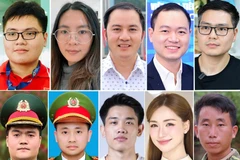
The Top 10 Vietnamese Outstanding Young Faces of 2025 (Photo: vietnamnet.vn)

Top 10 Vietnamese Outstanding Young Faces of 2025 announced

The Vietnamese Outstanding Young Faces award, presented by the Ho Chi Minh Communist Youth Union, honours individuals under 35 with exceptional achievements and strong social impact, contributing to the promotion of learning, research, innovation and workforce development among the country’s youth.

A social housing project in Thanh Sen ward, Ha Tinh province (Photo: VNA)

Gov't leader directs expanding beneficiaries of social housing policies

PM Chinh instructed relevant agencies to continue revising the decree toward expanding beneficiaries and adjusting income ceilings. Proposed thresholds include a maximum average monthly income of 25 million VND (950 USD) for single individuals, 35 million VND (1,330 USD) for single parents raising minor children, and a combined monthly income of up to 50 million VND (1,900 USD) for married applicants.

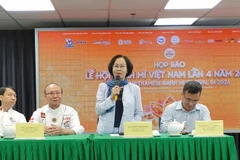
The organising committee answers reporters’ questions at the press briefing. (Photo: nhandan.vn)

Over 200,000 visitors expected at fourth Vietnam bread festival

This year’s festival is set to feature around 150 booths, with nearly 100 already registered. Visitors will have opportunities to explore diverse culinary experiences, enjoy promotional programmes at sponsor booths, and participate in various cultural and trade activities.

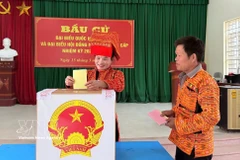
Dao ethnic minority people cast their votes. (Photo: VNA)

📝OP-ED: Responsibility, trust demonstrated in general election

The success of the election of deputies to the 16th National Assembly and People’s Councils at all levels for the 2026–2031 term goes beyond the scope of a routine political event. It is an occasion for people nationwide to exercise their right to mastery and place their trust in the representatives chosen for the country’s new stage of development.

The working session between the Belgian delegation and the Party Committee of Hung Yen province on March 19 (Photo: VNA)

Belgian fund proposes investment, support projects in Hung Yen

Belgium and the Aquitara ecosystem called on the province to facilitate the implementation of their programmes and projects, including allocating cleared land with full legal status within planned eco-industrial parks or economic development zones.

An urban area in Phan Rang ward, Khanh Hoa province (Photo: VNA)

Vietnam has potential for integrated urban development

Industry insiders said the country’s urbanisation processes are being reshaped, with focus shifting from simple expansion to integrated urban development linked by modern infrastructure and higher value creation.

First Secretary of the HCYU Central Committee Bui Quang Huy speaks at the forum (Photo: VNA)

Vietnamese youth forum amplifies young voices for action in new era

Huy emphasised that Vietnam’s new development phase requires rapid yet sustainable growth, mastery of science and technology, and enhanced innovation and digital transformation. In this context, young people are expected to play a pioneering role, and the youth union must strengthen its guidance and support mechanisms.