23% of Vietnamese users faced web-borne threats in 2025: Kaspersky

Though Vietnam’s rate is comparatively lower than some regional peers, nearly one in four users was still affected, underscoring the continued need for strong web security practices.

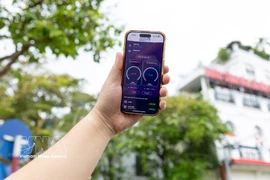
More than 23% of internet users in Vietnam encountered web-borne threats in 2025. (Photo courtesy of Kaspersky)


Ho Chi Minh City (VNS/VNA) - More than 23% of internet users in Vietnam encountered web-borne threats in 2025, which ranked the country 78th globally in terms of exposure, up two places from 80th the previous year, according to global cybersecurity and digital privacy company Kaspersky.

Web threats are cyberattacks that exploit vulnerabilities in browsers, plugins and online platforms to spread malware and other malicious content.

The most common techniques include drive-by downloads and social engineering schemes.

Drive-by downloads infect users automatically when they visit compromised websites without requiring any action on their part.

Social engineering relies on deception, tricking users into downloading malicious files disguised as legitimate applications, often through phishing emails, fake websites or misleading advertisements.

Across Southeast Asia, exposure to web-borne threats varies across markets. The Philippines recorded the highest rate, 32.9% of users, to rank sixth globally, followed by Malaysia at 26.7% (42nd).

Indonesia, Singapore and Thailand trailed Vietnam with exposure levels of 22.4%, 21.2 % and 20.3%.

Though Vietnam’s rate is comparatively lower than some regional peers, nearly one in four users was still affected, underscoring the continued need for strong web security practices.
Kaspersky also detected millions of web-borne threats across Southeast Asia in 2025.

Vietnam recorded the highest overall number in the six markets analysed, followed by Malaysia and Indonesia.

Thailand and the Philippines each reported more than 10 million incidents, while Singapore saw the lowest number in the region.

Differences in total detections reflect varying levels of digital activity and threat exposure across markets.

According to the latest report from the Kaspersky Security Network, 23.84 million web-borne threats targeting users in Vietnam were blocked last year, equivalent to more than 65,000 internet-based attacks per day on average.

But the threats have been on a consistent downward trend in recent years, including in 2025, suggesting gradual improvements in the country’s cybersecurity resilience, it said.

Simon Tung, Kaspersky’s general manager for Southeast Asia, said: “Vietnam has made measurable progress in strengthening its cybersecurity ecosystem, supported by clear national strategies and close collaboration between the public and private sectors.

“The downward trend in web-borne threat exposure observed in recent years suggests that these collective efforts are moving in the right direction.”

He noted that while overall exposure rates are improving, the threat landscape itself is evolving.

“Attackers are becoming more targeted and sophisticated, particularly through browser-borne exploits and highly convincing phishing campaigns. Cybercriminals are increasingly leveraging publicly available data and AI-driven tools to craft scams that blend seamlessly into legitimate digital experiences.

“This evolution means cybersecurity can no longer rely solely on reactive defences.

“Organisations and individuals must adopt behaviour-based detection, exploit prevention and real-time threat intelligence to identify suspicious activity even when no known malware signature exists. Strengthening national frameworks is important, but sustainable cyber resilience ultimately depends on continuous technological adaptation at the operational level.”

For individuals, Kaspersky recommended downloading applications only from trusted sources, keeping software regularly updated, and avoiding sharing personal information with strangers.

Users should also avoid clicking links from unknown sources or suspicious online advertisements, create strong and unique passwords combining upper- and lower-case letters, numbers and symbols, enable two-factor authentication, and use a reliable cybersecurity solution appropriate for their devices, it warned.

For businesses, it advised using strong passwords for corporate services and implementing multi-factor authentication, particularly for remote access.

Companies should ensure that all software is kept up to date to prevent attackers from exploiting vulnerabilities, it said.

Organisations are also encouraged to deploy solutions that monitor and mitigate security incidents in real time, access up-to-date threat intelligence to better understand the tactics, techniques and procedures used by threat actors, and train employees on cybersecurity best practices to reduce the risk of social engineering attacks, it added./.
VNA

See more

Delegates offer incense at Thien Tru pagoda, one of the most prominent architectural structures within the Huong Son scenic area in Hanoi. (Photo: VNA)

Friendship spring excursion promotes Vietnam’s historical, cultural values

Participants included 15 ambassadors and chargés d’affaires together with their spouses, more than 200 diplomatic staff from embassies, representatives of international organisations and foreign non-governmental organisations in Vietnam, as well as leaders from ministries, agencies and the municipal administration.

Ho Chi Minh City officially enters the “ageing population” phase in 2017, when people aged 60 and above accounted for 10.28% of the population (889,178 people). (Photo: VNA)

Ho Chi Minh City provides care for more than 1.5 million elderly residents

Ho Chi Minh City is drafting a long-term plan to develop elderly care facilities through 2030 and beyond, based on a four-tier care ecosystem prioritising home- and community-based care, followed by support for independent living, specialised nursing and dementia care, and hospital-based treatment combined with workforce training.

A social housing complex in My Hao ward, Hung Yen province, has been put into operation. (Photo: VNA)

Resolution 79: Social housing needs state-owned “locomotive”

The Politburo's Resolution No. 79-NQ/TW on the development of the state economic sector affirms its leading role as a key material force for guiding, regulating, and stabilising the economy. In social housing, which is closely tied to social welfare and labour market stability, this role must be reflected in concrete projects and measurable outcomes.

A performance at the celebration of the International Francophonie Day in Hanoi on March 20 (Photo: VNA)

International Francophonie Day celebrated in Hanoi

Under the theme “Generation Peace: The Contribution of Youth to a More Peaceful World”, this year’s celebration delivered a strong message about the youth’s pioneering role in fostering social cohesion and peacebuilding.

The Top 10 Vietnamese Outstanding Young Faces of 2025 (Photo: vietnamnet.vn)

Top 10 Vietnamese Outstanding Young Faces of 2025 announced

The Vietnamese Outstanding Young Faces award, presented by the Ho Chi Minh Communist Youth Union, honours individuals under 35 with exceptional achievements and strong social impact, contributing to the promotion of learning, research, innovation and workforce development among the country’s youth.

A social housing project in Thanh Sen ward, Ha Tinh province (Photo: VNA)

Gov't leader directs expanding beneficiaries of social housing policies

PM Chinh instructed relevant agencies to continue revising the decree toward expanding beneficiaries and adjusting income ceilings. Proposed thresholds include a maximum average monthly income of 25 million VND (950 USD) for single individuals, 35 million VND (1,330 USD) for single parents raising minor children, and a combined monthly income of up to 50 million VND (1,900 USD) for married applicants.

The organising committee answers reporters’ questions at the press briefing. (Photo: nhandan.vn)

Over 200,000 visitors expected at fourth Vietnam bread festival

This year’s festival is set to feature around 150 booths, with nearly 100 already registered. Visitors will have opportunities to explore diverse culinary experiences, enjoy promotional programmes at sponsor booths, and participate in various cultural and trade activities.

Dao ethnic minority people cast their votes. (Photo: VNA)

📝OP-ED: Responsibility, trust demonstrated in general election

The success of the election of deputies to the 16th National Assembly and People’s Councils at all levels for the 2026–2031 term goes beyond the scope of a routine political event. It is an occasion for people nationwide to exercise their right to mastery and place their trust in the representatives chosen for the country’s new stage of development.

The working session between the Belgian delegation and the Party Committee of Hung Yen province on March 19 (Photo: VNA)

Belgian fund proposes investment, support projects in Hung Yen

Belgium and the Aquitara ecosystem called on the province to facilitate the implementation of their programmes and projects, including allocating cleared land with full legal status within planned eco-industrial parks or economic development zones.

An urban area in Phan Rang ward, Khanh Hoa province (Photo: VNA)

Vietnam has potential for integrated urban development

Industry insiders said the country’s urbanisation processes are being reshaped, with focus shifting from simple expansion to integrated urban development linked by modern infrastructure and higher value creation.

First Secretary of the HCYU Central Committee Bui Quang Huy speaks at the forum (Photo: VNA)

Vietnamese youth forum amplifies young voices for action in new era

Huy emphasised that Vietnam’s new development phase requires rapid yet sustainable growth, mastery of science and technology, and enhanced innovation and digital transformation. In this context, young people are expected to play a pioneering role, and the youth union must strengthen its guidance and support mechanisms.