Resolution 79: Social housing needs state-owned “locomotive”

The Politburo's Resolution No. 79-NQ/TW on the development of the state economic sector affirms its leading role as a key material force for guiding, regulating, and stabilising the economy. In social housing, which is closely tied to social welfare and labour market stability, this role must be reflected in concrete projects and measurable outcomes.

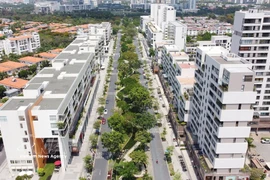
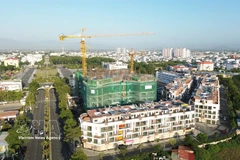
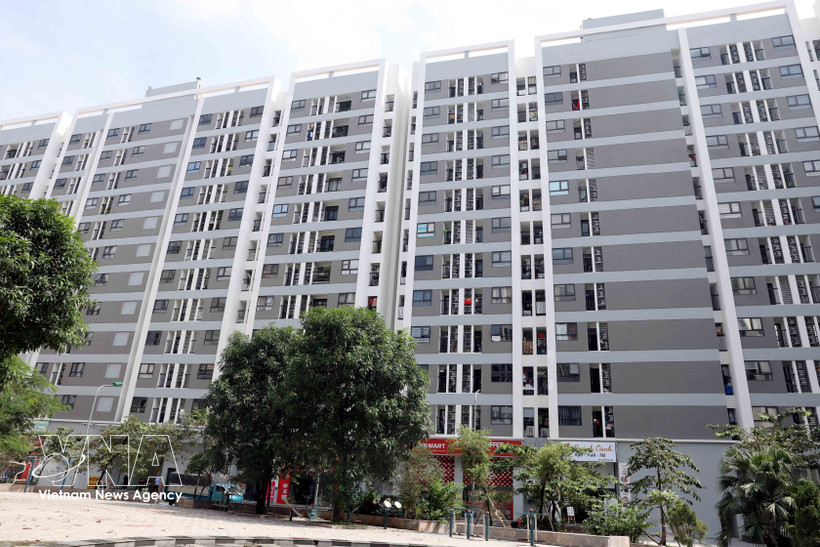
A social housing complex in My Hao ward, Hung Yen province, has been put into operation. (Photo: VNA)

Hanoi (VNA) - Vietnam’s goal of building at least one million social housing units by 2030 is entering a decisive phase, as demand continues to rise while supply remains limited. At this time, many experts argue that social housing needs a financially capable “locomotive” with sufficient land resources and a long-term vision to lead the market, namely the state economic sector.

Market gaps and the need for leadership

The Politburo's Resolution No. 79-NQ/TW on the development of the state economic sector affirms its leading role as a key material force for guiding, regulating, and stabilising the economy. In social housing, which is closely tied to social welfare and labour market stability, this role must be reflected in concrete projects and measurable outcomes.

Housing pressure on low-income groups, industrial workers, young civil servants, and armed force personnel is increasing, especially in urban centres and manufacturing hubs. Meanwhile, commercial housing prices remain high in comparation to average incomes, pushing the dream of homeownership further out of reach.

Social housing is designed to fill this gap, yet the segment faces structural constraints. Sale and rental prices are capped by regulations; eligibility screening is strict; and project preparation is often prolonged. At the same time, land, materials, and financing costs fluctuate, leaving profit margins significantly lower than in commercial housing. As a result, many private developers remain cautious or participate only on a limited scale, creating persistent market gaps.

According to economist Dr. Nguyen Dinh Cung, this is the moment to clarify the role of the state sector. Leadership does not mean subsidising or replacing the market, but guiding it, shaping it, and setting standards. Without a sufficiently strong force to initiate and sustain momentum, it is difficult to achieve long-term goals.

State-owned enterprises (SOEs) possess advantages in land access, infrastructure development experiences, and the ability to mobilise large-scale resources. More importantly, they can pursue long-term objectives and accept reasonable returns in exchange for broader socio-economic benefits.

From a financial perspective, Dr. Can Van Luc noted that social housing is not only a welfare issue but also has spillover effects on the labour market and consumption. When workers have stable housing, they are more committed to their jobs, thereby reducing social costs, boosting productivity, and strengthening the foundation for investment attraction.

Amid a restructuring real estate market, SOEs can act as an “anchor,” ensuring stable supplies and helping maintain reasonable price levels. Their participation also builds confidence among credit institutions and investors. However, experts stress that leadership must go beyond policy statements; it requires large-scale, well-executed, and transparent projects.

Conditions to become a “locomotive”

Experience shows that when SOEs treat social housing as a core mission, outcomes improve significantly. Integrated models - combining social housing within urban developments or linking worker housing with industrial zones - have begun to create cohesive ecosystems of living, working, and essential services.

Experts believe that with appropriate mechanisms and a clearly defined role, SOEs can become a driving force that encourages participation from other economic sectors. Associate Professor, Dr. Tran Dinh Thien emphasised that the leading role of the state sector must operate within market principles, with modern governance and transparency. Leadership should mean paving the way and setting standards, not crowding out the private sector.

Several key conditions are required. Land planning for social housing must be clearly defined and aligned with urban and industrial development plans; without accessible land at reasonable cost, targets are unattainable. Financial and credit mechanisms must also be stable and long-term, as social housing requires sustained preferential capital rather than short-term, fragmented packages.

It is equally important to clearly separate public service obligations from purely commercial activities. If SOEs are assigned social tasks beyond their financial capacity, transparent compensation mechanisms are needed to avoid weakening their competitiveness.

At the same time, improving operational efficiency in line with Resolution 79 places pressures on SOEs to enhance governance. To lead the market, they must demonstrate strong project management, cost control, and timely delivery. Only then can their “locomotive” role gain credibility./.

VNA
See more

Ho Chi Minh City officially enters the “ageing population” phase in 2017, when people aged 60 and above accounted for 10.28% of the population (889,178 people). (Photo: VNA)

Ho Chi Minh City provides care for more than 1.5 million elderly residents

Ho Chi Minh City is drafting a long-term plan to develop elderly care facilities through 2030 and beyond, based on a four-tier care ecosystem prioritising home- and community-based care, followed by support for independent living, specialised nursing and dementia care, and hospital-based treatment combined with workforce training.

A performance at the celebration of the International Francophonie Day in Hanoi on March 20 (Photo: VNA)

International Francophonie Day celebrated in Hanoi

Under the theme “Generation Peace: The Contribution of Youth to a More Peaceful World”, this year’s celebration delivered a strong message about the youth’s pioneering role in fostering social cohesion and peacebuilding.

The Top 10 Vietnamese Outstanding Young Faces of 2025 (Photo: vietnamnet.vn)

Top 10 Vietnamese Outstanding Young Faces of 2025 announced

The Vietnamese Outstanding Young Faces award, presented by the Ho Chi Minh Communist Youth Union, honours individuals under 35 with exceptional achievements and strong social impact, contributing to the promotion of learning, research, innovation and workforce development among the country’s youth.

A social housing project in Thanh Sen ward, Ha Tinh province (Photo: VNA)

Gov't leader directs expanding beneficiaries of social housing policies

PM Chinh instructed relevant agencies to continue revising the decree toward expanding beneficiaries and adjusting income ceilings. Proposed thresholds include a maximum average monthly income of 25 million VND (950 USD) for single individuals, 35 million VND (1,330 USD) for single parents raising minor children, and a combined monthly income of up to 50 million VND (1,900 USD) for married applicants.

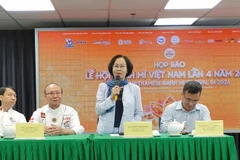
The organising committee answers reporters’ questions at the press briefing. (Photo: nhandan.vn)

Over 200,000 visitors expected at fourth Vietnam bread festival

This year’s festival is set to feature around 150 booths, with nearly 100 already registered. Visitors will have opportunities to explore diverse culinary experiences, enjoy promotional programmes at sponsor booths, and participate in various cultural and trade activities.

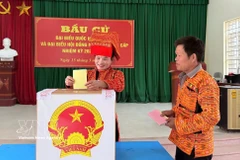
Dao ethnic minority people cast their votes. (Photo: VNA)

📝OP-ED: Responsibility, trust demonstrated in general election

The success of the election of deputies to the 16th National Assembly and People’s Councils at all levels for the 2026–2031 term goes beyond the scope of a routine political event. It is an occasion for people nationwide to exercise their right to mastery and place their trust in the representatives chosen for the country’s new stage of development.

The working session between the Belgian delegation and the Party Committee of Hung Yen province on March 19 (Photo: VNA)

Belgian fund proposes investment, support projects in Hung Yen

Belgium and the Aquitara ecosystem called on the province to facilitate the implementation of their programmes and projects, including allocating cleared land with full legal status within planned eco-industrial parks or economic development zones.

An urban area in Phan Rang ward, Khanh Hoa province (Photo: VNA)

Vietnam has potential for integrated urban development

Industry insiders said the country’s urbanisation processes are being reshaped, with focus shifting from simple expansion to integrated urban development linked by modern infrastructure and higher value creation.

First Secretary of the HCYU Central Committee Bui Quang Huy speaks at the forum (Photo: VNA)

Vietnamese youth forum amplifies young voices for action in new era

Huy emphasised that Vietnam’s new development phase requires rapid yet sustainable growth, mastery of science and technology, and enhanced innovation and digital transformation. In this context, young people are expected to play a pioneering role, and the youth union must strengthen its guidance and support mechanisms.

Party General Secretary To Lam (front, third from right), Prime Minister Pham Minh Chinh (front, second from right) and officials mark the start of work on inter-level boarding schools in land border communes on March 19 morning. (Photo: VNA)

Work starts on more inter-level boarding schools in border communes

The construction carries profound political and social significance, reflecting the State’s attentiveness to the educational needs of students in those areas, an effort to secure equitable access to education, narrow regional disparities, and bolster national defence – security.