Hanoi (VNA) – Vietnam’s natural history museums and biological research institutes have hosted an influx of students, families, and tourists these days, thanks to new exhibits, hi-tech gadgets, and hands-on activities proving the country's potential for distinctive educational and eco-tourism in 2026.
Open spaces for knowledge
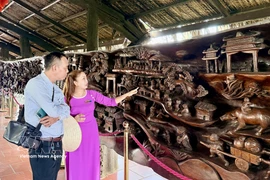
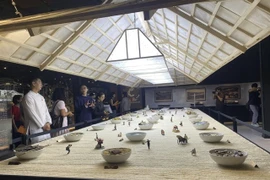
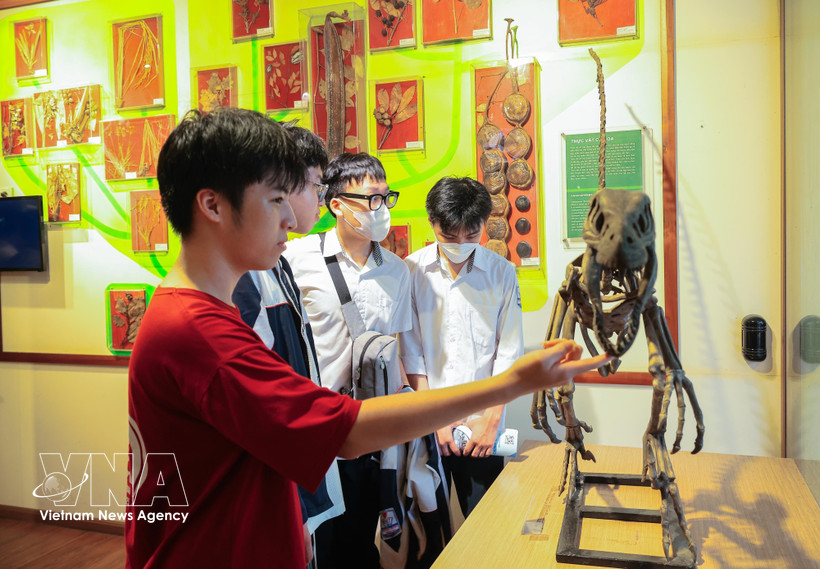
Hanoi's Vietnam National Museum of Nature in Nghia Do ward has become a go-to weekend and holiday hotspot. Packed with nearly 40,000 preserved and scientifically curated specimens, this place takes visitors on a wild ride through 3.6 billion years of life on Earth. The thematic setups mix with lighting, models, and easy-to-understand info panels that make hardcore science feel like a breeze for kids and adults alike.
Complementing traditional exhibits, the museum offers hands-on stuff like crafting insect specimens, casting fossil replicas, snapping together dinosaur robots, and painting wild animal masks. Schools from Hanoi and nearby book it for field trips that actually get kids excited. Big news hit on November 25, 2025, with the groundbreaking for a new facility in Hanoi's Kieu Phu commune, a huge leap forward.
In central Vietnam, Hue’s Central Coastal Nature Museum in Vy Da ward swung its doors back open in January 2026 after a full-on revamp. Packed with thousands of specimens, it showcases lush tropical rainforests, the vast Tam Giang–Cau Hai Lagoon, and vibrant coastal ocean life. Highlights include the ultra-rare saola (Pseudoryx nghetinhensis), Bengal tigers, leopards, Asiatic black bears, Huong River fish catches, and ancient palaeontological finds. There are also dedicated zones where students and researchers can dig into serious studies and get hands-on with interactive activities.
Under its 2021–2025 development plan with a vision to 2030, a 16-ha central complex is planned, encompassing indoor/outdoor exhibit zones, a butterfly garden, an insect area, and a genetic storage facility. It will link to adjacent heritage sites, such as the Chin Ham War Remnants Site, the Huyen Tran Cultural Centre and Vietnam Buddhist Academy in Hue.
Down south in Nha Trang, Khanh Hoa province, the Museum of Oceanography, run by the Institute of Oceanography, welcomes over 500,000 visitors at home and abroad each year. Since 2023, it has upgraded exhibition areas with thematic presentations, new specimens, and expanded digital outreach and engagement on online channels.
Another rising attraction is the Vietnam Geological Museum in Ho Chi Minh City's Sai Gon ward, which holds over 20,000 valuable geological and mineral specimens. The headliners include a 1.6-billion-year-old crystalline rock from Kon Tum and fossilised giant clams from Phan Vinh island in Truong Sa (Spratly).
Unlocking potential of educational tourism
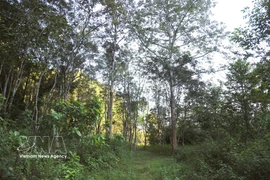
Vietnam ranks among the world’s 16 most biodiverse countries, according to the United Nations Development Programme. Its rich ecosystem, from forests and highlands to lagoons and marine zones, provides a robust base for eco-tourism development and environment education.
In fact, visitor numbers at many natural history museums have climbed sharply in recent years, fueled by facility upgrades and more experiential activities. Hooking up with schools, launching themed tours, and offering real lessons on protecting the environment and biodiversity have turned these visits into serious wins.
Moving forward, facilities need to keep training staff to dish out brainy science in fun, easy-to-grasp ways, use more digital technology, amplify outreach, and build partnerships with tour operators.
Ongoing projects, such as the Vietnam National Museum of Nature’s new site, the Central Coastal Nature Museum’s expansion, and exhibition upgrades at the Museum of Oceanography, show that Vietnam is serious about featuring its natural science scene into the modern age and making it a must-see for anyone hunting thrills and smarts./.