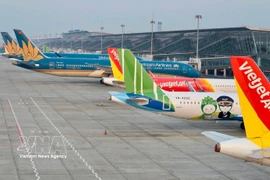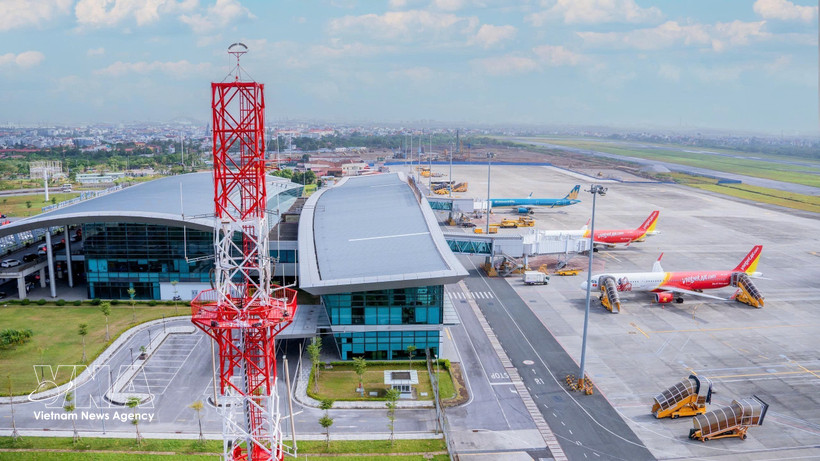
Hanoi (VNA) – Vietnam’s aviation sector is facing mounting cost pressures as it prepares for the long Reunification Day (April 30)–May Day (May 1) holiday and the summer travel peak, with surging fuel prices posing a critical challenge to fare management and operational sustainability.
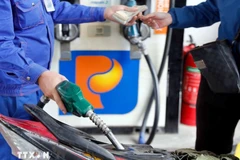
Fuel costs, which account for 35–40% of total operating expenses, have risen sharply in recent time, placing airlines under strain. According to the Ministry of Construction, operating costs have increased by 50–60% for Vietnam Airlines, around 30% for Sun Phu Quoc Airways, while VietJet Air has seen additional expenses of approximately 2 trillion VND (75.9 million USD) per month.
Meanwhile, MOPS Jet A-1 Singapore fuel prices now hover around 160 USD per barrel and are forecast to continue rising, potentially nearing 170 USD due to ongoing geopolitical tensions and constrained supply. The International Air Transport Association estimates that such increases could push airline operating costs up by 50–60%, and by over 70% if prices climb to 200 USD per barrel.
In addition to fuel volatility, conflicts in the Middle East have forced airlines to reroute flights to avoid restricted airspace, increasing flight times, fuel consumption, crew costs and maintenance expenses. Rising overflight charges and insurance premiums have further compounded operational costs.
Facing these pressures, airlines are implementing a range of adaptive measures. A representative of Vietnam Airlines said the carrier is drawing on fuel reserves while accelerating fuel-saving initiatives to sustain operations in the short term. However, if fuel prices approach 200 USD per barrel, airlines could face a scenario where “the more they fly, the greater the losses.”
To mitigate risks, Vietnamese carriers are restructuring flight schedules from April, prioritising core domestic and strategic international routes while suspending less efficient services. At the same time, they are preparing to introduce fuel surcharges on international routes.
Globally, more than 60% of airlines have already implemented or are planning fare adjustments or fuel surcharges since mid-March, according to a survey by the Civil Aviation Authority of Vietnam (CAAV). Some carriers, including Air France, Thai Airways and United Airlines, have incorporated fuel costs directly into ticket prices, with increases typically ranging from 5 to 20%. Others, such as Malaysia Airlines and All Nippon Airways, have applied separate fuel surcharges, varying widely depending on distance and service class.
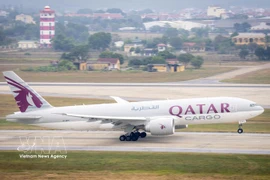
For air cargo, carriers like Lufthansa and Korean Air have also imposed fuel surcharges at 17,000 – 40,000 VND/kg, further affecting logistics costs.
Currently, Vietnamese airlines are formulating plans to introduce fuel surcharges on international routes, which may be implemented from early April.
According to agents and ticket offices, VietJet Air has announced adjustments to its fuel surcharge (YQ) for all direct international routes (excluding Japan and the Republic of Korea), as well as all connecting international itineraries, applicable to departing flights.
Regulators have emphasised the need for balanced solutions. Authorities are reviewing fare frameworks to ensure flexibility in response to fuel price fluctuations, while maintaining affordability for passengers and avoiding supply disruptions. CAAV has instructed airlines to optimise costs, safeguard cash flow, and maintain stable operations, particularly during peak travel periods./.
See more
Vietnam, Germany boost innovation, startup ecosystem connectivity
Deputy PM Nguyen Chi Dung highly valued CfE’s reputation and pioneering role in building Germany’s innovation-driven startup ecosystem, and called for stronger cooperation with NIC to support Vietnamese universities, research institutes and organisations in training and scientific research.
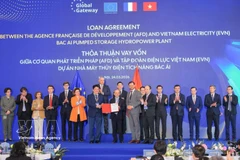
Vietnam's first pumped-storage hydropower project secures two int’l loan deals
Localted in the south-central province of Khanh Hoa, Bac Ai is Vietnam’s first pumped-storage hydropower plant. With four turbines and a total installed capacity of 1,200 MW, it is a key energy project playing a central role in the country’s energy transition.
ASEAN opens new export momentum for Vietnam
As competition in ASEAN is intensifying, Vietnamese enterprises are advised to strengthen distribution networks, enhance product innovation and closely monitor policy changes and trade-defence measures in importing markets to sustain and expand their market share.
Reference exchange rate down 5 VND on March 25
The State Bank of Vietnam set the daily reference exchange rate at 25,104 VND/USD on March 25, down 5 VND from the previous session.
Vietnam rice exports face shipping delays as Middle East tensions raise costs
Vietnam's rice exports in 2026 are likely to be affected by the conflict in the Middle East. Shipping insurance premiums have increased and delivery times have lengthened by 10-15 days, while domestic transport costs for rice shipments have risen by about 20,000-30,000 VND (0.8-1.2 USD) per tonne.
Vietnam to host first national conference on livestock, veterinary medicine
The event will bring together more than 750 delegates from government agencies, research institutes, universities, industry groups, businesses and international organisations. It will review research and technology applications from 2021–2025 and set priorities for 2026–2030, with a focus on modernisation, sustainability and digital transformation.
Private sector – Growth driver from Resolution 68
The participation of major enterprises such as Sao Do and Hateco in key projects demonstrates the capacity and strategic vision of Vietnam’s private sector while concretising Resolution No. 68-NQ/TW on private economic development, creating fresh momentum for sustainable growth in dynamic localities like Hai Phong.
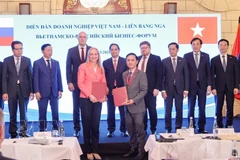
PM attends Vietnam – Russian Federation Business Forum in Moscow
PM Pham Minh Chinh stressed that the complex global situation is weighing on the world economy, requiring the two countries to “unite to create strength, cooperate for mutual benefit, and engage in dialogue to build trust” and to “listen with sincerity, share with heart, and act through concrete products.”
Deputy PM calls on US investors to cooperate in developing International Financial Centre
Binh called on US businesses and investors to partner with Vietnam in building and operating the centre, particularly in developing specialised financial products and services that could give the hub a distinct competitive edge and position it as an important node in the global financial network.
Deputy PM chairs meeting of Steering Committee for Anti-Money Laundering
Phoc also urged ministries and sectors, in line with their mandates, to pool all available resources to fulfill the tasks set out in the plan, increase investment in workforce and technology for anti-money laundering work, review and amend legal regulations to ensure consistency with conclusions issued by competent authorities.
PM’s visit bolsters Vietnam's self-reliant economic development: Russian Deputy Minister
Important outcomes of the visit include the signing of an intergovernmental pact for the Ninh Thuan-1 nuclear power plant in Vietnam and PAO NOVATEK’s LNG supply contract, which will help Vietnam secure strong energy infrastructure along with self-reliant and stable economic development.
Meetings seek to boost Australian investment in Vietnam
During the sessions, representatives of Australian funds and financial institutions described Vietnam as one of Asia’s most attractive emerging markets, citing steady economic growth, a young population and rising demand for modern financial services. The establishment of the VIFC was seen as opening new avenues for international investors.
Vietnam considers 50% cut to environmental tax on fuel through mid-2026
Under the proposal, during the resolution’s validity period, the environmental protection tax on petrol (excluding ethanol) and aviation fuel would be reduced from 2,000 VND (0.076 USD) per litre to 1,000 VND per litre.
Vietnam, Russia seek to expand partnership in industry, energy, trade
With its favourable geographic location and relatively developed infrastructure, Russia's Perm Krai is well positioned to expand cooperation with Vietnamese partners in trade, investment and industrial production.
Fuel security takes centre stage as global energy risks mount
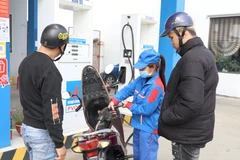
The MoIT has repeatedly instructed petroleum distributors nationwide to maintain uninterrupted retail operations, ensuring supply continuity under all circumstances. Regulators have also reviewed and refined policy mechanisms to enable businesses to diversify import sources, helping reinforce supply for both production and consumption needs.
Over 400 exhibitors join int’l hospitality, service supply exhibition in Ho Chi Minh City
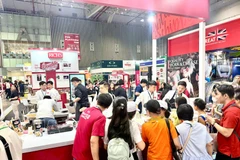
Organised by Informa Markets Vietnam under the patronage of the Ho Chi Minh City Department of Industry and Trade, the exhibitions feature more than 400 exhibitors from 36 countries and territories and 19 international pavilions, according to Ian Roberts, Senior Vice President of Informa Markets Asia.
Vietnam’s rice exports to Senegal surge nearly 30-fold
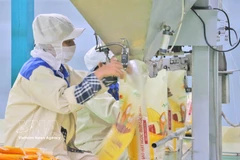
Vietnamese fragrant rice, including 100% broken rice, is widely available in Senegalese supermarkets in 5kg and 25kg packs, retailing at around 1.3 USD per kg.
EU remains Vietnam’s leading economic partner: Deputy PM
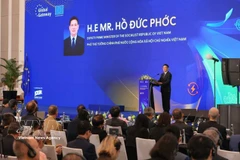
Deputy Prime Minister Ho Duc Phoc affirmed that Vietnam–EU relations have developed robustly over the past three decades, supported by an increasingly comprehensive cooperation framework. He highlighted the EU–Vietnam Free Trade Agreement (EVFTA) as a key driver of bilateral trade and investment.
Vietnam pledges best possible conditions for US investors
Vietnam is committed to accompanying and providing the most favourable conditions for foreign investors in general and US enterprises in particular to invest and operate successfully at the Vietnam International Financial Centre.
Vietnam secures lion’s share of Thailand pepper market
Vietnam now supplies about 99.63% of Thailand’s imported pepper, driven by strong demand from the food and tourism industries and limited domestic production.