Vietnam’s rice exports to Senegal surge nearly 30-fold

Vietnamese fragrant rice, including 100% broken rice, is widely available in Senegalese supermarkets in 5kg and 25kg packs, retailing at around 1.3 USD per kg.

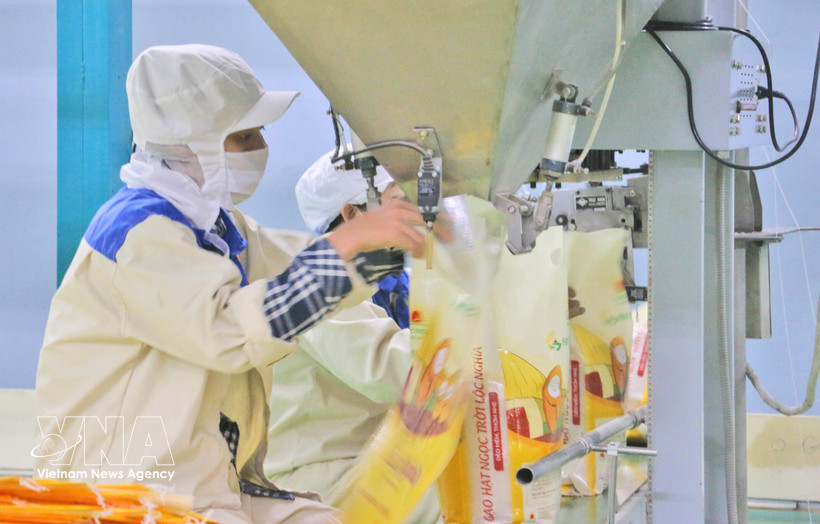
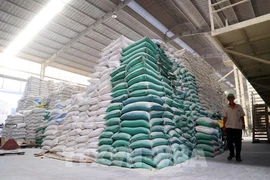
Rice packaging for export at the factory of Thao Son One Member Limited Liability Food Company, under Loc Troi Group JSC. (Photo: VNA)

Hanoi (VNA) – Vietnam’s rice exports to Senegal recorded a sharp surge in 2025, reaching 168,020 tonnes worth 52.57 million USD, nearly 30 times higher than in 2024.

Data from the Vietnamese Department of Customs show that Vietnamese fragrant rice, including 100% broken rice, is widely available in Senegalese supermarkets in 5kg and 25kg packs, retailing at around 1.3 USD per kg.

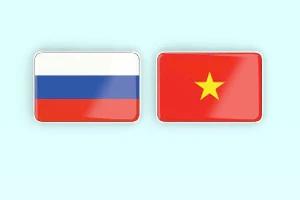
During National Assembly Chairman Tran Thanh Man’s official visit to Senegal in July 2025, the two countries signed a memorandum of understanding (MoU) on the rice trade. The agreement targets annual exports of approximately 100,000 tonnes of Vietnamese rice to Senegal, aiming to enhance the African nation’s food security while helping Vietnam expand market access in Africa and diversify export destinations. The implementation of the MoU is currently underway, supporting the recent surge in export value.

According to the Vietnam Trade Office in Algeria, which also covers Senegal, the West African country is a major global rice importer, purchasing roughly one million tonnes each year, primarily low-cost 100% broken rice. Senegal also records one of the region’s highest per-capita rice consumption levels, estimated at 117 kilogrammes annually.

The US Department of Agriculture forecasts Senegalese rice consumption at approximately 2.26 million tonnes in the 2025–2026 marketing year, up 2% year-on-year due to population growth. Imports are projected to reach 1.5 million tonnes in 2026, meeting around 70% of domestic demand. Key suppliers include India, Thailand, China, Pakistan, Uruguay and Vietnam. In addition to domestic consumption for its population of more than 19.3 million, Senegal imports rice for re-export to neighbouring markets such as Mauritania, Guinea-Bissau and Gambia.

Senegal is simultaneously advancing its second National Rice Development Strategy (NRDS 2), which aims to raise paddy output to 3 million tonnes by 2030 to improve self-sufficiency. Domestic milled rice production in the 2025–2026 season is expected to reach about 645,000 tonnes cultivated across 245,000 hectares, supported by government investment in mechanisation, irrigation systems and certified seed distribution.

Since January 6, 2026, the Senegalese Government has imposed a retail price cap of 300 CFA francs per kg on imported broken rice, about 14% lower than the previous ceiling of 350 CFA francs/kg, to curb living costs amid volatile global prices. However, the measure may squeeze profit margins for importers and distributors as international prices continue to rise.

Rice imports into Senegal are subject to multiple levies, including a 10% import duty on white rice, an 18% value-added tax, a 1% statistical fee and a 0.8% community solidarity tax, though authorities frequently adjust fiscal policies to maintain domestic price stability./.

VNA

See more

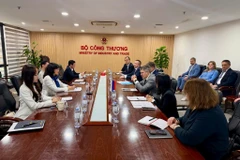
A roundtable between Vietnamese and Australian business communities at the Parliament House of Victoria. (Photo: VNA)

Meetings seek to boost Australian investment in Vietnam

During the sessions, representatives of Australian funds and financial institutions described Vietnam as one of Asia’s most attractive emerging markets, citing steady economic growth, a young population and rising demand for modern financial services. The establishment of the VIFC was seen as opening new avenues for international investors.

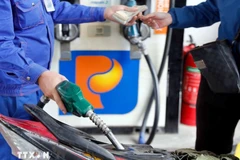
Residents purchase fuel at a petrol station in Ninh Binh province. (Photo: VNA)

Fuel security takes centre stage as global energy risks mount

The MoIT has repeatedly instructed petroleum distributors nationwide to maintain uninterrupted retail operations, ensuring supply continuity under all circumstances. Regulators have also reviewed and refined policy mechanisms to enable businesses to diversify import sources, helping reinforce supply for both production and consumption needs.

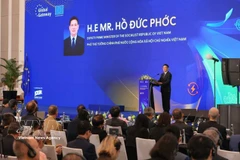
Deputy Prime Minister Ho Duc Phoc speaks at the EU–Vietnam Global Gateway Business and Investment Forum (Photo: VNA)

EU remains Vietnam’s leading economic partner: Deputy PM

Deputy Prime Minister Ho Duc Phoc affirmed that Vietnam–EU relations have developed robustly over the past three decades, supported by an increasingly comprehensive cooperation framework. He highlighted the EU–Vietnam Free Trade Agreement (EVFTA) as a key driver of bilateral trade and investment.

Delegates at the event (Photo: VNA)

Vietnam pledges best possible conditions for US investors

Vietnam is committed to accompanying and providing the most favourable conditions for foreign investors in general and US enterprises in particular to invest and operate successfully at the Vietnam International Financial Centre.

Vietnamese Ambassador to France Trinh Duc Hai (L) meets with Diego Diaz, President of SNCF International under the French National Railway Company (Photo: VNA)

Vietnam, France seek railway cooperation

Diego Diaz, President of SNCF International under the French National Railway Company (SNCF), affirmed the company’s readiness to support Vietnam through strategic consultancy, human resources training and technology transfer, while sharing practical lessons in planning, operation and management of modern railway systems.

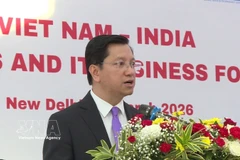
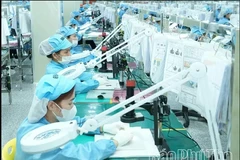
Vietnam, India step up cooperation in electronics, IT

Vietnam, India step up cooperation in electronics, IT

Opening the forum, Vietnamese Ambassador to India Nguyen Thanh Hai said both Vietnam and India are entering new development phases driven by innovation, digital transformation, and deeper integration into global value chains. He highlighted Vietnam’s goal of becoming a developed, high-income country by 2045 and India’s Viksit Bharat 2047 vision, noting strong alignment between the two countries’ strategies.

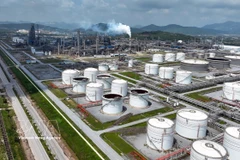
The fuel storage area of the Nghi Son Refinery in Thanh Hoa province (Photo: VNA)

Vietnam diversifies supply sources to meet domestic fuel demand

Since the Middle East conflict disrupted crude and refined fuel supply chains, Petrovietnam has swiftly activated a range of response measures while moving decisively to implement the Government’s Resolution 36/NQ-CP dated March 6, 2026 to secure energy supply for the market.

Bhflex Vina Co., Ltd., a Republic of Korea -invested company based in Khai Quang Industrial Park, Phu Tho province, currently operates five electronic component manufacturing plants, creating jobs for more than 4,100 workers (Photo: baophutho.vn)

Foreign investment in Phu Tho surges more than sevenfold in Q1

Phu Tho has renewed its investment promotion approach, expanding activities both at home and abroad to diversify partners and markets. It has also strengthened on-the-spot promotion, providing comprehensive support for investors from project preparation to implementation to ensure early and efficient operation.

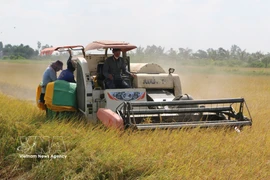
Producing high-quality rice in An Giang province (Photo: VNA)

Logistics pressures drive urgent restructuring of agricultural value chains

In an official dispatch on measures to boost exports in 2026 issued recently, Prime Minister Pham Minh Chinh stressed the requirement to develop and upgrade transport infrastructure, warehousing systems, deep-water seaports, and logistics centres to meet the demand of goods import-export. He also called for strengthening the capacity and market share of Vietnamese shipping firms in international cargo transport.

A fishing vessel bearing Ho Chi Minh City registration docks at Phan Thiet Port in Lam Dong province. (Photo: VNA)

Digital tools power Vietnam’s shift toward smarter fisheries

The Ministry of Agriculture and Environment has coordinated with relevant ministries, agencies and localities to finalise integrated fisheries data systems, including licensing and registration through the national fisheries database (Vnfishbase), electronic fishing logbooks (elogbook), eCDT, VMS, and digital platforms for handling administrative violations in the fisheries sector.