Logistics pressures drive urgent restructuring of agricultural value chains

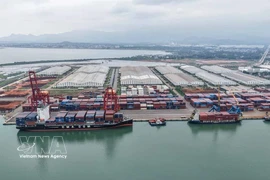
In an official dispatch on measures to boost exports in 2026 issued recently, Prime Minister Pham Minh Chinh stressed the requirement to develop and upgrade transport infrastructure, warehousing systems, deep-water seaports, and logistics centres to meet the demand of goods import-export. He also called for strengthening the capacity and market share of Vietnamese shipping firms in international cargo transport.

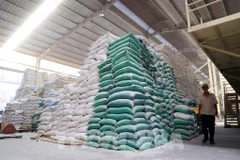
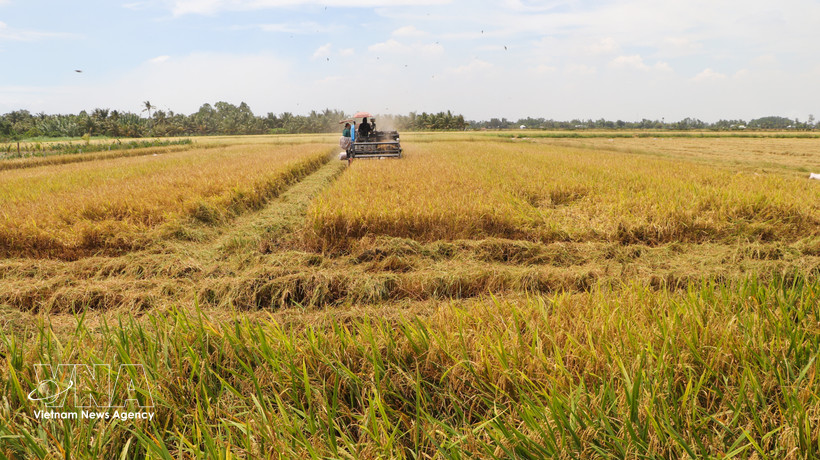
Producing high-quality rice in An Giang province (Photo: VNA)

Hanoi (VNA) – Amid mounting volatility in global trade, logistics has emerged as a decisive factor shaping the competitiveness of Vietnam’s farm produce, driving an urgent need to comprehensively restructure the agricultural value chain, to better control logistics costs and manage risks.

Rather than merely facilitating transport, logistics is increasingly seen as a “critical variable” influencing efficiency from farm to market. This reality is prompting a shift toward reorganising production, distribution, and supply linkages to enhance resilience and sustain export growth.

In an official dispatch on measures to boost exports in 2026 issued recently, Prime Minister Pham Minh Chinh stressed the requirement to develop and upgrade transport infrastructure, warehousing systems, deep-water seaports, and logistics centres to meet the demand of goods import-export. He also called for strengthening the capacity and market share of Vietnamese shipping firms in international cargo transport.

Widespread impact


Nguyen Van Thich, Chairman of the Board of Directors of the Xa No Mekong rice cooperative union in the Mekong Delta city of Can Tho, said that rising logistics costs are exerting pressure on the entire production chain. Transport costs for moving paddy from fields to processing plants have surged by 30–50% ahead of the winter-spring harvest and are expected to remain volatile, especially in remote areas.

Notably, these increases are compounded by higher fertiliser prices and a 30–40% rise in machinery rental costs for harvesting, significantly pushing up overall input expenses. As a result, average profits per hectare could fall by 15–20%, dampening farmers’ willingness to reinvest.

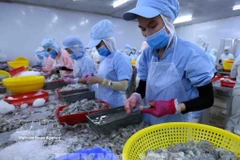
The seafood sector faces similar challenges. Exporters say the most immediate impact of ongoing tensions in the Middle East is not declining demand but soaring logistics costs, heightened transport risks, and fuel price fluctuations. Several shipping lines have raised surcharges by 2,000–4,000 USD per refrigerated container, alongside additional risk and fuel fees.

Domestic logistics costs have also climbed due to rising diesel prices, with local transport firms increasing fees by around 500,000 VND (nearly 19 USD) per 40-foot container.

According to Nguyen Hoai Nam, Secretary General of the Vietnam Association of Seafood Exporters and Producers (VASEP), exports to key markets such as the US, Japan, and Western Europe have not yet faced major direct impacts beyond higher freight rates. However, shipments to the Middle East and Southern Europe are encountering serious difficulties, with some exporters suspending operations due to limited shipping availability and elevated risks.

Strengthening production linkages, taking proactive logistics planning


Experts say restructuring production along value chains is key to mitigating logistics pressures.

Dong Van Canh, Director of New Green Farm Cooperative, noted that applying low-emission, large-scale farming practices in the Mekong Delta has helped improve rice yield and quality, creating room to offset rising logistics costs.

More importantly, concentrated production linked through cooperatives enables more efficient collection, storage, and transport arrangements, thereby reducing per-unit costs. In contrast, fragmented small-scale production tends to inflate logistics expenses and weaken overall efficiency.

However, international transport remains vulnerable to geopolitical tensions. Recent conflicts involving the US, Israel, and Iran have increased risks along key maritime routes such as the Strait of Hormuz and the Suez Canal, potentially driving up costs, disrupting shipments, and also reshaping how import markets select their partners.

Do Ngoc Hung, Trade Counsellor and Head of the Vietnam Trade Office in the US, said American importers are becoming more cautious, prioritising suppliers capable of ensuring stable delivery, transparency, and flexibility in commercial terms. Vietnamese firms, therefore, must not only remain price-competitive but also demonstrate consistency in delivery, reliability in contract performance, and a strong capacity to manage risks in international logistics.

VASEP has called on the Ministry of Industry and Trade and other relevant authorities to consider support policies for businesses as logistics and fuel costs surge, while stepping up coordination with international shipping lines to help stabilise transport routes serving exports.

Ngo Khac Le, Deputy Secretary General of the Vietnam Logistics Business Association, advised businesses to review shipping contracts and bills of lading, especially war-risk and deviation clauses, and to add provisions covering route changes or unplanned cargo discharge.

He also recommended strengthening logistics insurance to cover emerging geopolitical risks, diversifying transport routes and transshipment ports to reduce reliance on a single channel, developing contingency plans, identifying alternative ports, adopting flexible transport modes, and building partnerships with bonded warehouses and logistics providers in key transit hubs to enhance resilience./.
VNA

See more

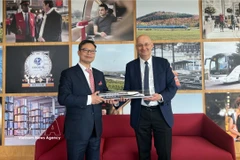
Vietnamese Ambassador to France Trinh Duc Hai (L) meets with Diego Diaz, President of SNCF International under the French National Railway Company (Photo: VNA)

Vietnam, France seek railway cooperation

Diego Diaz, President of SNCF International under the French National Railway Company (SNCF), affirmed the company’s readiness to support Vietnam through strategic consultancy, human resources training and technology transfer, while sharing practical lessons in planning, operation and management of modern railway systems.

Vietnam, India step up cooperation in electronics, IT

Vietnam, India step up cooperation in electronics, IT

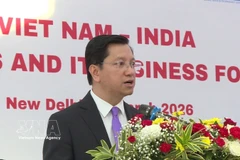
Opening the forum, Vietnamese Ambassador to India Nguyen Thanh Hai said both Vietnam and India are entering new development phases driven by innovation, digital transformation, and deeper integration into global value chains. He highlighted Vietnam’s goal of becoming a developed, high-income country by 2045 and India’s Viksit Bharat 2047 vision, noting strong alignment between the two countries’ strategies.

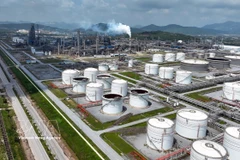
The fuel storage area of the Nghi Son Refinery in Thanh Hoa province (Photo: VNA)

Vietnam diversifies supply sources to meet domestic fuel demand

Since the Middle East conflict disrupted crude and refined fuel supply chains, Petrovietnam has swiftly activated a range of response measures while moving decisively to implement the Government’s Resolution 36/NQ-CP dated March 6, 2026 to secure energy supply for the market.

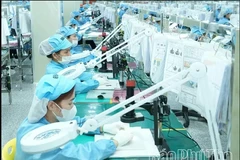
Bhflex Vina Co., Ltd., a Republic of Korea -invested company based in Khai Quang Industrial Park, Phu Tho province, currently operates five electronic component manufacturing plants, creating jobs for more than 4,100 workers (Photo: baophutho.vn)

Foreign investment in Phu Tho surges more than sevenfold in Q1

Phu Tho has renewed its investment promotion approach, expanding activities both at home and abroad to diversify partners and markets. It has also strengthened on-the-spot promotion, providing comprehensive support for investors from project preparation to implementation to ensure early and efficient operation.

A fishing vessel bearing Ho Chi Minh City registration docks at Phan Thiet Port in Lam Dong province. (Photo: VNA)

Digital tools power Vietnam’s shift toward smarter fisheries

The Ministry of Agriculture and Environment has coordinated with relevant ministries, agencies and localities to finalise integrated fisheries data systems, including licensing and registration through the national fisheries database (Vnfishbase), electronic fishing logbooks (elogbook), eCDT, VMS, and digital platforms for handling administrative violations in the fisheries sector.

Illustrative image (Photo: VNA)

Can Tho to host 2026 rice export promotion conference on March 24

The the 2026 rice export promotion conference in Can Tho city is conceived as a key platform where management agencies, industry associations, overseas trade offices, and the business community can speak plainly about the state of the market, confront on-the-ground challenges, and sketch remedies for obstacles that impede smoother, more profitable exports.

At the conference between VWU and Unilever Vietnam (Photo: VNA)

Vietnam Women’s Union, Unilever Vietnam benefit over 100,000 women

In the 2022-2025 period, the collaboration between the Vietnam Women's Union and Unilever Vietnam established itself as a flagship public - private partnership empowering more than 100,000 Vietnamese women, particularly those in rural and underserved areas, by enhancing economic opportunities, improving health, and raising overall quality of life.

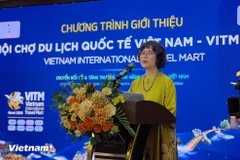
Nguyen Thi Hoa Mai, Deputy Director of the Vietnam National Authority of Tourism, speaks at a briefing in Hanoi (Photo: VietnamPlus)

Vietnam Int’l Travel Mart 2026 to feature 450 booths

VITM 2026 is expected to attract participants from 15 countries and territories and 34 localities nationwide to promote destinations, introduce products and seek cooperation opportunities. The fair is projected to draw about 80,000 visitors, creating a vibrant platform for promotion and market stimulation.

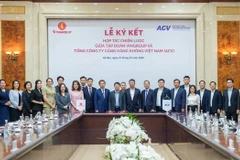
Delegates at the ceremony (Photo: tienphong.vn)

Vingroup, ACV partner to promote green transition at airports

Vingroup and ACV plan to roll out clean energy solutions and advanced power supply models tailored to airport operations and affiliated units. Priority will also be given to developing infrastructure for electric vehicles, including charging networks and related support services.

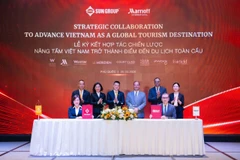
Sun Group and Marriott International sign a strategic partnership to elevate Vietnam into a global tourism destination. (Photo: Sun Group)

Sun Group, Marriott International enter strategic partnership

The collaboration portfolio adds 8 brands across diverse segments and operating models, including W Hotels, Marriott Hotels, Westin, Le Méridien, Courtyard by Marriott, Fairfield, Moxy Hotels, and Four Points by Sheraton; among which W Hotels and Moxy Hotels are making their debut in Vietnam.

Participants in the March 20 event that unveils a report urging stronger policy support to foster sustainable agriculture in Vietnam (Photo: VNA)

Vietnam seeks to promote green investment, credit for sustainable agriculture

The report draws on a survey of 97 enterprises and cooperatives operating in agricultural value chains, alongside 15 in-depth interviews with experts and relevant stakeholders. It aims to assess the current state of environmental, social and governance (ESG) practices, as well as access to sustainable finance among small- and medium-sized actors in the sector.