Ho Chi Minh City (VNA) – The labour market in Ho Chi Minh City and surrounding areas showed positive recovery in the first quarter of 2026, despite global uncertainties continuing to weigh on businesses engaged with international partners.
Hiring demand has risen steadily alongside improving export performance and expanded production, although labour supply remains insufficient to fill tens of thousands of vacancies.
Since early March, job fairs and recruitment drives have been held regularly at employment service centres and universities across the city. Nearly 1,000 companies operating both within and outside export processing zones and industrial parks have registered to recruit, offering more than 36,800 job opportunities.
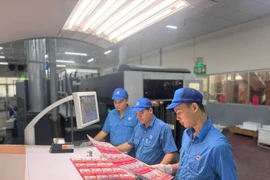
PouYuen Vietnam Co., Ltd., one of the city’s largest employers based in Binh Tan ward, is seeking over 4,000 workers across multiple fields, including textiles and garments, footwear manufacturing, security, maintenance, CAD design and high-tech automated machine operation, supported by a strong order pipeline extending to the end of the year.
Cu Phat Nghiep, chairman of the company’s trade union, said the firm has introduced flexible hiring policies to ensure contract delivery schedules, recruiting unskilled workers with paid training as well as experienced employees aged over 40. In addition to base pay and allowances, technical staff and specialists can earn between 10 million and 25 million VND (380–950 USD) per month.
In the infrastructure sector, Deo Ca Group plans to recruit approximately 2,500 additional employees, following the award of several new projects. The company pledged to fully guarantee employee benefits while maintaining attractive incentive schemes to draw high-quality talent.
Meanwhile, Hoa Net Wood Technology Co., Ltd., located in Vietnam Singapore Industrial Park 2 (VSIP 2) in the former Binh Duong area, plans to hire around 1,500 workers to support production expansion. Along with benefits such as a 13th-month salary and Tet bonuses, employees are offered monthly incomes ranging from 10-18 million VND. The company is also investing in a modern and dynamic workplace to foster long-term workforce stability.
Although recruitment demand for highly skilled professionals is smaller in scale, salary levels remain competitive. Businesses in the former Ba Ria – Vung Tau area are actively seeking specialised personnel to meet requirements in technology operations, production management and long-term industrial development.
Labour experts noted that the first quarter is traditionally a peak hiring period as companies accelerate order fulfilment and rebuild their workforce. Many industries, including textiles, wood processing and food production, have already secured orders through the end of the second quarter.
Data from the Ho Chi Minh City Department of Home Affairs indicate that recruitment demand currently totals tens of thousands of positions. Unskilled labour accounts for the largest share at 39.82%, followed by processing and technical industries at 23.23%, and trade, services and logistics at 8.99%.
Nguyen Van Hanh Thuc, Director of the Ho Chi Minh City Employment Service Centre, said many vacancies remain unfilled despite competitive salary offers. General workers typically earn 8–10 million VND per month, technical workers receive 10–15 million VND, while specialised roles in logistics, public relations and sales offer 12–20 million VND, with some positions reaching up to 25 million VND monthly.
In the second quarter of 2026, the labour market is expected to become more regionally specialised. Central Ho Chi Minh City will concentrate on services, finance, information technology and e-commerce, while the former Binh Duong area will continue to attract manufacturing and processing labour. Recruitment demand in the former Ba Ria – Vung Tau area is forecast to grow in port operations and logistics services.
A survey by ManpowerGroup found that 63% of Vietnamese businesses plan to increase hiring in the second quarter, with construction and real estate leading recruitment expectations at 64%, driven by major infrastructure projects.
Despite geopolitical headwinds, the labour market in Ho Chi Minh City and southern Vietnam has remained stable and attractive. Businesses’ proactive adjustments, flexible recruitment strategies and increasingly competitive welfare policies are helping sustain growth momentum while improving their ability to attract and retain workers./.