Ho Chi Minh City’s post-Tet labour market sees rising recruitment demand

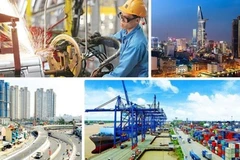
In the early months of 2026, businesses are projected to require approximately 55,000 additional workers, primarily in manufacturing, trade, services, and logistics, creating substantial employment opportunities.

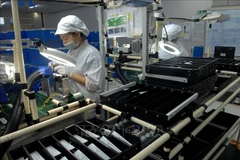
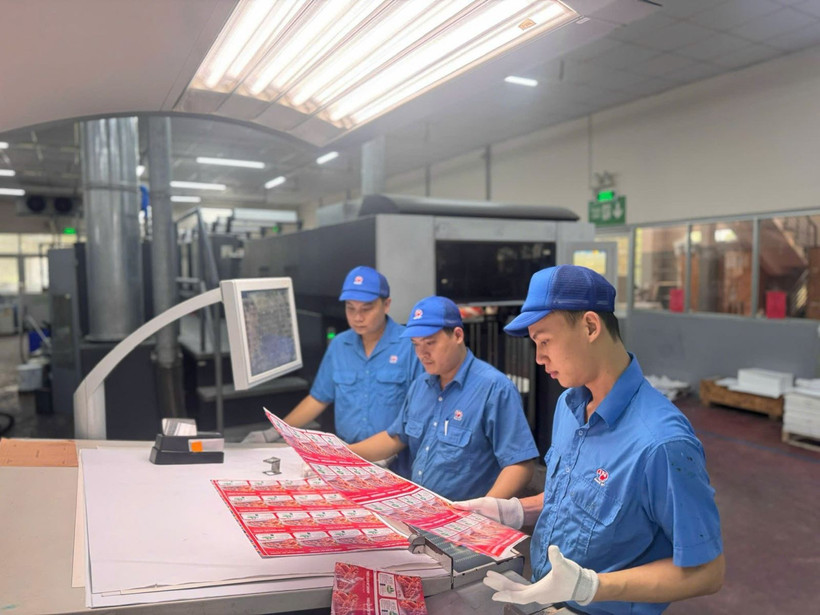
Workers at Printing No. 7 Joint Stock Company resume production on the first working day of the Lunar New Year 2026. (Photo: VNA)

Ho Chi Minh City (VNA) – Following the nine-day Lunar New Year (Tet) holiday, the labour market in Ho Chi Minh City has swiftly regained momentum, with recruitment demand rising sharply across key sectors.

In the early months of 2026, businesses are projected to require approximately 55,000 additional workers, primarily in manufacturing, trade, services, and logistics, creating substantial employment opportunities.

Demand for unskilled and semi-skilled labour has surged, after Panko Vina Co., Ltd. in My Phuoc 1 Industrial Zone, Ben Cat ward, ceased operations in late 2025 due to order shortages, affecting some 2,700 workers. Eight companies quickly stepped in to recruit around 3,600 employees from this workforce.

In other industrial zones, firms have also announced large-scale hiring plans, offering starting salaries ranging from 8–15 million VND (300-570 USD) per month for workers, warehouse staff and seasonal employees, while managerial and technical positions may command 30–60 million VND depending on qualifications.

In the footwear sector, PouYuen Vietnam plans to recruit around 3,000 additional workers as production orders stabilise through mid-2026. The company has also adopted more competitive wage and welfare policies while expanding post-recruitment training, particularly for young workers without prior experience.

Despite robust demand, recruitment challenges persist. Skill mismatches, limited practical experience and concerns over workforce stability remain key obstacles. Older workers often face difficulties adapting to new technologies and modern production environments. Post-holiday labour mobility has also contributed to localised shortages in the first quarter, as some employees delay returning to the city or shift industries.

Beyond general labour, the market also faces shortages of high-quality human resources. According to insiders, demand in technology, data, fintech, advanced manufacturing, green energy and logistics continues to grow. Automation and artificial intelligence are reshaping the labour market, requiring multi-skilled, adaptable workers with foundational digital competencies. Employers increasingly prioritise practical skills, work attitude and learning capacity over formal qualifications.

Data from the Ho Chi Minh City Employment Service Centre show that in 2025, businesses registered over 313,000 vacancies, while fewer than 192,000 job seekers entered the market, indicating a persistent supply–demand imbalance. Structural challenges remain, including a low rate of short-term vocational training and mismatches in age, gender, and skill composition.

As Ho Chi Minh City and the southern key economic region accelerate growth, experts emphasise that the central issue is not merely the number of jobs available, but the alignment between workforce capabilities and enterprise needs. Proactive training, stronger labour-market forecasting and improved working conditions will be critical to sustaining stable and inclusive growth in 2026./.

VNA

See more

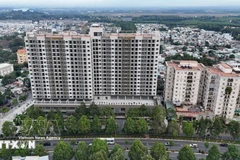
The A6 and A7 social housing project has recently been completed in Tran Bien ward, Dong Nai province. (Photo: VNA)

New resolution to break logjam in social housing market

Scaling up social housing delivery would stimulate aggregate demand and create jobs in construction, building materials, interior decor, and finance and banking, delivering economic benefits that extend far beyond real estate itself.

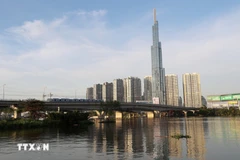
A train of Metro Line No. 1 passes Saigon Bridge in Ho Chi Minh City. (Photo: VNA)

Infrastructure breakthroughs help Ho Chi Minh City to promote economic locomotive

At a conference reviewing socio-economic tasks for 2026, Chairman of the municipal People’s Committee Nguyen Van Duoc said the city will focus on three strategic breakthroughs – institutions, infrastructure and human resources – with public investment playing a leading role. Authorities are determined to fully disburse the allocated public investment capital.

Director General of the International Atomic Energy Agency (IAEA) Rafael Grossi (centre) poses for a group photo with ambassadors and heads of missions of ASEAN countries in Vienna. (Photo: VNA)

ASEAN, IAEA strengthen cooperation in peaceful use of nuclear energy

Director General of the International Atomic Energy Agency (IAEA) Rafael Grossi commended the effective, substantive and steadily expanding cooperation between the IAEA and ASEAN, particularly in technical cooperation, the peaceful use of nuclear energy, and support for the development priorities of each member state.

Vietnam’s tilapia export turnover to the US surges 173% year-on-year in 2025 (Source: VASEP)

Vietnamese tilapia eye opportunities to make breakthrough

To sustain growth in 2026 across major markets such as the US, the Middle East and the European Union (EU), Vietnamese tilapia products must meet stringent requirements, ranging from flesh quality and food safety to certifications for sustainable farming and production, including GlobalGAP, BAP and ASC. This calls for a fully standardised production chain, from broodstock and farming to processing.

A Vinamilk factory (Photo: Vinamilk)

Strategy promotes sustainable growth of dairy processing industry

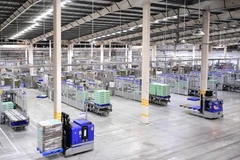
The strategy aims to build a sustainably developed dairy processing industry with a complete value chain, from dairy herd development and increased raw milk output to high value-added processed products. The industry is expected to largely meet rising domestic demand while integrating more deeply into regional and global dairy value and supply chains.

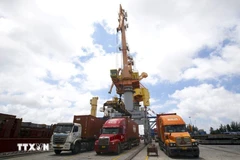
Trucks carrying export goods at Tan Vu Port in Hai Phong city (Photo: VNA)

Vietnam among France’s five most promising export markets: Bpifrance

The strongest prospects for French firms lie in higher value-added products and solutions, including processed food, equipment for hi-tech agriculture, corporate digital solutions and healthcare. Vietnam is also considered an important link in the Southeast Asian value chain, opening broader access to the ASEAN market.

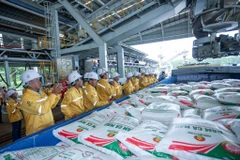
Workers load fertiliser onto a vessel for export by Petrovietnam Ca Mau Fertiliser Corporation (PVCFC). (Photo: Petrovietnam)

Vietnamese firm successfully exports first 40,000 tonnes of fertiliser to US

Beyond opening access to a market with substantial consumption capacity, the presence of Ca Mau fertiliser in the US – known for its stringent technical, environmental and traceability standards – is seen as an affirmation of the credibility and quality of Vietnamese products amid increasingly rigorous global requirements.

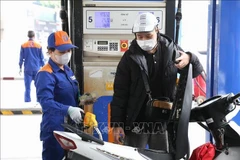
A motorcyclist has his vehicle refilled at a Petrolimex station. (Photo: VNA)

Vietnam ready for nationwide E10 biofuel rollout from June 1

Industry representatives noted that alongside infrastructure readiness, continued investment, stable raw material supply and an appropriate pricing policy in the initial phase will be essential to ensure a smooth nationwide transition to E10 from June 1.