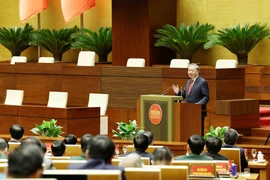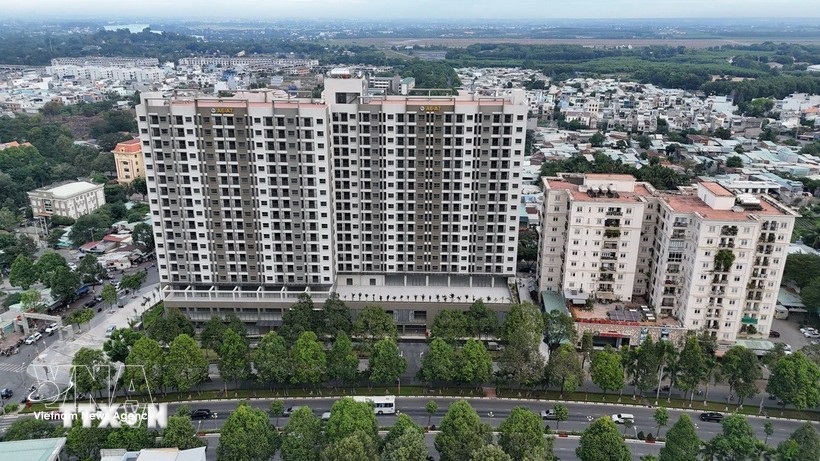
Hanoi (VNA) – The Politburo’s Resolution 68-NQ/TW, recently issued with sweeping orientations on institutional reform and private sector growth, is drawing attention from experts as a potential game-changer that could finally dismantle the entrenched obstacles stifling Vietnam’s social housing market.
A message of institutional overhaul
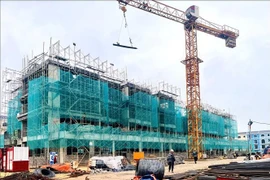
For years, social housing supply has chronically trailed explosive demand, especially in major cities and industrial zones. Industry analysts point to the core issues: cumbersome legal processes, scarce land supply and strict profit caps that have deterred developers.
Le Hoang Chau, Chairman of the Ho Chi Minh City Real Estate Association, has long argued that social housing builders must navigate approval procedures nearly as onerous as those for commercial projects, yet face profit restrictions and incentive packages that are neither sufficiently appealing nor predictable over the long term.
Dr Can Van Luc, a member of the National Financial and Monetary Policy Advisory Council, noted that the social housing market suffers not from weak demand but the absence of a comprehensive policy framework spanning land access, credit, taxation and investment approvals. Tackling these issues piecemeal, he warned, won't deliver lasting results.
Although the resolution is not real estate-specific, experts said its broad directives have immediate and direct bearing on social housing. It places strong emphasis on administrative reform, the removal of unnecessary business conditions, and the assurance of a transparent, stable investment climate
By protecting the legitimate rights and interests of private enterprises, the resolution seeks to restore investor confidence in undertaking socially vital but commercially low-margin projects like social housing
Longer policy runway essential
Financial experts believe that drawing private capital into social housing requires policies designed to “offset risks” rather than simply cap profits. This could be achieved through mechanisms such as the supply of pre-cleared land parcels, substantive exemptions or reductions in land-use fees, clear tax incentives, and, in particular, access to long-term credit with stable interest rates.
The resolution’s reform momentum is also expected to spur ministries and agencies to conduct a thorough end-to-end review of the social housing project cycle, encompassing investment approvals, planning, land allocation, handover processes, and certificate issuance.
Orientations toward improving land mechanisms and enhancing transparency in resource allocation, as outlined in the resolution, should empower local authorities to take more proactive roles in planning, investor selection, and project supervision.
According to Luc, scaling up social housing delivery would stimulate aggregate demand and create jobs in construction, building materials, interior decor, and finance and banking, delivering economic benefits that extend far beyond real estate itself.
Should supply constraints ease, both sale and rental prices are likely to moderate, relieving cost-of-living strains on workers, helping retain skilled labour in key industrial clusters, and ultimately sharpening Vietnam’s broader economic competitiveness.
Concerted action required
While expectations are high, experts cautioned that the resolution provides only an orientation framework, while execution will be the decisive factor. Developers and industry groups are calling for detailed and unified guidelines to align the Land Law, Housing Law, Real Estate Business Law, and relevant decrees.
In this light, the resolution has the potential to evolve into an “institutional pillar” for a new era of social housing development, which aligns the interests of the state, businesses, and citizens around a unified reform agenda.
In a complementary step, the Government recently issued Resolution 66.15/2026/NQ-CP, which introduces targeted mechanisms to tackle legal and regulatory bottlenecks in social and military housing projects, including regulations to address planning-related difficulties in investment./.