Taiwanese high-tech group chooses Vietnam as Southeast Asia manufacturing hub

Under its plan, UNIVACCO’s Vietnam project will be developed to global manufacturing standards, integrating advanced technologies, optimising logistics and strengthening market responsiveness, particularly in premium packaging, digital applications and environmentally friendly materials.

Hanoi (VNA) – UNIVACCO Technology Inc., a high-tech company headquartered in Tainan (Taiwan, China), has leased 29,742.4 sq.m of industrial land at Long Thanh Industrial Park in the southern province of Dong Nai, officially designating Vietnam as its strategic manufacturing base in Southeast Asia.

Founded in 1990, UNIVACCO specialises in vacuum metallised films and surface-coating technologies serving printing, packaging and advanced materials industries. Its flagship products, including hot-stamping foil, cold-stamping foil and functional vacuum-coated films, are widely distributed across the Americas, Europe and Asia.

The nearly three-hectare lease in Dong Nai reflects a selective relocation trend among high-tech manufacturers, with Vietnam emerging as a preferred destination thanks to its stable manufacturing base, competitive costs and deepening integration into global supply chains.

Under its plan, UNIVACCO’s Vietnam project will be developed to global manufacturing standards, integrating advanced technologies, optimising logistics and strengthening market responsiveness, particularly in premium packaging, digital applications and environmentally friendly materials.

According to UNIVACCO CEO Bruce, Vietnam was chosen as the company’s overseas production base to capitalise on favourable international tariff policies and the country’s cost competitiveness.

Data from Savills Vietnam show that in 2025, Dong Nai attracted over 2.7 billion USD in FDI, exceeding 144% of its annual target. The province currently hosts more than 2,200 valid FDI projects with total registered capital surpassing 42 billion USD. In 2026, Dong Nai is expected to continue drawing fresh investment into high-tech manufacturing, logistics and financial services, driven by major infrastructure projects such as Long Thanh International Airport and Phuoc An Port, alongside administrative reform and digital transformation.

Phan Cuu Chi, Manager of Industrial Real Estate Services at Savills Ho Chi Minh City, noted that high-tech FDI into Vietnam is shifting from opportunistic moves to long-term strategic commitments. “Investors like UNIVACCO are not merely seeking production sites; they are choosing Vietnam as an integrated platform for sustained manufacturing and innovation,” she said.

Meanwhile, Sonadezi Long Thanh, the park’s developer, said the 488-ha industrial park features synchronised technical infrastructure, completed internal transport networks, and power, water and wastewater treatment systems meeting the requirements of high-tech projects.

This project reflects our strategy to attract high-quality, technology-oriented manufacturers that create long-term value for the industrial ecosystem, a Sonadezi Long Thanh representative said.

In the transaction, Savills Vietnam acted as exclusive adviser, providing end-to-end support from site selection and negotiation to deal completion, while continuing to accompany UNIVACCO and Sonadezi Long Thanh during project implementation./.

VNA
See more

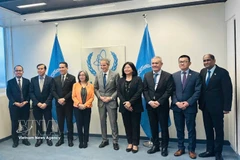
Director General of the International Atomic Energy Agency (IAEA) Rafael Grossi (centre) poses for a group photo with ambassadors and heads of missions of ASEAN countries in Vienna. (Photo: VNA)

ASEAN, IAEA strengthen cooperation in peaceful use of nuclear energy

Director General of the International Atomic Energy Agency (IAEA) Rafael Grossi commended the effective, substantive and steadily expanding cooperation between the IAEA and ASEAN, particularly in technical cooperation, the peaceful use of nuclear energy, and support for the development priorities of each member state.

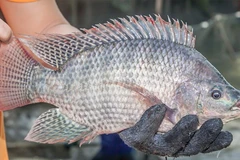
Vietnam’s tilapia export turnover to the US surges 173% year-on-year in 2025 (Source: VASEP)

Vietnamese tilapia eye opportunities to make breakthrough

To sustain growth in 2026 across major markets such as the US, the Middle East and the European Union (EU), Vietnamese tilapia products must meet stringent requirements, ranging from flesh quality and food safety to certifications for sustainable farming and production, including GlobalGAP, BAP and ASC. This calls for a fully standardised production chain, from broodstock and farming to processing.

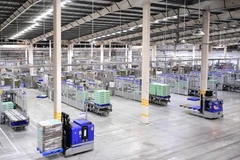
A Vinamilk factory (Photo: Vinamilk)

Strategy promotes sustainable growth of dairy processing industry

The strategy aims to build a sustainably developed dairy processing industry with a complete value chain, from dairy herd development and increased raw milk output to high value-added processed products. The industry is expected to largely meet rising domestic demand while integrating more deeply into regional and global dairy value and supply chains.

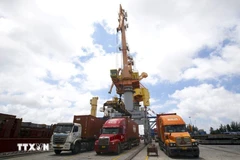
Trucks carrying export goods at Tan Vu Port in Hai Phong city (Photo: VNA)

Vietnam among France’s five most promising export markets: Bpifrance

The strongest prospects for French firms lie in higher value-added products and solutions, including processed food, equipment for hi-tech agriculture, corporate digital solutions and healthcare. Vietnam is also considered an important link in the Southeast Asian value chain, opening broader access to the ASEAN market.

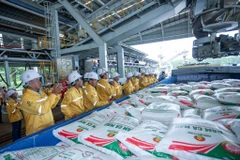
Workers load fertiliser onto a vessel for export by Petrovietnam Ca Mau Fertiliser Corporation (PVCFC). (Photo: Petrovietnam)

Vietnamese firm successfully exports first 40,000 tonnes of fertiliser to US

Beyond opening access to a market with substantial consumption capacity, the presence of Ca Mau fertiliser in the US – known for its stringent technical, environmental and traceability standards – is seen as an affirmation of the credibility and quality of Vietnamese products amid increasingly rigorous global requirements.

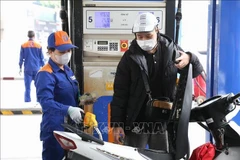
A motorcyclist has his vehicle refilled at a Petrolimex station. (Photo: VNA)

Vietnam ready for nationwide E10 biofuel rollout from June 1

Industry representatives noted that alongside infrastructure readiness, continued investment, stable raw material supply and an appropriate pricing policy in the initial phase will be essential to ensure a smooth nationwide transition to E10 from June 1.