Hanoi (VNA) – Resolution No. 79-NQ/TW, issued by the Politburo on January 6, 2026, reaffirms the leading role of the state sector in the socialist-oriented market economy while requesting stronger governance reform, deeper power decentralisation, more effective public investment, and expanded cooperation with the private sector.
As the political and administrative centre of the nation and the growth engine of the Red River Delta, Hanoi is actively translating the resolution into concrete, locally tailored action plans, particularly in fiscal decentralisation, public investment, and infrastructure development through public – private partnerships (PPPs).
From policy direction to practical necessity
Implementing Resolution 79 is both a major political task and an intrinsic necessity as the capital faces mounting pressures from urbanisation, infrastructure demand, digital transformation, social welfare provision, and the need to improve residents’ quality of life.
Resolution 79 sets the target that by 2030 the state-run economic sector will strengthen its leading role in key areas, helping ensure macroeconomic stability and create a foundation for sustainable development. A central pillar is renewing state economic governance through robust decentralisation and delegation of authority to localities, alongside enhanced accountability, transparency, and efficient use of public resources.
For Hanoi, this provides greater autonomy in public investment decisions, budget allocation, and the selection of priority projects, reducing reliance on the former “ask-and-give” mechanism. At the same time, the resolution promotes stronger mobilisation of social resources, enabling closer cooperation between state-owned enterprises (SOEs) and the private sector in infrastructure development and public service delivery.
According to the Hanoi People's Committee, the city promptly instructed departments to develop resolution implementation plans linked with the 2026–2030 socio-economic development programme, focusing on three priorities: budget decentralisation and stronger accountability in public investment; restructuring local SOEs; and expanding PPPs in infrastructure development and urban services.
Resolution 79 also stresses restructuring and improving the efficiency of SOEs in essential sectors. In Hanoi, local SOEs are being streamlined towards greater transparency and competitiveness. SOEs under the municipal administration's management in water supply and drainage, urban environment, lighting, and public transport will continue to play a core role, but under modern governance models with financial disclosure, transparent bidding, and stricter supervision.
Cooperation between SOEs and private enterprises is being promoted, particularly for large-scale, capital-intensive and technology-driven projects.
New momentum for capital infrastructure
A notable feature of Resolution 79 is the principle of “local decision-making, local implementation, local accountability” in public investment. With the country’s largest local budget and high infrastructure demand, Hanoi stands to benefit significantly.
The municipal Department of Finance said during 2026–2030, the city plans to allocate hundreds of trillions of VND for medium-term public investment, prioritising urban transport, environmental improvement, digital transformation, and high-quality education and health care. Stronger decentralisation is expected to shorten approval timelines and improve flexibility while tighter fiscal discipline, digital monitoring, and enhanced inspection aim to prevent wastefulness and inefficiency.
At the grassroots level, wards and communes are also being granted greater authority over the development of community infrastructure and social facilities, enabling faster responses to residents’ needs and stronger local accountability.
Given that Hanoi’s infrastructure investment needs run into quadrillions of VND, PPPs are seen as a key solution. The city is gradually forming a PPP project pipeline in transport, environment, water supply and drainage, digital transformation, and smart urban services. Resolution 79 provides a solid political cornerstone for expanding private-sector participation while balancing the interests of the State, businesses, and the public.
PPP projects are being advanced in river-crossing bridges, new urban connectors, wastewater and waste treatment, underground parking, data centres, and digital infrastructure.
In digital transformation, PPPs are viewed as inevitable, bringing not only capital but also private-sector expertise, technology, and modern management models to improve public service quality. Hanoi is therefore partnering with major technology firms to develop shared data platforms, smart operation centres, end-to-end online public services, and citizen-oriented digital applications.
Despite initial progress, challenges remain. Experts note that successful implementation requires end-to-end transparency, stronger capacity among civil servants, and a well-designed mechanism for sharing risks with private investors.
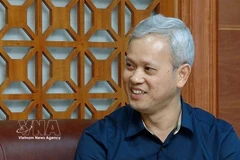
The city is refining its 2026–2030 PPP project list in line with the capital’s master plan, prioritising projects with strong spillover effects and aligning project preparation, bidding, and contract management with international practices, said Deputy Director of the Hanoi Department of Finance Le Trung Hieu.
Through the comprehensive rollout of Resolution 79, Hanoi is moving towards a development model in which the state sector plays a guiding role while private participation is strongly encouraged, especially in infrastructure and urban services.
By 2030, the city aims to build modern and well-connected infrastructure; a green, smart, and liveable environment; fully digitalised public services; and data-driven urban governance. Sound budget decentralisation, effective public investment management, and transparent PPPs are expected to form three key pillars in achieving these goals./.
VNA