Hanoi (VNA) - As the global economy is undergoing profound restructuring amid rapid and unpredictable changes, Vietnam is facing a dual challenge: not only sustaining its recovery momentum but also establishing a new, higher growth trajectory that is more sustainable and resilient to external shocks for the 2026-2030 period.
Economists view this not as a mere short-term requirement but as a strategic pivot to reposition the country's growth model within evolving global value chains.
Pressure from a changing global landscape
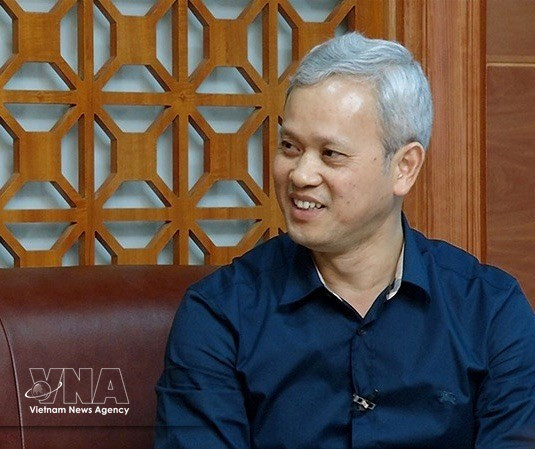
According to Dr. Nguyen Bich Lam, former Director General of the General Statistics Office under the Ministry of Planning and Investment (now the National Statistics Office under the Ministry of Finance), the global economy is being shaped by three major trends: technology transformation driven by artificial intelligence and the digital economy; restructuring of global supply and value chains; and green transition toward net-zero emissions. These trends present both opportunities and challenges for developing economies.
Domestically, Vietnam’s growth space based on capital expansion, low-cost labour, and natural resource exploitation is narrowing. Labour productivity has advanced but remains short of a decisive leap. Many industries remain concentrated on processing and assembly stages with low added value, and limited linkages between foreign-invested and local firms.
Without strong reforms, the economy risks being trapped in a prolonged spell of moderate growth, making it difficult to achieve rapid and sustainable development goals in the coming years.
Lam stressed that growth quality and sustainability matter more than headline GDP figures. Pursuing numerical targets without strengthening institutional foundations, technological capabilities, and workforce would leave growth unstable and vulnerable to external shocks.
Institutional framework as primary breakthrough
Establishing a new growth trajectory should rest on three pillars: improving institutional framework for development; accelerating the transition to a growth model based on science, technology, and innovation; and workforce upskilling.
Dr. Nguyen Dinh Cung, former President of the Central Institute for Economic Management (CIEM), argued that the current requirement goes far beyond revising individual regulations. Instead, Vietnam needs substantive institutional reforms to ensure the economy operates fully under market principles.
The State, he added, should focus on setting transparent rules, ensuring fair competition, and protecting property rights rather than displacing market choices.
When business freedom is secured, compliance burdens eased and the investment climate stabilised, the private sector can better fulfill its role as a key growth engine, laying the foundation for better quality growth in the medium and long term.
Alongside institutional reform, upgrading strategic infrastructure, from transport and energy to digital systems and climate-resilient infrastructure, must be accelerated to sharpen national competitiveness, he said.
Repositioning within global value chains
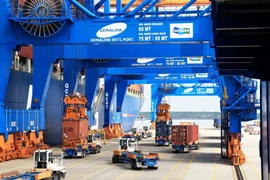
Beyond institutional fixes, transforming the growth model is seen as an urgent priority. Establishing a new growth trajectory means repositioning Vietnam within global value chains. Continued involvement mainly in low-value assembly stages would steadily constrain growth potential.
“The new growth trajectory must rest on high technology, innovation, and deeper integration into global value chains,” Lam stressed.
Vietnam also needs to cultivate a new development ecosystem where next-generation FDI ties closely to technology transfer, supporting industry growth and tighter bonds with domestic companies.
With export markets imposing ever-stricter environmental criteria, scaling renewable energy, energy-efficient manufacturing and emissions cuts becomes both a sustainability mandate and a competitiveness prerequisite, he added.
According to experts, comprehensive education and training reform should match labour market demand, with greater emphasis on digital skills, innovation capability, and global mindset. Policies to attract and effectively utilise talents, especially in high technology, finance, and modern management, are equally essential.
Strengthening autonomy and resilience
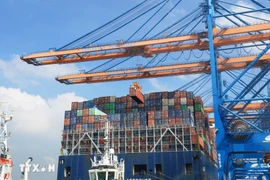
Lessons from recent global shocks indicate that an open economy like Vietnam must enhance its autonomy, diversify markets and partners, and reduce dependence on specific sectors or markets.
Harnessing the domestic market of 100 million consumers should be considered a key pillar. At the same time, energy, food and financial security must be critical to macroeconomic stability – the bedrock of sustainable growth.
Maintaining macroeconomic stability, controlling inflation, and ensuring major economic balances will remain prerequisites. Yet stability must not breed undue caution. Fiscal and monetary policies need to be coordinated flexibly and proactively to back businesses and emerging growth drivers./.