Seaports, border gates operate smoothly throughout Lunar New Year holiday

The continuous operations at key logistics hubs during Tet not only safeguarded uninterrupted cargo flows but also set a dynamic tone for production and business activities at the start of 2026, laying a solid foundation for economic growth and expanded trade.

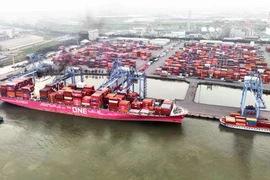
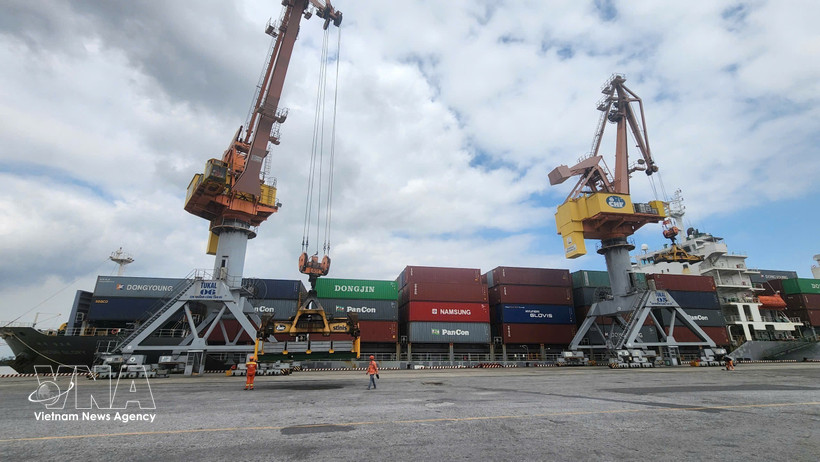
Ships dock at a port of Hai Phong Port Joint Stock Company during the Lunar New Year holiday. (Photo: VNA)

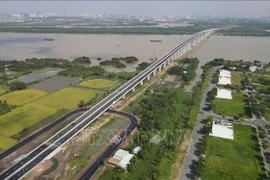
Hanoi (VNA) – From north to south, Vietnam’s seaports and border gates maintained stable and uninterrupted operations throughout the nine-day Lunar New Year (Tet) holiday, ensuring the smooth flow of goods and passengers and preventing any disruption to trade activities.

At the Hateco Hai Phong International Container Terminal, officers and workers kept up their regular working rhythm.

Vu Van Tien, a stevedore with more than a decade of experience working through Tet shifts, said staying on duty during the holiday has become routine, as the most important task is to keep cargo flows running smoothly.

The atmosphere at Nam Dinh Vu Port remained bustling during the festive days. Ship horns echoed across the wharves as containers were loaded and unloaded in quick succession, while trucks lined up in steady streams. The port’s smart gate system, featuring automatic number plate and container code recognition and electronic delivery notes, enabled vehicles to enter and exit with a simple QR code scan in just seconds.

Pham Van Bac from VMS Transport Co., Ltd. said the swift and convenient cargo handling at the start of the year brought a sense of good fortune for businesses.

According to the Hai Phong Maritime Port Authority, from February 14 (the 27th day of the last lunar month) to 2:30pm on February 20 (the fourth day of Tet), the port area handled 349 vessel and inland waterway calls, with total cargo throughput reaching 1.58 million tonnes and 137,918 TEUs.

The figures marked increases of 25% in vessel calls, 22% in tonnage, and 30% in container volume compared to Tet 2025.

Director Bui Nguyen Khoi said shipping lines and port enterprises were requested to assign staff on duty around the clock to promptly handle incidents and ensure maritime safety, fire prevention and environmental protection.

At Cai Lan Port in Quang Ninh province, bulk cargo handling continued from the first day of the new year, with sufficient manpower and equipment deployed to meet large-volume shipments.

In Nghe An province, Cua Lo Port resumed full operations from the third day of Tet, with seven vessels docking for loading and unloading. The port also welcomed a container ship bound for Dongguan, China, with post-holiday throughput projected at 15,000 tonnes per day.

In the south, customs clearance at Cat Lai Port was maintained throughout Tet. Customs officers were on constant duty, coordinating closely across the import-export chain. Transparent duty rosters and streamlined electronic procedures helped reduce waiting times and facilitate businesses.

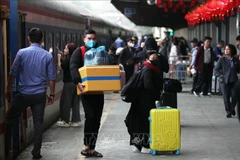
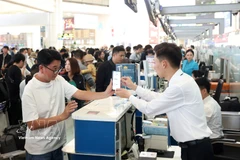
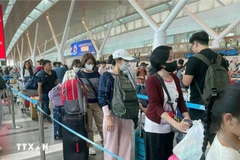
Border gates also operated in an orderly manner. At Huu Nghi International Border Gate, passenger traffic rose steadily during the holiday, reaching over 18,700 crossings on the fourth day of Tet. Border guard forces arranged sufficient personnel to ensure smooth entry and exit procedures.

Meanwhile, at Kim Thanh II International Road Border Gate in Lao Cai province, customs, border guards and quarantine forces coordinated efficiently from early morning. At 8am on the first day of Tet, a truck carrying 17 tonnes of durian was cleared for export to Hekou, China, marking an auspicious start for cross-border trade.

The continuous operations at key logistics hubs during Tet not only safeguarded uninterrupted cargo flows but also set a dynamic tone for production and business activities at the start of 2026, laying a solid foundation for economic growth and expanded trade./.
VNA

See more

Inside Bach Dang shipbuilding factory (Photo: VNA)

Vietnam's industry spearheads transition to circular economy

The circular economy is no longer just a policy choice. It has become an inevitable trend for delivering sustainable and green growth, sharpening competitiveness at home and abroad, and meeting Vietnam’s net-zero emissions target by 2050. It is now a prerequisite to sustain long-term economic expansion, particularly in industrial production and supporting industries.

Algerian officials, representatives of foreign embassies, and numerous global oil and gas companies attend the Bid Round. (Photo: VNA)

Vietnam joins int'l bidding for oil and gas exploration in Algeria

Currently, PVEP is involved in oil exploitation at Blocks 433a and 416b of the Bir Seba field in the Hassi Messaoud area, Ouargla province, located more than 600 km south of Algiers. The project stands as one of Petrovietnam’s most successful overseas ventures, demonstrating the operational capacity and technical expertise of Vietnamese engineers on the global stage.

A customer is making payment via QR code at a coffee shop. The Ministry of Finance has proposed new regulations on taxable revenue thresholds for household businesses. (Photo: VNA)

Finance ministry eyes flexible tax thresholds

In a draft law amending several articles of the laws on personal income tax, corporate income tax and value-added tax, Vietnam's finance ministry proposed scrapping the fixed revenue threshold of 500 million VND. Instead, it suggested the threshold be set by the Government based on prevailing economic conditions.

Part of the Vung Ang II Thermal Power Plant. (Photo: VNA)

Vung Ang II thermal power plant inaugurated in Ha Tinh

With a total investment of 2.2 billion USD, the Vung Ang II Thermal Power Plant is developed under a build-operate-transfer (BOT) model and has a designed capacity of 1,200 MW, comprising two turbines. The plant is expected to play a key role in ensuring stable electricity supply for the central region and neighbouring areas, thereby facilitating the development of industries, agriculture and services.

Aircraft at the Noi Bai International Airport in Hanoi. (Photo: VNA)

Vietnam seeks stable jet fuel supplies from China amid Middle East disruptions

On the basis of the long-standing friendship and cooperation between Vietnam and China, as well as close ties between their aviation authorities, the Civil Aviation Authority of Vietnam has asked the Civil Aviation Administration of China to direct relevant fuel suppliers to ensure sufficient and stable supplies for Vietnam.

Illustrative photo (Photo: Xinua/VNA)

Remittances to Ho Chi Minh City decline in Q1 amid global headwinds

Data from the State Bank of Vietnam (SBV)'s Region 2 branch showed that remittances transferred through credit institutions and economic organisations in Ho Chi Minh City exceeded 2 billion USD in the January–March period, down 15.6% from the previous quarter and 16.9% year-on-year.

The shipments are unloaded at the airport. (Photo: VNA broadcasts)

Nearly 100 tonnes of Vietnamese fruits, vegetables airlifted to UAE

Vietnamese fresh produce and processed foods are increasingly recognised for their quality, with items such as cashew nuts, coffee and spices gaining popularity among Middle East consumers. In 2025, Vietnam’s farm produce exports to the UAE exceeded 445 million USD, up nearly 24% year-on-year.

The World Coffee Heritage Forum officially opens at the World Coffee Museum in Dak Lak province, with eyes on UNESCO recognition for Vietnamese coffee culture. (Photo: VNA)

World Coffee Heritage Forum opens in Dak Lak

Dak Lak is known as the 'capital' of Vietnamese coffee, with rich, fertile basalt red soil ideal for agriculture. The coffee provides livelihoods for thousands of locals and has developed a unique cultural space, closely tied to the socioeconomic life, customs and identity of local communities.

Chili peppers are on the list of essential goods in Indonesia (Photo: VNA)

Indonesia reduces imports of strategic food commodities

In 2026, Indonesia is expected to have approximately 12 million tonnes of rice carried over from the previous year, supported by annual production of around 34.7 million tonnes. With projected consumption of 31.1 million tonnes, national rice reserves could reach approximately 16 million tonnes by the end of the year.

Hanoi’s roadmap to implement low-emission zones from July is providing a strong boost to the electric two-wheeler market (Photo: VNA)

Low-emission zone roadmap drives electric two-wheeler boom in Hanoi

From July 1, Hanoi will introduce time-based or area-based restrictions on petrol-powered motorcycles within Ring Road 1, with plans to expand coverage across the entire zone by 2028 and extend to areas within Ring Road 3 by 2030. The policy is expected to reshape travel habits for millions of urban residents.