Hanoi (VNA) – The Politburo's Resolution No. 80-NQ/TW on the development of Vietnamese culture identifies culture as the spiritual foundation of society and an internal resource for sustainable development, serving as a link connecting communities and strengthening social consensus.
Practical experience from local communities and insights from researchers show that when culture is properly positioned in social life, the spirit of the resolution can be realised in a natural and lasting manner.
Folk arts in community life
Dr. Nguyen Thi Tam of the Institute of Anthropology and Religious Studies under the Vietnam Academy of Social Sciences (VASS) said the vitality of folk arts is shaped not by a single factor, but by the combined effects of performance spaces, benefit-sharing mechanisms and intergenerational transmission within communities.
Performance spaces play a foundational role – when folk arts retain their “living space” in community activities, cultural values can be practiced, observed, learned and naturally passed on. Meanwhile, benefit-sharing mechanisms, especially those linked with community-based tourism, create additional momentum for people to sustain cultural practices while intergenerational transmission ensures the continuity of knowledge and skills.
Resolution 80 highlights the need for culture to permeate daily life. Tam noted culture truly spreads only when communities themselves practice it and choose ways to preserve and promote it in everyday living.
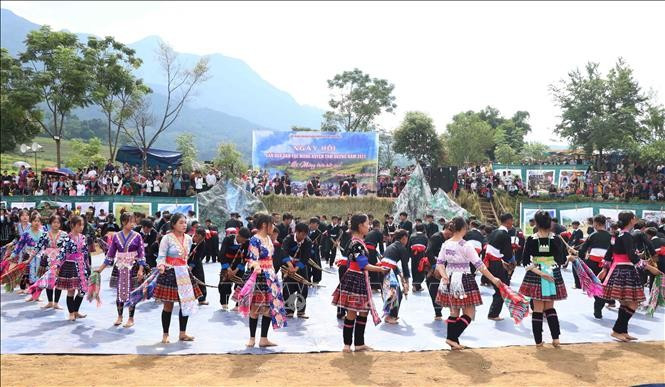
In Lo Lo Chai, a village of Mong and Lo Lo ethnic people in northTuyen Quang province, folk arts are practiced in communal spaces, rituals and visitor reception, helping maintain “living heritage” while adding economic value for local residents.
For the Mong community in Then Pa, also part of Tuyen Quang, where performance spaces are limited and young people often work away from home, solutions tied to communal activities, traditional rituals or on-site tourism are seen as key channels to keep folk arts present in daily life. In parallel, documentation, preservation and sharing on digital platforms – gradually forming “digital cultural resources” and “digital cultural spaces” – can support cultural preservation and promotion amid social changes.
Culture as internal resource
Associate Professor Dr Pham Van Duong of the VASS’s Institute of Cultural Studies said the core spirit of Resolution 80 is to make culture both the spiritual foundation of society and an internal driver of sustainable development. This requires a shift in approach, viewing culture not only as something to be preserved but as an active force embedded in social life to spur development.
Preservation detached from daily life – limited to collection, archiving or symbolic performance – struggles to create lasting impact. By contrast, when culture is practiced in connection with livelihoods, education, tourism and social activities, its values are naturally renewed and disseminated.
From this perspective, Duong stressed the role of social sciences and humanities research in concretising Resolution 80. Cultural studies should go beyond description to clarify how culture operates within communities and how it can become a genuine development driver.
Amid accelerating urbanisation, labour migration and market forces that are reshaping social structures, treating culture as an internal resource is increasingly vital. When placed in its proper role, culture can serve as the “glue” that binds communities, reinforces identity, strengthens social consensus and provides a solid spiritual foundation for sustainable development./.
See more
Olympic movement helps elevate Vietnam’s sporting stature internationally
As Vietnam implements its Sports Development Strategy to 2030 with a vision to 2045, the focus is not only on sustaining mass participation but also on improving quality and competitive achievements globally.
Golden Bridge enters top bridges of the world
Golden Bridge is placed No 4 in the honouring table along with many other renowned bridges globally.
Huong Pagoda Festival 2026 opens with renewed management, elevating national-scale event
This year’s festival themed “Safety - Friendliness - Quality” underscores efforts to ensure a secure and welcoming environment while enhancing service standards for visitors.
Hanoi festival marks 237th anniversary of Ngoc Hoi – Dong Da Victory
The commemoration ceremony featured traditional incense offerings and ritual rites to honour Emperor Quang Trung and the fallen soldiers. Festive activities, including cultural performances and historical reenactments, recreated the heroic atmosphere of the legendary campaign, drawing large crowds of residents and visitors.
Human chess – A traditional Vietnamese cultural beauty festival opens in Hanoi
Nguyen Hong Trang, Standing Vice Chairwoman of the Hoan Kiem People’s Committee, emphasised that human chess is a unique folk cultural and sporting practice, embodying intellectual depth, performance artistry and the Vietnamese martial spirit. Each chess piece represents not only a tactical role but also discipline, strategy, unity and national identity.
Yen Tu – Vinh Nghiem – Con Son, Kiep Bac: cultural heritage with global resonance
UNESCO’s inscription is grounded in criteria on the Outstanding Universal Value, underscoring the organic relationship between the sacred landscape of the Yen Tu mountains and the Con Son–Kiep Bac area, Truc Lam Buddhist thought, and the political authority of the Tran Dynasty.
Bronze Drum Stadium to elevate Vietnam to global sports stage
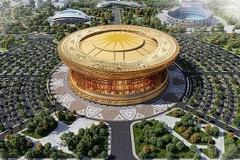
Vietnam's construction of the Trong Dong (Bronze Drum) Stadium, set to accommodate 135,000 spectators, has garnered significant attention from global media. Once completed, it will be the world's largest stadium.
Xoan singing part of Vietnam's unique identity on world heritage map.
In the vast treasure trove of Vietnamese folk art, Xoan singing stands as a unique jewel, inextricably linked to the worship of the Hung Kings — the nation's legendary founders.
Exploring hidden Tet experiences across Vietnam
While fireworks and countdown celebrations light up much of the country, New Year’s Eve on Con Dao is markedly subdued. At midnight, the island becomes an “island of candles” as locals gather at Hang Duong Cemetery to pay tribute to national heroes.
Exhibitions invite visitors to explore zodiac animal of New Year
A series of exhibitions, diverse in materials and perspectives, not only celebrate the zodiac animal of the year but also invite visitors on a journey into the cultural, historical and artistic depth associated with this familiar motif.
Northern Vietnam’s top 10 spring festivals to explore after Tet
Starting from the third day of Tet, locals and travellers from all over the country heading to the North can check out a variety of unique festivals in different areas to enjoy spring trips, go on pilgrimages, and experience the vibrant cultural traditions that are part of Vietnam’s rich heritage.
Spring pagoda visits preserve Hanoians’ spiritual culture
The ritual has long formed part of Vietnam’s spiritual tradition, reflecting a shared wish for a year of good fortune.
Flavours of three regional Tet feasts in contemporary life
Each dish embodies not only taste but also memories and cultural values nurtured over generations. Sustaining this heritage ensures that Vietnamese cuisine is not eroded by time, but continues to be cherished, renewed and shared with care and respect.
Nguyen Hue Flower Street showcases Vietnamese identity, integration spirit
The Nguyen Hue Flower Street in Ho Chi Minh City presents a symphony of vivid colours under the southern spring sunshine, featuring more than 100,000 baskets of diverse flowers.
Tet Book Street Festival welcomes Spring with knowledge, renewed thinking
Over more than a decade, the 2026 Lunar New Year Book Street Festival has become a distinctive cultural hallmark of Ho Chi Minh City, promoting and spreading reading culture.
Gen Z reconnects with their roots, spreads rural Tet spirit
In recent years, Vietnamese social media has witnessed the rise of a content stream that feels old-fashioned yet resonates strongly with young audiences in the digital age: documenting rural life, especially kitchen scenes, Tet preparations, and everyday family routines.
Vietnam tops medal table at World Kun Khmer Championships
The Vietnamese team claimed 18 gold medals on their debut at the sixth World Kun Khmer Championships in Cambodia, edging hosts Cambodia to finish first overall and strengthening their push for Olympic recognition of the sport.
Art reawakens Hanoi's public spaces
Last year, Hanoi saw a surge in both quantity and quality of public art endeavours, a leap forward in the art of breathing new life into urban landscapes
‘Apricot blossom horse’ – a soulful flight of cultural memory
In the ever-evolving landscape of Vietnamese art, the "Ngua hoa mai" (Apricot blossom horse) project stands as a testament to how folk motifs can find new life.
Indochina-era archives proposed for UNESCO Memory of the World Register
According to the State Records and Archives Department, part of the archives from the French colonial period (1858–1954) is preserved in Vietnam, while the remainder is kept in France.