Gen Z reconnects with their roots, spreads rural Tet spirit

In recent years, Vietnamese social media has witnessed the rise of a content stream that feels old-fashioned yet resonates strongly with young audiences in the digital age: documenting rural life, especially kitchen scenes, Tet preparations, and everyday family routines.

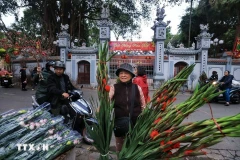
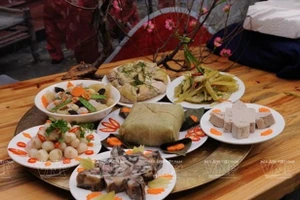
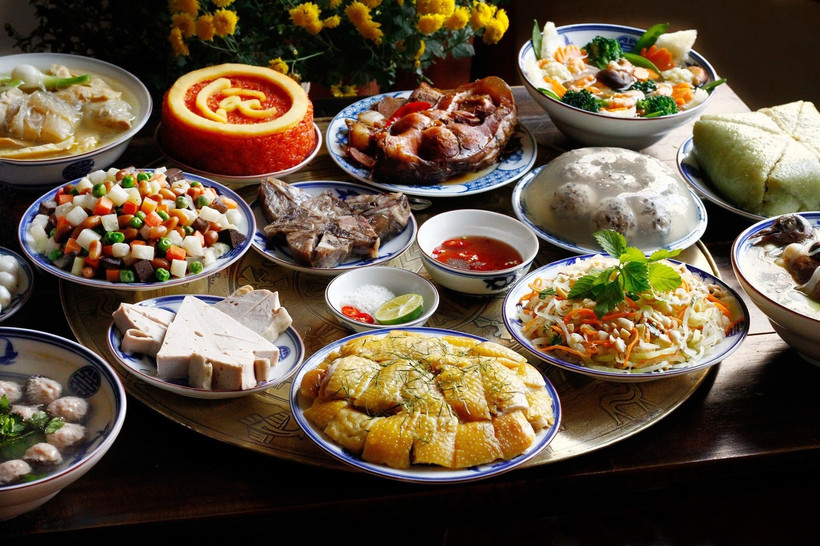
As Lunar New Year approaches, videos guiding viewers on how to prepare a traditional Tet feast attract increasing numbers of likes and comments. (Photo: tienphong.vn)

Hanoi (VNA) - In recent years, Vietnamese social media has witnessed the rise of a content stream that feels old-fashioned yet resonates strongly with young audiences in the digital age: documenting rural life, especially kitchen scenes, Tet preparations, and everyday family routines.

During the Lunar New Year (Tet) 2026, the trend became even more pronounced as personal channels such as Ut Ve Vuon, Bep Tren Suon Doi, Que Noi, Nguoi Nha Que, and Mon Ngon Me Nau drew sustained attention with videos grounded in real people and real work, largely free of performance or staging.

On Bep Tren Suon Doi, Nguyen Trong Hieu, affectionately known as Ti, takes viewers, in just over three minutes, through a long and meticulous journey to produce bitter melon preserves. This video has, to date, attracted more than 3 million views.

Elsewhere, Tran Kim Ut, owner of the Ut Ve Vuon channel with more than 1.8 million followers, similarly takes viewers back to Tet memories of the Mekong Delta. Her videos feature Buddha’s hand citron preserves, vegetable-based floral preserves, nipa palm candy, kumquat and pomelo preserves.

From thin peeling and overnight limewater soaking to boiling, sugaring, carving papaya into lotus shapes, and slow candying over low heat to preserve form, each step demands patience. Ut admits these dishes take a great deal of time, but the process makes her feel “excited, as if reliving Tet of the past.” Her videos often garner hundreds of thousands of views and thousands of comments and shares, forming a community devoted to traditional home cooking.

Redefining values

Globally, since 2020, the Cottagecore trend - idealising a simple, slow-paced rural life close to nature - has gained traction, driven by fatigue with urban pressure, technology overload, and the COVID-19 period. Young people began dreaming of gardening, cooking, reading, sewing, and living in small homes amid nature. Pastoral imagery from farm to table attracted widespread engagement.

Today, returning from the city to the countryside remains a viable lifestyle choice. Remote work allows young people to stabilise income, reduce costs, and stay closer to family. Psychologist Vu Dieu My describes this shift as a “redefinition of life values,” since opportunities are no longer seen as inherently tied to cities.
tet-2.jpg
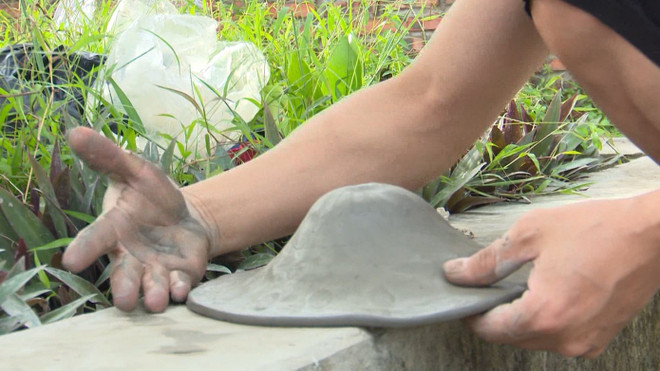
Making clay firecrackers and wrapping banh chung without a mold are among the keywords currently trending on social media. (Photo: tienphong.vn)

Ahead of Tet 2026, TikTok and YouTube Shorts overflowed with videos titled “making fruit preserves with grandma,” “going home to learn braised pork,” “wrapping banh chung without moulds,” or “going to the Tet market with mom.” Most clips are simply shot, often on older phones, without elaborate lighting or scripts. The creators are ordinary students, office workers, or freelancers returning home for Tet, yet many videos still reach tens or hundreds of thousands of views.

Tet as a pause

In recent years, Tet content online has moved beyond showcasing food trays or lucky money. The holiday now unfolds in vlogs, kitchen sounds, and photo albums curated like diaries. Simple YouTube vlogs such as “Tet in my hometown” or “three days of Tet with my family” resonate because they offer what many feel they lack: familiarity.

“I made the vlog because I feared one day I might forget the image of my grandmother wrapping rice cake by the stove, the chopping sounds in the yard, my father pasting calligraphy on the porch,” shared Nguyen Tran Dang Khoa, creator of Tet in the countryside. His clip unexpectedly drew nearly 10,000 views, with many viewers saying it made them miss home and Tet of old.

Cultural researcher Nguyen Khoa from the Institute for Research, Preservation and Promotion of National Culture views the “returning home” craze as a natural response by young people to a hyper-digitalised modern life.

When relationships are increasingly mediated through screens, people seek more direct, tangible and lasting emotional anchors. Family and hometown provide exactly that, he said. From a cultural perspective, the trend shows that young people are not turning away from tradition, but reconnecting with their roots using the language and tools of their own era./.
VNA

See more

Phan Thi Hong Lien wins the last gold for of Vietnam to help the team place No 1 in the sixth World Kun Khmer Championships' tally. (Photo: VNA)

Vietnam tops medal table at World Kun Khmer Championships

The Vietnamese team claimed 18 gold medals on their debut at the sixth World Kun Khmer Championships in Cambodia, edging hosts Cambodia to finish first overall and strengthening their push for Olympic recognition of the sport.

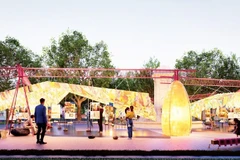
An exhibition on "do" paper and recycled materials at Dien Hong flower garden. (Photo: nhandan.vn)

Art reawakens Hanoi's public spaces

Last year, Hanoi saw a surge in both quantity and quality of public art endeavours, a leap forward in the art of breathing new life into urban landscapes

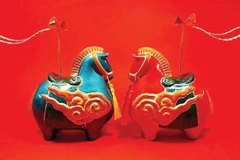
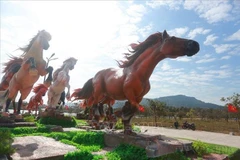
The horse image symbolises resilience, endurance, and spirit of “success upon arrival.” (Photo: VNA)

Horse mascot leaves strong impression at spring fair

A major attraction is a unique “Eight galloping horses” (Bat Ma) sculpture displayed at the To Trinh gemstone booth. Carved from a rare monolithic jade block, the artwork features eight spirited horses racing across golden rice fields. The harmonious blend of pure jade veins and natural golden tones enhances both its aesthetic depth and symbolic meaning, evoking prosperity and abundance associated with Vietnam’s rice civilisation.

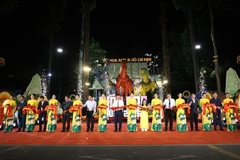
Delegates cut the ribbon to launch the 46th Spring Flower Festival at Tao Dan Park. (Photo: VNA)

Festive activities herald Lunar New Year of the Horse

A vibrant array of cultural and media events has been launched across Vietnam to welcome the Lunar New Year of the Horse 2026, highlighting both the country’s enduring traditions and its dynamic socio-economic progress.

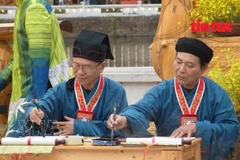
A calligraphy booth at the festival (Photo: VNA)

Spring Calligraphy Festival 2026 opens in Hanoi

A central attraction remains the traditional New Year calligraphy request activity, featuring 35 booths staffed by calligraphers selected through a rigorous, transparent evaluation process.

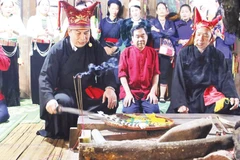
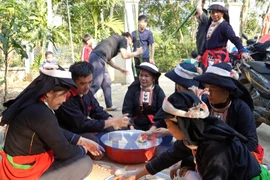
A ritual to welcome new year of Muong people in Phu Tho (Photo: nhandan.vn)

Unique Lunar New Year traditions on display

Each ethnic group brings its own unique Tet customs to the Vietnam National Village for Ethnic Culture and Tourism on the outskirts of Hanoi, creating a rich and colourful cultural mosaic.

Polish Ambassador to Vietnam Joanna Skoczek (R) attends a cultural event in Vietnam (Photo: VNA)

Cultural, people-to-people interactions anchor Vietnam–Poland relations: diplomat

Skoczek also pointed to striking similarities between Vietnam’s Tet and Poland’s Christmas Eve traditions, particularly the emphasis on family reunions, symbolic meals and shared rituals passed down through generations. Despite differences in customs and cuisine, she said the essence of the celebrations remains universal: bringing loved ones together to welcome a new start.

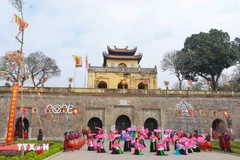
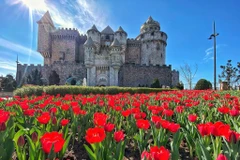
A Tet flower street is held for the first time at the Thang Long Imperial Citadel during the Lunar New Year 2026. (Photo: VNA)

Tet flower street held for first time at Thang Long Imperial Citadel

More than a seasonal attraction, the flower street also functions as a formal cultural venue for receiving ambassadors, their spouses and representatives of diplomatic missions attending the Vietnam Discovery Day 2026 programme. Its linkage with an external event further reinforces the Thang Long Imperial Citadel’s position as a key platform for introducing Vietnam’s cultural identity to international friends.

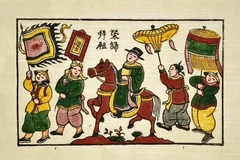
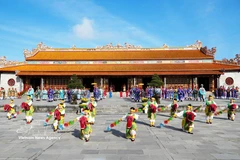
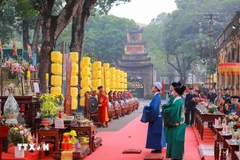
The recreation of Tien lich (calendar presentation ceremony), an important year-end ritual in which the royal court presented the new calendar for the coming year to the king, within a programme at the Thang Long Imperial Citadel in Hanoi on February 10. (Photo: VNA)

Hanoi recreates Lunar New Year court ritual at Thang Long Imperial Citadel

Organised by the municipal People’s Committee in coordination with the Vietnam National Commission for UNESCO, the programme recreated a range of ceremonial practices once performed in the royal court. These included the Tien lich ritual, in which calendars were formally distributed to the court and the public; the Thuong tieu ceremony featuring the ceremonial New Year pole erected to ward off evil spirits and welcome spring; the ritual release of carp to send the Kitchen Gods to heaven; and the solemn changing-of-the-guard ceremony inside the imperial citadel. Together, the activities helped audiences better understand the cultural, spiritual and ceremonial order of Vietnam’s feudal past.