Indochina-era archives proposed for UNESCO Memory of the World Register

According to the State Records and Archives Department, part of the archives from the French colonial period (1858–1954) is preserved in Vietnam, while the remainder is kept in France.
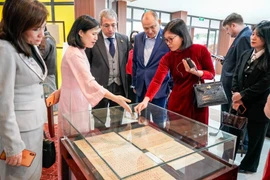
Hanoi (VNA) – Deputy Prime Minister Mai Van Chinh has agreed to submit the nomination dossier for the documentary heritage of the archives on Indochina preserved in France and Vietnam (1862–1954) to UNESCO for inscription on the Memory of the World Register.

Under Document No. 1444/VPCP-KGVX, the Deputy PM assigned the Ministry of Culture, Sports and Tourism and the Ministry of Foreign Affairs (MoFA) to coordinate with the Ministry of Home Affairs, in carrying out the necessary procedures and working with the French side to submit the dossier to UNESCO in accordance with regulations on cultural heritage and UNESCO guidelines.

The process must ensure compliance with international treaties and commitments to which Vietnam is a signatory, the provisions of the letter of intent signed between the Ministry of Home Affairs of Vietnam and the Ministry of Culture of France, as well as relevant legal regulations.

The MoFA and the Vietnam National Commission for UNESCO were tasked with supporting the Ministry of Home Affairs, the Ministry of Culture, Sports and Tourism, and relevant agencies in implementing measures to garner international consensus in this regard. They were also asked to promote Vietnam’s role in UNESCO’s governing mechanisms.

The Ministry of Home Affairs was requested to work closely with the French side to finalise the nomination dossier and follow the submission schedule closely, ensuring that its contents strictly comply with regulations on national security, sovereignty, cultural heritage, archives, protection of state secrets, access to information, and other relevant laws.

According to the State Records and Archives Department, part of the archives from the French colonial period (1858–1954) is preserved in Vietnam, while the remainder is kept in France.

vnanet-nguyen-dynasty.jpg
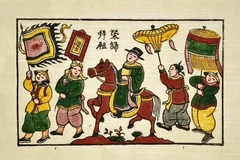
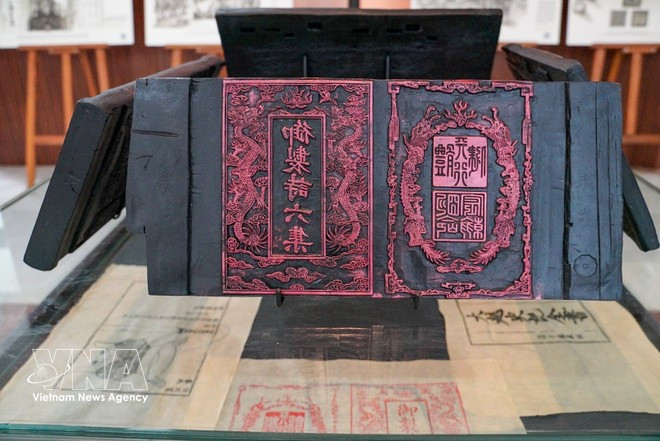
Nguyen Dynasty woodblocks are inscribed on UNESCO’s Memory of the World Register (Photo: VNA)

In Vietnam, the documents are safeguarded at the National Archives Centres I, II and IV, with a total volume of some 9,000 metres of shelving, comprising 84 record groups. The remaining documents are preserved at the French National Overseas Archives in Aix-en-Provence under the terms of a 1950 agreement between French High Commissioner Léon Pignon and Bao Dai, the last king of Vietnam’s last feudal dynasty.

The archives include administrative records of Indochina-level agencies as well as regional administrations and provincial authorities. They also contain technical documents related to nearly 150 architectural works, including administrative headquarters, hospitals, schools, irrigation facilities and transport infrastructure across the northern, central and southern regions, along with more than 20,000 maps produced by the Indochina Geographic Service and provincial administrative agencies.

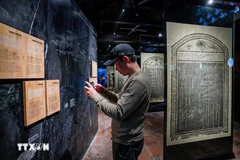
Vietnam currently has three documentary heritages recognised by UNESCO, namely the Nguyen Dynasty woodblocks and imperial records, and the stone steles of doctoral laureates at the Temple of Literature./.
VNA

See more

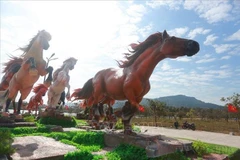
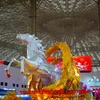
The horse image symbolises resilience, endurance, and spirit of “success upon arrival.” (Photo: VNA)

Horse mascot leaves strong impression at spring fair

A major attraction is a unique “Eight galloping horses” (Bat Ma) sculpture displayed at the To Trinh gemstone booth. Carved from a rare monolithic jade block, the artwork features eight spirited horses racing across golden rice fields. The harmonious blend of pure jade veins and natural golden tones enhances both its aesthetic depth and symbolic meaning, evoking prosperity and abundance associated with Vietnam’s rice civilisation.

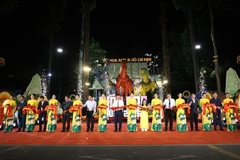
Delegates cut the ribbon to launch the 46th Spring Flower Festival at Tao Dan Park. (Photo: VNA)

Festive activities herald Lunar New Year of the Horse

A vibrant array of cultural and media events has been launched across Vietnam to welcome the Lunar New Year of the Horse 2026, highlighting both the country’s enduring traditions and its dynamic socio-economic progress.

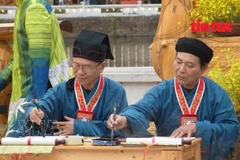
A calligraphy booth at the festival (Photo: VNA)

Spring Calligraphy Festival 2026 opens in Hanoi

A central attraction remains the traditional New Year calligraphy request activity, featuring 35 booths staffed by calligraphers selected through a rigorous, transparent evaluation process.

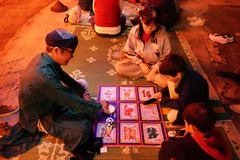
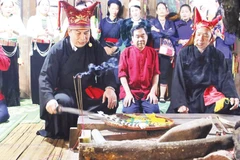
A ritual to welcome new year of Muong people in Phu Tho (Photo: nhandan.vn)

Unique Lunar New Year traditions on display

Each ethnic group brings its own unique Tet customs to the Vietnam National Village for Ethnic Culture and Tourism on the outskirts of Hanoi, creating a rich and colourful cultural mosaic.

Polish Ambassador to Vietnam Joanna Skoczek (R) attends a cultural event in Vietnam (Photo: VNA)

Cultural, people-to-people interactions anchor Vietnam–Poland relations: diplomat

Skoczek also pointed to striking similarities between Vietnam’s Tet and Poland’s Christmas Eve traditions, particularly the emphasis on family reunions, symbolic meals and shared rituals passed down through generations. Despite differences in customs and cuisine, she said the essence of the celebrations remains universal: bringing loved ones together to welcome a new start.

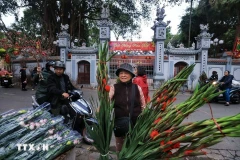
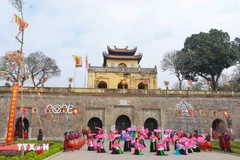
A Tet flower street is held for the first time at the Thang Long Imperial Citadel during the Lunar New Year 2026. (Photo: VNA)

Tet flower street held for first time at Thang Long Imperial Citadel

More than a seasonal attraction, the flower street also functions as a formal cultural venue for receiving ambassadors, their spouses and representatives of diplomatic missions attending the Vietnam Discovery Day 2026 programme. Its linkage with an external event further reinforces the Thang Long Imperial Citadel’s position as a key platform for introducing Vietnam’s cultural identity to international friends.

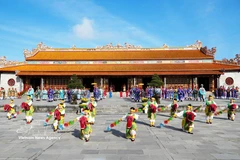
The recreation of Tien lich (calendar presentation ceremony), an important year-end ritual in which the royal court presented the new calendar for the coming year to the king, within a programme at the Thang Long Imperial Citadel in Hanoi on February 10. (Photo: VNA)

Hanoi recreates Lunar New Year court ritual at Thang Long Imperial Citadel

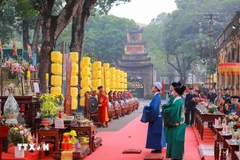
Organised by the municipal People’s Committee in coordination with the Vietnam National Commission for UNESCO, the programme recreated a range of ceremonial practices once performed in the royal court. These included the Tien lich ritual, in which calendars were formally distributed to the court and the public; the Thuong tieu ceremony featuring the ceremonial New Year pole erected to ward off evil spirits and welcome spring; the ritual release of carp to send the Kitchen Gods to heaven; and the solemn changing-of-the-guard ceremony inside the imperial citadel. Together, the activities helped audiences better understand the cultural, spiritual and ceremonial order of Vietnam’s feudal past.

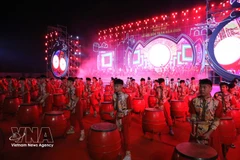
Illustrative image (Photo: VNA)

Fireworks, festive events usher in Year of the Horse across Vietnam

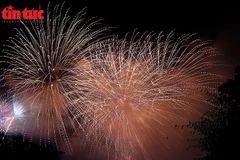
Local residents and visitors can enjoy spectacular fireworks displays at locations like the Hanoi Post Office in Hoan Kiem ward; Coconut island in Thong Nhat park, Hai Ba Trung ward; the F1 racetrack area in Tu Liem ward; Lac Long Quan flower garden in Tay Ho ward; Van Quan lake in Ha Dong ward; and the Son Tay Ancient Citadel in Son Tay ward.

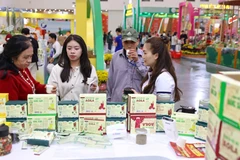
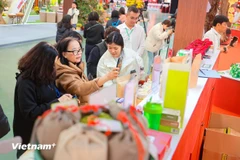
People visit the Spring Fair 2026. (Photo: VNA)

Spring Fair 2026: Celebration of Vietnamese Tet flavours, cultural memory

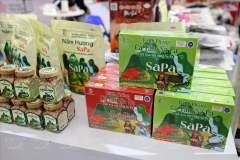
Food has long occupied a central place in Vietnamese Tet culture, symbolising abundance, harmony and gratitude. At the Spring Fair 2026, traditional Tet delicacies are presented in a modern setting while retaining their familiar essence, allowing visitors to experience both nostalgia and renewal.