Vietnam tops medal table at World Kun Khmer Championships

The Vietnamese team claimed 18 gold medals on their debut at the sixth World Kun Khmer Championships in Cambodia, edging hosts Cambodia to finish first overall and strengthening their push for Olympic recognition of the sport.

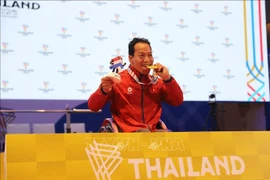
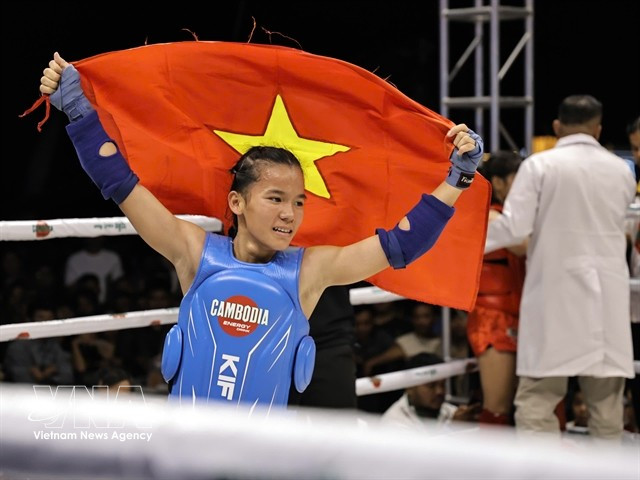
Phan Thi Hong Lien wins the last gold for of Vietnam to help the team place No 1 in the sixth World Kun Khmer Championships' tally. (Photo: VNA)

Hanoi (VNS/VNA) - Vietnam emerged as the strongest team at the sixth World Kun Khmer Championships, finishing top of the medal table when the tournament concluded on February 14 in Cambodia.

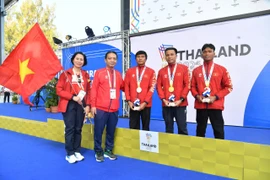
After seven days of competition, the Vietnamese delegation claimed 18 gold medals to dominate both the senior and junior events, despite this being their first appearance at the championships.

On the final day, February 14, Phan Thi Hong Lien, Truong Dinh Vang and Pham Le Gia Huy advanced to the finals, securing one gold and two silver medals, respectively.

Their results helped Vietnam edge past hosts Cambodia, the birthplace of Kun Khmer, to lead the overall standings by a single gold medal.

In total, Vietnam won 18 gold, 8 silver and 10 bronze medals. Cambodia finished second with 17 gold, 15 silver and 5 bronze medals.

“My fighters successfully fulfilled their mission,” said Nguyen Trong Nguyen, head of the Vietnamese delegation.

“I was truly proud and moved by their spirit, determination and effort. I would like to thank the athletes for their courage and the coaches for their dedication, which enabled them to compete at more than 100% of their capacity.”

Beyond their impressive performances in the ring, Vietnam also made its mark at the International Kun Khmer Federation (IKKF) General Assembly, held in Preah Sihanouk province.

Ho Thanh Liem, Head of the Competition Organisation and Events Department of the Vietnam Kickboxing Federation, was elected Vice President of the IKKF.

Representatives of all IKKF member countries unanimously endorsed a new 25-member executive committee. At the assembly, the newly elected leadership called on the federation’s 63 member nations to work together to raise the global profile of Kun Khmer, with the long-term goal of securing its inclusion in the Olympic Games during the current term.

The federation aims to expand its membership to 75 countries in the 2026–30 period, a key requirement for Olympic recognition.

Among its priorities in 2026, Liem and the federation will promote the establishment of Asian and Southeast Asian Kun Khmer federations to strengthen the sport’s regional structure.

At home, the Sports Authority of Vietnam officially recognised Kun Khmer as one of the country’s elite sports in January.

The National Kun Khmer Clubs Championships will be held in June in Tay Ninh province. The National Junior Kun Khmer Championships are scheduled for August in Gia Lai, while the National Kun Khmer Championships will take place in September in Can Tho, which will also host the seventh World Kun Khmer Championships in November.

Kun Khmer is a Cambodian-origin combat sport featuring stand-up striking and clinch fighting, in which competitors aim to win by knockout, technical knockout or points./.

VNA
See more

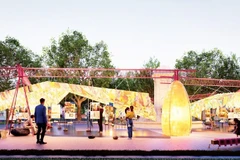
An exhibition on "do" paper and recycled materials at Dien Hong flower garden. (Photo: nhandan.vn)

Art reawakens Hanoi's public spaces

Last year, Hanoi saw a surge in both quantity and quality of public art endeavours, a leap forward in the art of breathing new life into urban landscapes

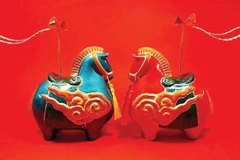
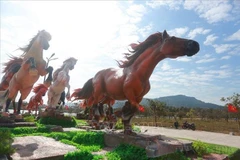
The horse image symbolises resilience, endurance, and spirit of “success upon arrival.” (Photo: VNA)

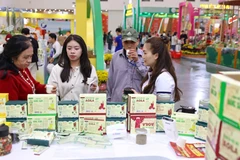
Horse mascot leaves strong impression at spring fair

A major attraction is a unique “Eight galloping horses” (Bat Ma) sculpture displayed at the To Trinh gemstone booth. Carved from a rare monolithic jade block, the artwork features eight spirited horses racing across golden rice fields. The harmonious blend of pure jade veins and natural golden tones enhances both its aesthetic depth and symbolic meaning, evoking prosperity and abundance associated with Vietnam’s rice civilisation.

Delegates cut the ribbon to launch the 46th Spring Flower Festival at Tao Dan Park. (Photo: VNA)

Festive activities herald Lunar New Year of the Horse

A vibrant array of cultural and media events has been launched across Vietnam to welcome the Lunar New Year of the Horse 2026, highlighting both the country’s enduring traditions and its dynamic socio-economic progress.

A calligraphy booth at the festival (Photo: VNA)

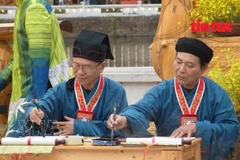
Spring Calligraphy Festival 2026 opens in Hanoi

A central attraction remains the traditional New Year calligraphy request activity, featuring 35 booths staffed by calligraphers selected through a rigorous, transparent evaluation process.

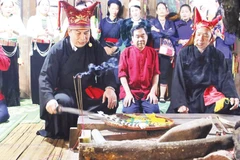
A ritual to welcome new year of Muong people in Phu Tho (Photo: nhandan.vn)

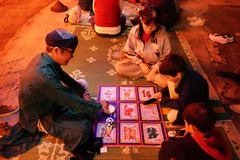
Unique Lunar New Year traditions on display

Each ethnic group brings its own unique Tet customs to the Vietnam National Village for Ethnic Culture and Tourism on the outskirts of Hanoi, creating a rich and colourful cultural mosaic.

Polish Ambassador to Vietnam Joanna Skoczek (R) attends a cultural event in Vietnam (Photo: VNA)

Cultural, people-to-people interactions anchor Vietnam–Poland relations: diplomat

Skoczek also pointed to striking similarities between Vietnam’s Tet and Poland’s Christmas Eve traditions, particularly the emphasis on family reunions, symbolic meals and shared rituals passed down through generations. Despite differences in customs and cuisine, she said the essence of the celebrations remains universal: bringing loved ones together to welcome a new start.

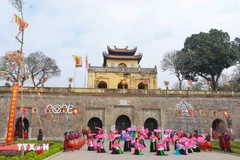
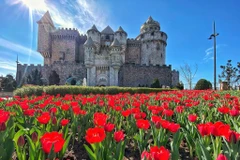
A Tet flower street is held for the first time at the Thang Long Imperial Citadel during the Lunar New Year 2026. (Photo: VNA)

Tet flower street held for first time at Thang Long Imperial Citadel

More than a seasonal attraction, the flower street also functions as a formal cultural venue for receiving ambassadors, their spouses and representatives of diplomatic missions attending the Vietnam Discovery Day 2026 programme. Its linkage with an external event further reinforces the Thang Long Imperial Citadel’s position as a key platform for introducing Vietnam’s cultural identity to international friends.

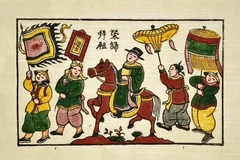
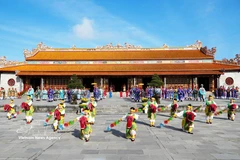
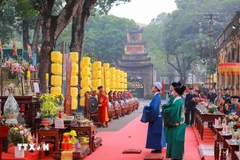
The recreation of Tien lich (calendar presentation ceremony), an important year-end ritual in which the royal court presented the new calendar for the coming year to the king, within a programme at the Thang Long Imperial Citadel in Hanoi on February 10. (Photo: VNA)

Hanoi recreates Lunar New Year court ritual at Thang Long Imperial Citadel

Organised by the municipal People’s Committee in coordination with the Vietnam National Commission for UNESCO, the programme recreated a range of ceremonial practices once performed in the royal court. These included the Tien lich ritual, in which calendars were formally distributed to the court and the public; the Thuong tieu ceremony featuring the ceremonial New Year pole erected to ward off evil spirits and welcome spring; the ritual release of carp to send the Kitchen Gods to heaven; and the solemn changing-of-the-guard ceremony inside the imperial citadel. Together, the activities helped audiences better understand the cultural, spiritual and ceremonial order of Vietnam’s feudal past.