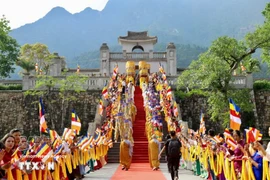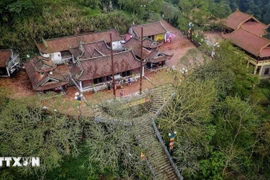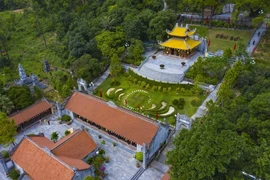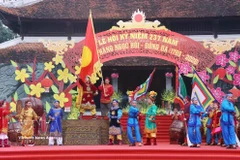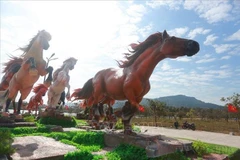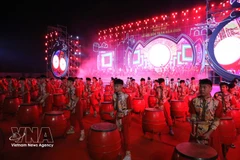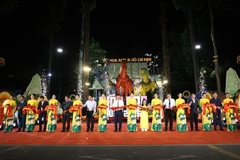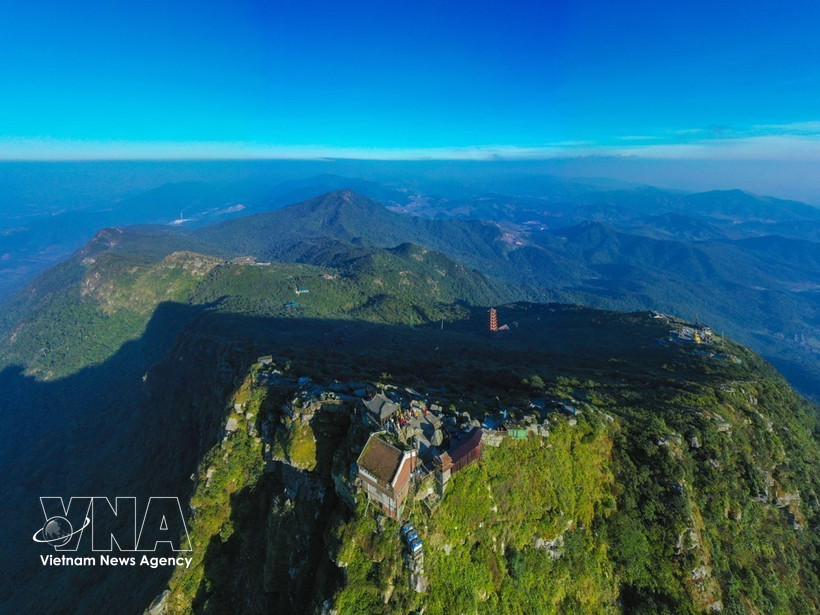
Hanoi (VNA) – The Yen Tu – Vinh Nghiem – Con Son, Kiep Bac Complex of Monuments and Landscapes, inscribed by UNESCO as a World Cultural Heritage site, embodies Outstanding Universal Value through the close interplay of history, culture, spirituality and distinctive natural landscapes.
Spanning Quang Ninh, Bac Ninh, and Hai Phong, the complex creates a seamless heritage space that highlights the beginnings, development, and wide influence of a unique Vietnamese cultural and spiritual tradition. It’s deeply connected to the founding and flourishing of the Truc Lam Yen Tu Zen sect, a native school of Buddhism, established in the 13th century by King-Monk Tran Nhan Tong.
During the Tran Dynasty, Truc Lam Buddhism went beyond the realm of religion to become an important ideological pillar, contributing to national cohesion and the protection of Dai Viet’s independence, sovereignty and cultural identity. Its philosophy of engaged Buddhism, harmonising spiritual practice with everyday life, combined with a strong patriotic spirit to create a powerful moral force that united the nation in resistance to foreign invasion and in the process of nation-building.
UNESCO’s inscription is grounded in criteria on the Outstanding Universal Value, underscoring the organic relationship between the sacred landscape of the Yen Tu mountains and the Con Son–Kiep Bac area, Truc Lam Buddhist thought, and the political authority of the Tran Dynasty.
The emergence of Truc Lam Buddhism offers global evidence of how a religion rooted in diverse philosophical traditions and indigenous beliefs arose from a sacred landscape and exerted a lasting influence on social life, contributing to state consolidation and regional stability.
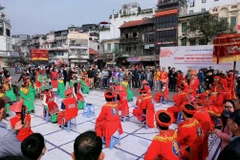
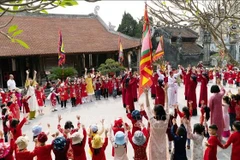
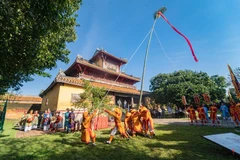
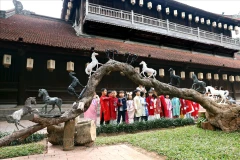
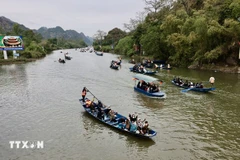
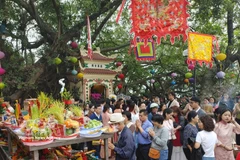
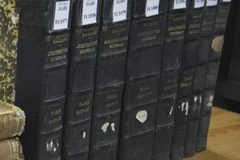
A defining feature of the complex is its rare synthesis of tangible and intangible heritage. It comprises systems of ancient pagodas, stupas, stone steles, traditional architecture and woodblocks, most notably the Vinh Nghiem Pagoda woodblocks, recognised by UNESCO as Documentary Heritage of the Asia–Pacific region. These exist alongside living practices such as rituals, teachings, pilgrimage traditions and festivals that continue to this day. Together, these elements provide valuable insights into Vietnam’s spiritual life and cultural continuity.
The site is also closely associated with the lives and legacies of eminent historical figures and Zen masters, including King-Monk Tran Nhan Tong, members of the Tran royal family, as well as renowned national heroes and scholars such as Tran Hung Dao and Nguyen Trai. Its relics encapsulate layers of historical, architectural, artistic and intellectual values accumulated over centuries.
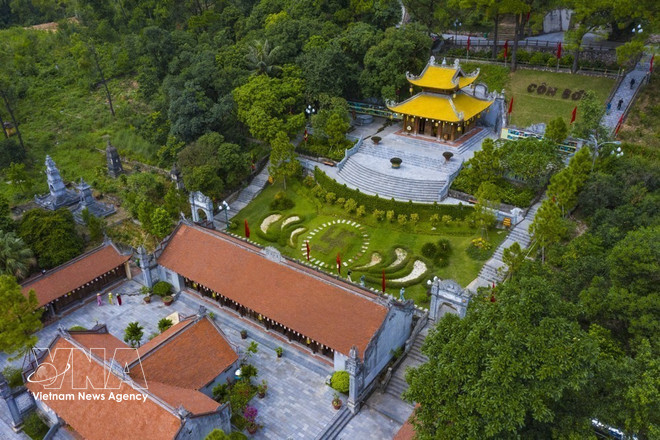
The successful inscription reflects a long, systematic and scientifically grounded preparation process, characterised by close and responsible coordination across sectors and levels, particularly among the three localities involved. As Vietnam’s first serial, inter-provincial World Heritage nomination, the dossier represents an innovative approach and opens up new opportunities for sustainable tourism, cultural education and international exchange on spiritual heritage.
Alongside national pride, UNESCO recognition entails heightened responsibility. The Vietnamese Government has pledged to safeguard the site’s integrity, authenticity and Outstanding Universal Value through an integrated, cross-sectoral and inter-regional management framework that balances conservation with socio-economic development and environmental protection. Local communities, religious institutions and cultural stakeholders are expected to play an active role in preserving and passing on these values.
The Yen Tu – Vinh Nghiem – Con Son, Kiep Bac complex stands as a vivid testament to the depth of Vietnam’s history, culture and spiritual life, while also making a meaningful contribution to the shared heritage of humanity./.