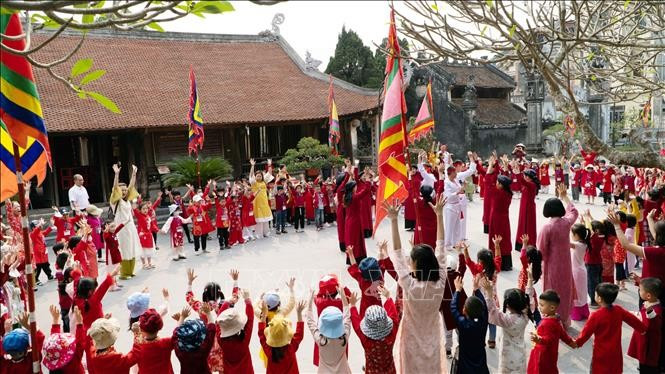
Xoan singing part of Vietnam's unique identity on world heritage map.

In the vast treasure trove of Vietnamese folk art, Xoan singing stands as a unique jewel, inextricably linked to the worship of the Hung Kings — the nation's legendary founders.

Students from Viet Tri city learn about Xoan singing with traditional Xoan artisans at Hung Lo communal house. (Photo: VNA)

Phu Tho (VNA) - In the vast treasure trove of Vietnamese folk art, Xoan singing stands as a unique jewel, inextricably linked to the worship of the Hung Kings — the nation's legendary founders.

With its rustic melodies and profound lyrics, Xoan singing is more than just a musical performance; it is a living chronicle of the spiritual life and cultural identity of the Vietnamese people in the "Ancestral Land" of Phu Tho.

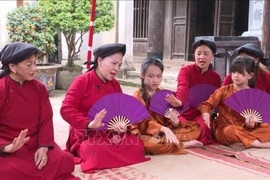
Dating back thousands of years, Xoan singing traditionally accompanies spring festivals, serving as a spiritual bridge to pray for bountiful harvests, favourable weather, and national peace. Often referred to as “hat cua dinh” (singing at the communal house), the art form reflects the tight-knit relationship between ancient beliefs and community life.

According to cultural researcher Pham Ba Khiem, Xoan singing serves as a precious archive of the labour, emotions, and customs of agricultural residents in the northern midland region. Through every rhythmic beat and vocal nuance, listeners can feel a deep-seated love for the homeland and a collective aspiration for a prosperous, harmonious life.

The global community recognised Xoan singing's unique value and enduring vitality in 2011 when UNESCO inscribed Phu Tho’s Xoan singing as an Intangible Cultural Heritage in Need of Urgent Safeguarding. Remarkably, following a swift and intensive six-year campaign involving the entire political system, the community and local artisans, it was moved to the Representative List of the Intangible Cultural Heritage of Humanity in 2017. This transition remains a rare achievement in heritage conservation and a point of immense national pride.

Today, the four original Xoan guilds - Phu Duc, Thet, Kim Doi, and An Thai - remain the beating heart of this legacy. Preservation efforts have moved beyond mere documentation; elder artisans are actively mentoring younger generations to ensure the "Xoan rhythm" never fades.

Furthermore, the art form is being revitalised through contemporary creative lenses. Many young artists are experimenting with modern arrangements, blending traditional melodies with light shows, dance, and drama to appeal to younger audiences. Educational initiatives have also integrated Xoan singing into provincial school curricula, establishing a steady stream of young successors.

Looking ahead, Phu Tho is strategically weaving heritage into its tourism development. The "Xoan Singing in Ancient Villages" project allows international visitors to experience the art in its original, sacred setting. By linking these performances with key historical landmarks, the province aims to transform Xoan singing into a signature tourism product, boosting the local economy while promoting the image of the Ancestral Land to the world.

As these ancient chants continue to resonate across communal houses and modern stages alike, they reaffirm the enduring strength of Vietnamese cultural identity. The "flow" of Xoan singing remains a vital artery, enriching the nation’s spiritual life and asserting Vietnam's cultural standing on the global stage./.
VNA

See more

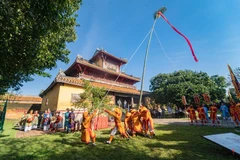
In Hue city, Tet (Lunar New Year) holiday begins with the ritual of erecting neu (bamboo) pole, which follows the traditional ceremonies of the Nguyen Dynasty. (Photo: VietnamPlus)

Exploring hidden Tet experiences across Vietnam

While fireworks and countdown celebrations light up much of the country, New Year’s Eve on Con Dao is markedly subdued. At midnight, the island becomes an “island of candles” as locals gather at Hang Duong Cemetery to pay tribute to national heroes.

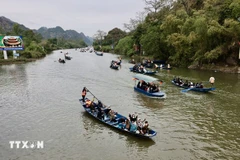
Yen Stream is bustling with boats carrying visitors to celebrate the Huong Pagoda Festival. (Photo: VNA)

Northern Vietnam’s top 10 spring festivals to explore after Tet

Starting from the third day of Tet, locals and travellers from all over the country heading to the North can check out a variety of unique festivals in different areas to enjoy spring trips, go on pilgrimages, and experience the vibrant cultural traditions that are part of Vietnam’s rich heritage.

Flavours of three regional Tet feasts in contemporary life. (Photo: VNA)

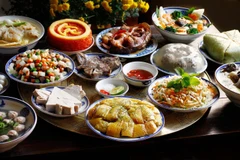
Flavours of three regional Tet feasts in contemporary life

Each dish embodies not only taste but also memories and cultural values nurtured over generations. Sustaining this heritage ensures that Vietnamese cuisine is not eroded by time, but continues to be cherished, renewed and shared with care and respect.

As Lunar New Year approaches, videos guiding viewers on how to prepare a traditional Tet feast attract increasing numbers of likes and comments. (Photo: tienphong.vn)

Gen Z reconnects with their roots, spreads rural Tet spirit

In recent years, Vietnamese social media has witnessed the rise of a content stream that feels old-fashioned yet resonates strongly with young audiences in the digital age: documenting rural life, especially kitchen scenes, Tet preparations, and everyday family routines.

Phan Thi Hong Lien wins the last gold for of Vietnam to help the team place No 1 in the sixth World Kun Khmer Championships' tally. (Photo: VNA)

Vietnam tops medal table at World Kun Khmer Championships

The Vietnamese team claimed 18 gold medals on their debut at the sixth World Kun Khmer Championships in Cambodia, edging hosts Cambodia to finish first overall and strengthening their push for Olympic recognition of the sport.

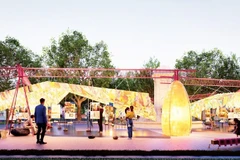
An exhibition on "do" paper and recycled materials at Dien Hong flower garden. (Photo: nhandan.vn)

Art reawakens Hanoi's public spaces

Last year, Hanoi saw a surge in both quantity and quality of public art endeavours, a leap forward in the art of breathing new life into urban landscapes

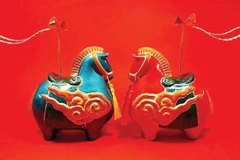
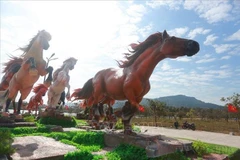
The horse image symbolises resilience, endurance, and spirit of “success upon arrival.” (Photo: VNA)

Horse mascot leaves strong impression at spring fair

A major attraction is a unique “Eight galloping horses” (Bat Ma) sculpture displayed at the To Trinh gemstone booth. Carved from a rare monolithic jade block, the artwork features eight spirited horses racing across golden rice fields. The harmonious blend of pure jade veins and natural golden tones enhances both its aesthetic depth and symbolic meaning, evoking prosperity and abundance associated with Vietnam’s rice civilisation.

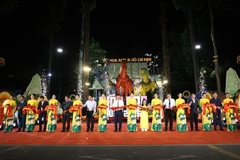
Delegates cut the ribbon to launch the 46th Spring Flower Festival at Tao Dan Park. (Photo: VNA)

Festive activities herald Lunar New Year of the Horse

A vibrant array of cultural and media events has been launched across Vietnam to welcome the Lunar New Year of the Horse 2026, highlighting both the country’s enduring traditions and its dynamic socio-economic progress.