Phu Tho (VNA) – Amid drifting clouds and layered mountain ranges in Vietnam’s northwestern highlands, Van Son commune, known as the “roof of the Muong land” in Phu Tho province, emerges as a place where pristine nature and ancient culture converge.
With its fresh climate, unspoiled landscapes, and well-preserved Muong ethnic heritage, Van Son is fast becoming a new promising tourist destination in Phu Tho.
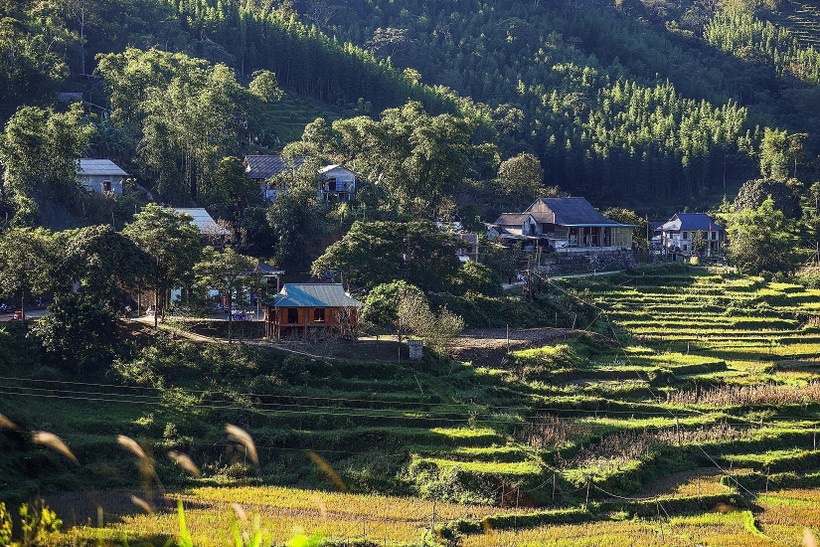
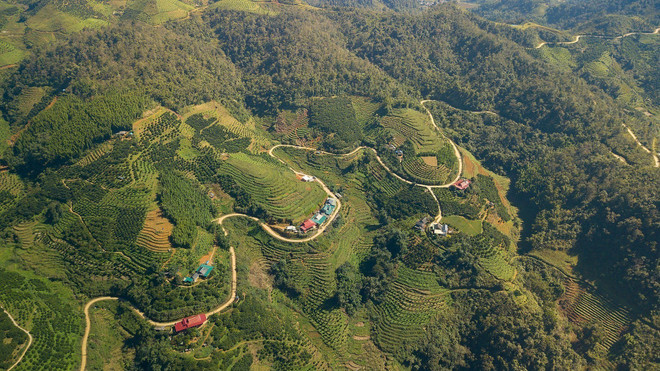
The only road leading to Van Son curves like a silk ribbon along mountainsides nearly 1,000 metres above sea level, opening onto mist-filled valleys and tranquil hamlets. The scenery unfolds vividly with stilt houses nestled against forested slopes, golden groves of ancient mandarins, birdsong echoing from primeval forests, and a veil of mist lingering across villages.
Van Son was formed through the merger of the former communes of Quyet Chien, Van Son, and Ngo Luong. It has long been home to generations of Muong ethnic people, who maintain a gentle way of life closely tied to nature. Locals call the area the “valley of longevity” as many elderly residents live beyond 100 years of age while remaining alert and healthy.
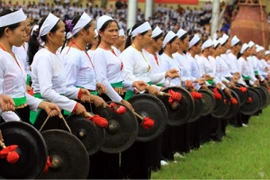
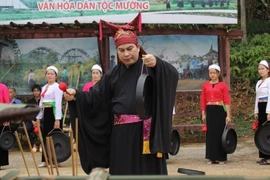
Bui Xuan Truong, Deputy Director of the Phu Tho Department of Culture, Sports and Tourism, said the essence of ancient Muong culture is evident everywhere in Van Son –from turtle-shell-shaped stilt house roofs and black brocade garments with intricate patterns, to the lively laughter at early-morning markets and jars of traditional rice wine by the hearth.
This cultural authenticity has endured largely thanks to the area’s former isolation. Once called Lung Van, the highland commune was difficult to access, allowing customs and traditions to remain largely untouched. Cultural researcher Phan Cam Thuong used to describe the region as a rare place where traditions developed almost entirely from within, with little influence from the outside.
Bui Thi Uon, an elderly woman in Xom hamlet, recounts that the Muong Bi region in the past was a land that includes today's Van Son. It was founded by a couple who survived a great flood by clinging to a giant "bi" tree. Their descendants went on to clear forests, establish villages, and cultivate a wet-rice civilisation in the highlands – a sacred origin story still passed down today.
Van Son is at its most beautiful from after the Lunar New Year through the fourth lunar month, when clouds cascade into valleys and hover above terraced rice fields. The area’s fragrant and sticky rice used to be offered to Muong lords and is still known as “Muong Lord’s rice”.
Coming to the commune, visitors can also experience the Lung Van market, held every Tuesday and Sunday. In the morning mist, the market comes alive with bamboo shoots, forest vegetables, purple garlic, golden mandarins, and handwoven brocade fabrics. Beyond buying and selling, it offers visitors a chance to immerse themselves in the daily rhythm of Muong life.
Van Son’s famed ancient Nam Son mandarin variety, with its thin peel, juicy segments and distinctive aroma, has become a key income source for local households. During the harvest season before Tet (Lunar New Year), mandarin orchards turn into unique agri-tourism attractions.
The commune also boasts limestone cave systems, notably Nam Son Cave, dubbed a “rough gem” for its shimmering stalactites and jade-coloured underground lakes. Recognised as a national scenic landscape in 2008, the cave attracts eco-tourists, archaeologists, and adventure seekers. Other highlights include Thung Waterfall, Nui Kien Cave, and a cluster of 11 millennium-old "nghien" (Burretiodendron hsienmu) trees.
Recognising these natural and cultural values, Van Son residents have begun developing community-based tourism. In Chien hamlet, traditional stilt houses have been upgraded into homestay facilities while retaining their original characteristics. Several family-run accommodations now can host 15–20 guests per stay, offering immersive experiences such as sharing Muong meals, making traditional dishes, working in the fields, and foraging for bamboo shoots.
Looking ahead to 2025–2030, the commune aims to invest in infrastructure, promote specialty agriculture linked to tourism, and equip locals with community-based tourism skills.
Secretary of the Van Son Party Committee Nguyen Duy Tu said a sustainable tourism development plan is being drafted with a focus on ecology, Muong culture, and agriculture. The homestay model, night markets, and tourism links with the Mai Chau and Pu Luong areas will also be promoted.
Gradually awakening to its potential, Van Son is revealing a rustic yet compelling beauty where pristine nature, the ancient Muong identity, and sustainable community-based tourism converge to create a charming destination in Phu Tho and Vietnam’s northern highlands./.