PM calls for effective implementation of Resolution 79 to support double-digit growth

According to PM Chinh, the new policies must focus on optimising State resources, improving governance, promoting digitalisation and green development, and balancing State and private sector resources, while reducing unnecessary administrative intervention.

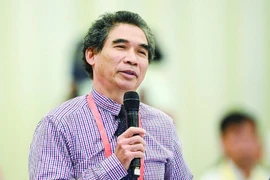
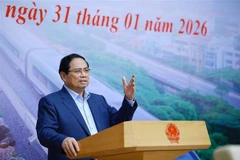
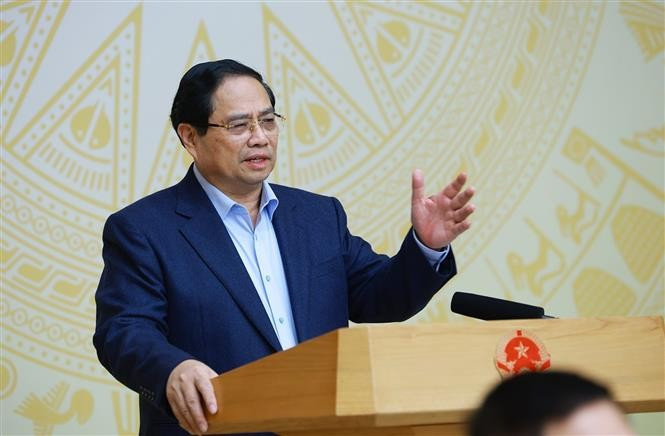
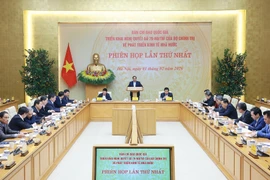
Prime Minister Pham Minh Chinh addresses the meeting. (Photo: VNA)

Hanoi (VNA) - Prime Minister Pham Minh Chinh on February 1 stressed the need for flexible, proactive and effective implementation of the Politburo’s Resolution No. 79-NQ/TW on the Development of the State-owned Economic Sector, contributing to double-digit economic growth in 2026 and the years ahead.

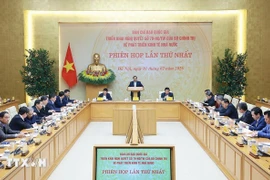
Chairing the first meeting of the National Steering Committee for the Implementation of Resolution 79, PM Chinh, who leads the committee, underlined a renewed approach to translating Party resolutions into action, stressing speed, effectiveness and tangible outcomes.

He reiterated the principle that sound policies must be implemented swiftly and thoroughly, with effectiveness as the ultimate measure, ensuring that the people benefit and the country develops, guided by the motto of avoiding wasted time, missed opportunities and passivity.

He praised the Ministry of Finance and relevant agencies for their proactive preparations, particularly during the drafting of Resolution 79, and for constructive contributions aimed at swiftly and effectively bringing the resolution into practice.

He instructed the Government Office to incorporate feedback and issue the meeting’s conclusion, while directing the Government Portal, the National Legal Portal and the Ministry of Finance’s portal to publicise draft resolutions and solicit opinions from the public, experts and practitioners.

According to PM Chinh, the new policies must focus on optimising State resources, improving governance, promoting digitalisation and green development, and balancing State and private sector resources, while reducing unnecessary administrative intervention.

He said the State should clearly define the tasks it must undertake while maintaining its leading role, and refrain from areas where the private sector can operate more effectively.

The Government should also expand public-private partnerships, with State resources playing a guiding role, he added.

The PM said policymakers should review Resolution 79 to identify areas requiring special or pilot mechanisms that differ from existing laws or are not yet regulated, allowing for immediate implementation or future legal amendments under a defined roadmap.
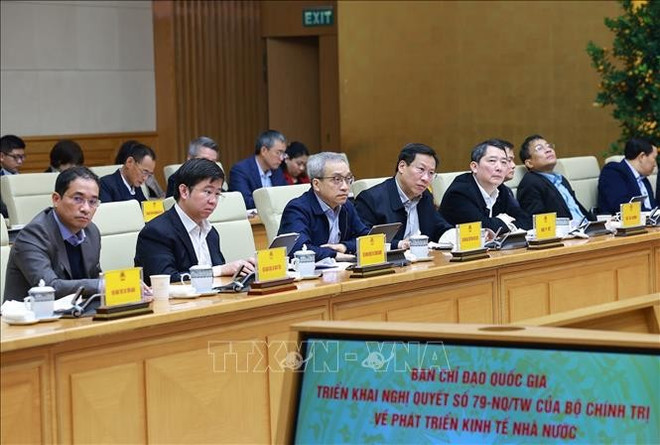
kinh-te-nha-nuoc-1226-1.jpg
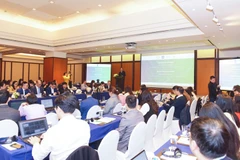
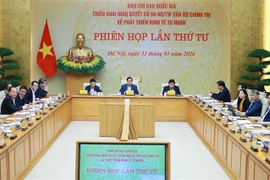
Delegates attending the first meeting of the National Steering Committee for the Implementation of Resolution 79. (Photo: VNA)

He assigned the Ministry of Finance to incorporate feedback and finalise draft resolutions for submission to the Government, with completion targeted for February 2026, and to continue restructuring State-owned corporations and improving tax and fee policies.

Other ministries were tasked with reviewing and proposing legal amendments in their respective areas, including land use, environmental protection, sustainable resource exploitation, underground space management, housing policy, and personnel recruitment and appointment mechanisms at State entities and public service units.

He requested steering committee members, ministries and State-owned enterprises to submit written feedback on the draft resolutions, stressing that the flexible and proactive implementation of Resolution 79 will contribute to achieving double-digit economic growth from 2026 onwards.

Delegates said the resolutions are needed to maximise the role of State-owned enterprises in stabilising the economy and driving growth during the 2026-2030 period.

They noted that the global environment remains complex and unpredictable, requiring stronger coordination and innovation to achieve Vietnam's development targets.

According to delegates, Resolution 79 for the first time provides a comprehensive definition of the State economy, setting out nine core components comprising resources owned, managed or controlled by the State.

These include land and natural resources, infrastructure assets, the State budget, national reserves, non-state financial funds, State capital in enterprises where the Government holds 50% or less of equity, State-owned enterprises (SOEs), State-owned credit institutions and public service units.

A key focus is the restructuring of SOEs to improve efficiency and governance in line with international standards.

By 2030, Vietnam aims to have 50 SOEs among Southeast Asia’s 500 largest firms and one to three in the global top 500.

All SOEs are expected to adopt modern, digital-based governance systems, while all State economic groups and corporations must apply OECD corporate governance principles.

By 2045, Vietnam aims to place around 60 SOEs among Southeast Asia’s 500 largest companies and five within the world’s top 500./.
VNA

See more

A trial UAV-based delivery at the Saigon Hi-Tech Park. (Photo: VGP)

Domestic firms position for booming UAV industry in Vietnam

Ho Chi Minh City’s Department of Science and Technology has recently partnered with the Management Board of Saigon Hi-Tech Park (SHTP) and technology firms to pilot UAV-based delivery services within SHTP. Though currently limited to short-distance routes, the trial represents an initial step towards integrating UAVs into daily life in Vietnam’s largest economic hub.

At the seminar to launch the 2 million USD initiative on green banking capacity development (Photo: VNA)

ADB, SBV launch 2 million USD green banking initiative

The initiative is a component of the technical assistance project “Inclusive and Climate Finance” funded by the Japanese Government through the Japan Fund for Prosperous and Resilient Asia and the Pacific (JFPR).

Prime Minister Pham Minh Chinh speaks at the meeting on January 31. (Photo: VNA)

PM urges flexible investment models for North–South high-speed railway

On the North–South high-speed railway, PM Chinh underscored its urgency for achieving double-digit growth, urging rapid completion of pre-feasibility and feasibility studies, parallel land clearance, and consideration of all three investment models—State, private, and PPP—ensuring balanced interests.

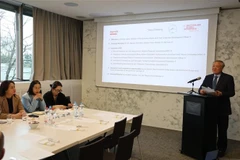
Deputy Prime Minister Nguyen Hoa Binh delivers a speech at the headquarters of the Switzerland Global Enterprise. (Photo: VNA)

Deputy PM concludes working visit to Switzerland

Vietnam will closely coordinate with Switzerland and other members of the European Free Trade Association to conclude a free trade agreement in 2026, meeting expectations of businesses in both countries and creating new drivers for bilateral economic cooperation.

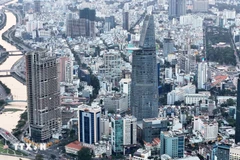
A corner of Ho Chi Minh City (Photo: VNA)

Ho Chi Minh City – A magnet for global capability centres

Quality talent, cost advantages, and an expanding pipeline of ESG-compliant Grade A office space are turning Ho Chi Minh City into an increasingly strategic long-term destination for multinational corporations establishing or expanding Global Capability Centres (GCCs).

Leveraging the fertile alluvial soil along the Red River, Trinh Ngoc Tiep of Hiep Cuong commune, Hung Yen province, boldly develops a large-scale flower-growing model that generates high income and creates jobs for many local workers. (Photo: VNA)

Flower villages enter final sprint for Tet season

As the Lunar New Year (Tet) 2026 approaches, flower and ornamental plant villages nationwide are entering their peak season, with the market showing a mix of vibrant prospects and mounting challenges.

E10 bio petrol will be sold from June 1, 2026 while the production and use of E5 RON92 gasoline will continue to be maintained until December 31, 2030 (Photo: VNA)

Ministry unveils mandatory roadmap for E10 biofuel

Starting from June 1, all unleaded gasoline that meets current technical standards will be required to be blended into E10 gasoline for consumption on the domestic market, Nguyen Anh Tuan, head of the petroleum and gas business management division under the ministry's Domestic Market Management and Development Department, said at a regular press briefing for the fourth quarter of 2025 held in Hanoi on January 29.

Hanoi records more than 2 billion USD in agricultural export revenue in 2025 (Photo: VNA)

Hanoi’s agricultural exports surpass 2 billion USD in 2025

Of the total, key agricultural and food products accounted for about 1.4 billion USD, representing the largest share of the sector’s export turnover. The result reflects the effectiveness of Hanoi’s efforts to expand overseas markets, improve quality standards, strengthen traceability systems and promote international-standard production models to meet increasingly stringent import requirements.

Nhon-Hanoi Station metro line. A series of planned investments in national and urban railway infrastructure over the next 15 years is expected to generate enormous demand for railway industrial products. (Photo: VNA)

Ample room remains open for railway industry enterprises

A highlight of the scheme is the ambition to develop a modern, integrated railway industry capable of independently designing, manufacturing, and maintaining metro lines and inter-regional railways with design speeds below 200 km/h, while gradually mastering high-speed railway technologies with design speeds of 200 km/h or higher. The roadmap is structured in three phases.