Congestion at border gates largely resolved: Ministry

The disruptions emerged in late January at a number of road, sea and air border checkpoints after Decree 46/2026/ND-CP on food safety management took effect on January 26.

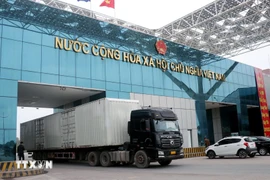
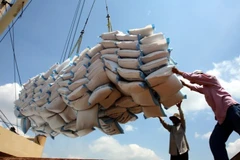
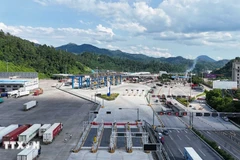
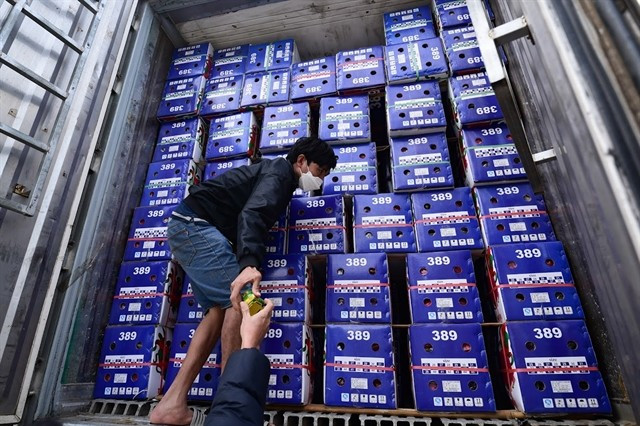
A container truck carrying imported farm produce. Congestions of farm produce and food occurring at several border gates following the application of new food safety decree have been largely resolved. (Photo courtesy of Ministry of Agriculture and Environment)

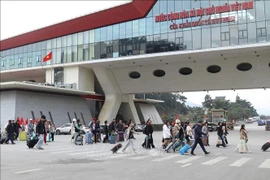
Hanoi (VNS/VNA) - The Ministry of Agriculture and Environment has announced that congestions of farm produce and food occurring at several border gates following the application of new food safety decree have been largely resolved.

The disruptions emerged in late January at a number of road, sea and air border checkpoints after Decree 46/2026/ND-CP on food safety management took effect on January 26.

After emergency measures were taken to facilitate clearance, congestions at border gates, including Tay Ninh, were largely resolved by January 31 afternoon, the ministry said, adding that customs clearance gradually returned to normal ahead of Tet (Lunar New Year) peak.

The ministry attributed the congestion to changes in inspection procedures under the new decree, which introduced risk-based food safety controls aligned with international practices. However, the immediate implementation of the new decree without detailed guidance on sampling methods and testing timelines created difficulties at border checkpoints.

Between January 26 - 29, more than 700 consignments totalling 300,000 tonnes were held up nationwide, mainly fresh vegetables, fruits, rice, cassava and some packaged processed foods, to wait for test results which typically took 5-7 days, creating disruptions.

To deal with the issue, the agriculture ministry works with the Food Safety Department under the Ministry of Health to clarify inspection procedures for imported plant products and facilitate clearance.

On January 30, Deputy Minister Hoang Trung chaired an urgent meeting with the Department of Customs and the Legal Department to address legal bottlenecks in implementing the decree and ensure a consistent interpretation of the rules to avoid further delays.

As a result, most congestion points had been eased by Saturday afternoon.

The agriculture ministry will report problems arising during the implementation of Decree 46 and send it to the Ministry of Health by February 1 for review. The ministry also urged the early issuance of clear guidance to ensure consistent nationwide enforcement.

The ministry added that it would focus on enhancing management of food safety based on a risk-based approach and consumer health protection while facilitating import and import./.

VNA
See more

A trial UAV-based delivery at the Saigon Hi-Tech Park. (Photo: VGP)

Domestic firms position for booming UAV industry in Vietnam

Ho Chi Minh City’s Department of Science and Technology has recently partnered with the Management Board of Saigon Hi-Tech Park (SHTP) and technology firms to pilot UAV-based delivery services within SHTP. Though currently limited to short-distance routes, the trial represents an initial step towards integrating UAVs into daily life in Vietnam’s largest economic hub.

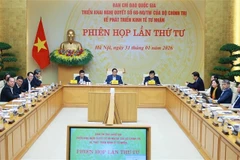
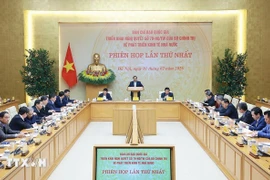
Prime Minister Pham Minh Chinh, Head of the National Steering Committee for the Implementation of the Politburo’s Resolution No. 79-NQ/TW on the Development of the State-owned Economic Sector, chaired the first meeting of the steering committee in Hanoi on February 1. (Photo: VNA)

PM chairs first meeting of steering committee for development of state-owned economic sector

According to the steering committee, the Politburo’s Resolution No. 79-NQ/TW on the Development of State-Owned Economic Sector was issued in the context that the whole country is striving and determined to innovate and reform in many fields, aiming to become a developing country with modern industry and upper-middle income by 2030; and a developed country with high income by 2045.

At the seminar to launch the 2 million USD initiative on green banking capacity development (Photo: VNA)

ADB, SBV launch 2 million USD green banking initiative

The initiative is a component of the technical assistance project “Inclusive and Climate Finance” funded by the Japanese Government through the Japan Fund for Prosperous and Resilient Asia and the Pacific (JFPR).

Prime Minister Pham Minh Chinh speaks at the meeting on January 31. (Photo: VNA)

PM urges flexible investment models for North–South high-speed railway

On the North–South high-speed railway, PM Chinh underscored its urgency for achieving double-digit growth, urging rapid completion of pre-feasibility and feasibility studies, parallel land clearance, and consideration of all three investment models—State, private, and PPP—ensuring balanced interests.

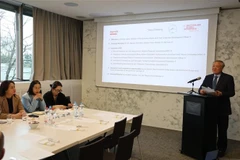
Deputy Prime Minister Nguyen Hoa Binh delivers a speech at the headquarters of the Switzerland Global Enterprise. (Photo: VNA)

Deputy PM concludes working visit to Switzerland

Vietnam will closely coordinate with Switzerland and other members of the European Free Trade Association to conclude a free trade agreement in 2026, meeting expectations of businesses in both countries and creating new drivers for bilateral economic cooperation.

At the fourth session of the National Steering Committee for the implementation of the Politburo’s Resolution 68-NQ/TW on private sector development (Photo: VNA)

PM sets digital, green priorities for private sector

Ministries, agencies, and local authorities must foster open mechanisms and streamlined administrative procedures, deliver synchronous and seamless infrastructure, cultivate smart workforce and governance, pool all possible resources for private firms, and share trials and tribulations faced by them.

A corner of Ho Chi Minh City (Photo: VNA)

Ho Chi Minh City – A magnet for global capability centres

Quality talent, cost advantages, and an expanding pipeline of ESG-compliant Grade A office space are turning Ho Chi Minh City into an increasingly strategic long-term destination for multinational corporations establishing or expanding Global Capability Centres (GCCs).

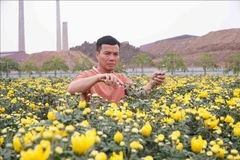
Leveraging the fertile alluvial soil along the Red River, Trinh Ngoc Tiep of Hiep Cuong commune, Hung Yen province, boldly develops a large-scale flower-growing model that generates high income and creates jobs for many local workers. (Photo: VNA)

Flower villages enter final sprint for Tet season

As the Lunar New Year (Tet) 2026 approaches, flower and ornamental plant villages nationwide are entering their peak season, with the market showing a mix of vibrant prospects and mounting challenges.

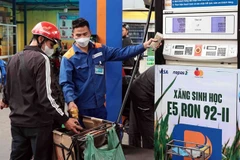
E10 bio petrol will be sold from June 1, 2026 while the production and use of E5 RON92 gasoline will continue to be maintained until December 31, 2030 (Photo: VNA)

Ministry unveils mandatory roadmap for E10 biofuel

Starting from June 1, all unleaded gasoline that meets current technical standards will be required to be blended into E10 gasoline for consumption on the domestic market, Nguyen Anh Tuan, head of the petroleum and gas business management division under the ministry's Domestic Market Management and Development Department, said at a regular press briefing for the fourth quarter of 2025 held in Hanoi on January 29.

Hanoi records more than 2 billion USD in agricultural export revenue in 2025 (Photo: VNA)

Hanoi’s agricultural exports surpass 2 billion USD in 2025

Of the total, key agricultural and food products accounted for about 1.4 billion USD, representing the largest share of the sector’s export turnover. The result reflects the effectiveness of Hanoi’s efforts to expand overseas markets, improve quality standards, strengthen traceability systems and promote international-standard production models to meet increasingly stringent import requirements.

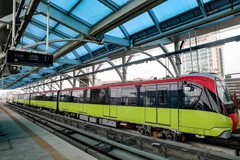
Nhon-Hanoi Station metro line. A series of planned investments in national and urban railway infrastructure over the next 15 years is expected to generate enormous demand for railway industrial products. (Photo: VNA)

Ample room remains open for railway industry enterprises

A highlight of the scheme is the ambition to develop a modern, integrated railway industry capable of independently designing, manufacturing, and maintaining metro lines and inter-regional railways with design speeds below 200 km/h, while gradually mastering high-speed railway technologies with design speeds of 200 km/h or higher. The roadmap is structured in three phases.