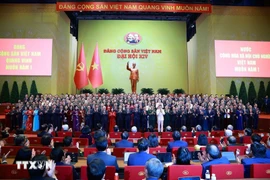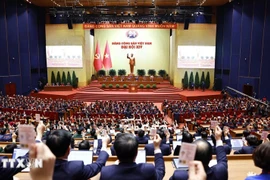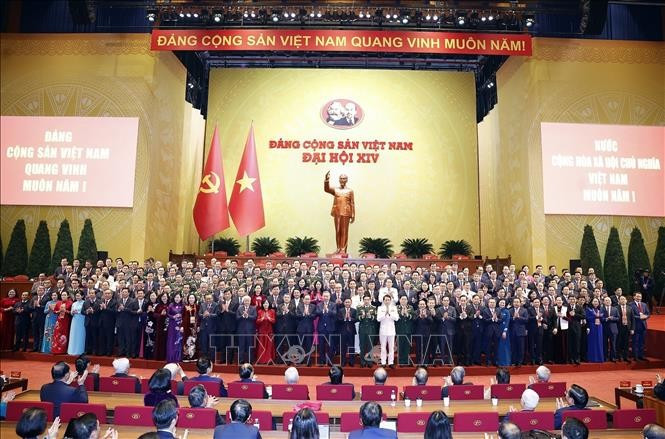
Singapore (VNA) – An article recently published on the website of the Singapore-based Lee Kuan Yew School of Public Policy highlighted that the 14th National Congress of the Communist Party of Vietnam (CPV) marked a pivotal inflection point in Vietnam’s contemporary development trajectory.
It was not just a routine transfer of power, but a strategic effort aimed at consolidating leadership, renewing a party’s vision, and positioning Vietnam for significant transformation by 2030, with the ultimate goal of becoming a high-income nation by 2045, the centenary of its independence, the article said.
The writing noted that convened at a moment of profound global uncertainty—characterised by geopolitical tensions, rapid technological disruption, climate stress, and shifting patterns of global growth, the 14th Congress delivered three powerful messages: the importance of stable leadership coupled with controlled renewal; the strategic clarity around a new development model; and heightened expectations for execution, state capacity, and international engagement.
Together, these elements indicate that Vietnam is entering a new phase of growth—one focused not merely on speed, but on achieving smarter, higher-quality, and more resilient transformation.
A notable outcome of the Congress was the formation of a renewed leadership cohort. The Congress elected 180 members to the Party Central Committee, including 71 newcomers, along with 20 young alternate members, ensuring a pipeline for leadership succession and longer-term generational renewal.
From this Central Committee, 19 members were elected to the Politburo, including nine new members, while General Secretary To Lam was re-elected with unanimous support, ensuring continuity at the top. The swift constitution of the Secretariat and the Central Inspection Commission further reinforced organisational discipline and unity, according to the artcile.
It stressed that beyond numbers, the new leadership reflects a qualitative shift towards greater emphasis on capability, professionalism, and execution capacity. Leaders with experience in economic management, science and technology, education, security, and governance in fast-growing provinces and cities are increasingly prominent.
Equally notable is the rising value placed on international exposure and structured policy learning. It reflects a recognition that governing in the current era demands strategic literacy, comparative insight, and systems thinking, not merely administrative seniority.
Substantively, the Congress reaffirmed Vietnam’s long-term national ambition: to become a modern industrial economy by 2030 and a high-income, developed nation by 2045. If successful, this will mark an extraordinary chapter in human history. In just a century (1945–2045), Vietnam would have navigated three significant phases of national survival and development: “rising up”, “awakening”, and now “ascending”.
The coming two decades are expected to define the third phase: ascending. This phase demands quantum leaps rarely achieved by nations—in productivity, innovation, governance quality, and global standing.
According to the article, what distinguishes the 14th Congress is not ambition alone, but the clarity of its development model, structured around eight mutually reinforcing pillars, including rule of law and institutions: institutions are treated as economic infrastructure, with execution discipline as the ultimate test; a new growth model: shifting to a knowledge-based, digital, green, and circular economy; science and technology: prioritising innovation and digital transformation, especially AI and data platforms, to boost competitiveness; and human capital: breakthrough reform in education, skills, leadership, and values such as integrity and responsibility is tightly linked to economic transformation and social cohesion.
The other pillars are strategic security and diplomacy: integrating defence, security, and foreign policy into development planning to safeguard national interests; Party building and State capacity: merit-based selection, accountability tied to outcomes, strict discipline, and protection for reform-minded officials; human security: a disciplined, safe, and civilised society places human security at the core of development—through anti-corruption, public trust, social safety nets, environmental protection, and disaster resilience; and national unity: democracy is paired with discipline, participation with responsibility, and equitable access to opportunity with fair sharing of development gains.
Together, these pillars form a coherent reform architecture, rather than a series of disconnected initiatives, the article continued.
It concluded that the 14th National Congress of the CPV represents a moment of strategic consolidation and elevation. The Congress's success will therefore be judged not by its resolutions alone, but by whether Vietnam can translate political alignment into sustained improvements in execution, productivity, innovation, and governance quality.
Vietnam’s success will hinge on its ability to respond effectively to challenges and seize opportunities. If Vietnam succeeds, the 14th Congress may well be remembered as the moment the country decisively repositioned itself for a new era of accelerated, high-quality growth—and for a confident ascent toward 2045.
If it achieves sustainable prosperity in the coming decades, its journey will serve as an inspiring example for many nations—demonstrating that peace, prosperity, and partnership are mutually reinforcing imperatives in the 21st century, the writing added./.
See more
One killed as fireworks factory explodes in Thailand
A fireworks factory explosion hit Suphan Buri province in Thailand on January 30, with local rescuers confirming one fatality at the scene following an initial inspection.
Bangkok invites public to join Bangkok Design Week 2026
The Bangkok Metropolitan Administration invites the public to attend Bangkok Design Week 2026, held under the theme DESIGN S/O/S.
Malaysia, Singapore eye stronger economic ties
The JS‑SEZ was established on January 11, 2024, and a JS‑SEZ agreement was signed between the two countries on January 7, 2025. According to The Business Times, in the first nine months of 2025, the JS‑SEZ pact locked in 68 billion MYR (17 billion USD) in approved investments, marking a staggering leap from the 48.5 billion MYR recorded for the whole of 2024.
Laos and Thailand strengthen cooperation to ensure border security
At the January 28 meeting, the two sides briefed each other on recent activities and exchanged views on a range of key issues, including ensuring that measures against illegal entry and exit are conducted in accordance with the laws of both countries, preventing illicit drug trafficking, and strengthening close coordination at all levels in border inspections to jointly safeguard security, safety and order in their respective border areas.
Indonesia: Bali airport tightens health screening amid Nipah virus concerns
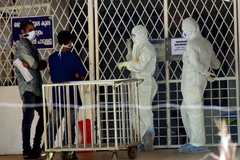
The airport's communication representative, Gede Eka Sandi Asmadi, said on January 29 that all personnel are committed to increasing their monitoring strictly and thoroughly to prevent the spread of the virus from arrival areas.
Thailand steps up preventive measures against election-related crime
Police have been instructed to maintain heightened readiness ahead of both the advance voting on February 1 and election day on February 8, which will coincide with a national referendum, said deputy national police chief Pol Gen Samran Nualma, who also serves as director of the election security and order centre at the Royal Thai Police.
Myanmar: Election results confirm USDP’s victory
Latest figures from the UEC showed that the USDP has secured 231 seats in the Pyithu Hluttaw (Lower House) and 108 seats in the Amyotha Hluttaw (Upper House), totaling 339 seats.
Southeast Asian nations step up health measures amid risk of Nipah virus spread
The Communicable Diseases Agency of Singapore (CDA) announced on January 29 that the country will conduct temperature screening for travellers arriving on flights from areas where Nipah virus outbreaks have been reported.
Malaysia takes proactive steps to address population ageing
Malaysia’s population stood at 34.2 million in 2025 and is projected to rise to 36.4 million by 2030 and 38.3 million by 2035. However, marriage rates have shown a declining trend, falling from 6.6 marriages per 1,000 people in 2022 to 5.7 per 1,000 in 2023. This shift is expected to shorten reproductive periods and further contribute to lower fertility rates.
CPV’s 14th National Congress consolidates foundations of comprehensive Vietnam-Russia cooperation
Russia’s TASS news agency on January 28 published an article by Yuri Denisovich, TASS bureau chief in Vietnam, offering positive assessments of the outcomes of the 14th National Congress of the Communist Party of Vietnam (CPV) and their significance for bilateral relations.
AirAsia leaves 23 passengers behind on bus, cites miscommunication
Thai AirAsia apologised for the inconvenience, said it had launched an internal investigation into staff involved and taken action in line with company regulations, and added that it would tighten supervisory measures to prevent a repeat.
ASEAN rolls out 2026-2030 tourism roadmap
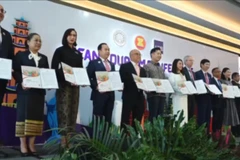
The ASEAN Sectoral Plan 2026-2030 is anchored on five priorities, including building a tourism sector that is resilient to crises and potential shocks.
Indonesia receives first batch of Rafale fighter jets from France
As reported by Malaysia’s national news agency Bernamas, the jets marked the first batch under a deal to acquire 42 aircraft signed in 2022.
Cambodia - Thailand meeting over border issues ends with no consensus
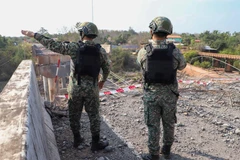
The three-day Cambodia-Thailand Regional Border Committee (RBC) secretariat meeting over border issues wrapped up on January 29 without reaching any consensus, said a Cambodian defence spokesperson.
Thailand: Two pilots killed in military aircraft crash
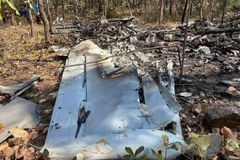
The Royal Thai Air Force announced that a military aircraft crashed on January 29 morning in a forest area of Chiang Mai province in northern Thailand, killing two pilots.
ADB approves 149 mln USD for sustainable development projects in Laos
ADB Country Director for Laos Shanny Campbell stated that the bank is committed to partnering with the Lao government to achieve inclusive growth and sustainable development. The projects will focus on strengthening the food system, primary healthcare, skills training for a green economy, and responsible forest management.
Indonesia, US launch debt-swap programme for coral reef protection
The initiative is based on the US Tropical Forest and Coral Reef Conservation Act (TFCCA), which is designed to help preserve biodiversity in partner countries through innovative debt-swap mechanisms.
Philippines alerts public on Nipah virus
The Philippines Department of Health noted that proactive border screening measures continue to be enforced to protect the public from the entry of infectious diseases, including online health declarations before travel, on-arrival thermal scanning, and trained observation of travelers at ports of entry.
Malaysia encourages MSMEs to adopt e-invoicing
The Malaysian government has also granted flexibility in the e-Invoicing implementation period for small traders, extending it from six months to 12 months, taking into account their capacity and readiness.
Thailand confronts economic headwinds
Vinit Visessuvanapoom, Director-General of the Fiscal Policy Office (FPO) and the ministry’s spokesperson, said the country’s GDP growth in the third quarter of 2025 came in at 1.2%, weaker than expected, pulling down the full-year average. The slowdown was attributed to weaker manufacturing output due to refinery maintenance shutdowns.