Jakarta (VNA) – Indonesia and the US have launched the Tropical Forest and Coral Reef Conservation Act (TFCCA) programme, a debt-swap mechanism designed to support coral reef conservation in Indonesia.
Director of Marine Conservation and Biodiversity at the Indonesian Ministry of Marine Affairs and Fisheries Firdaus Agung Kurniawan explained that under the scheme, funds originally allocated for debt repayment are instead redirected to support conservation activities in the country.
He noted that the initiative is based on the US Tropical Forest and Coral Reef Conservation Act (TFCCA), which is designed to help preserve biodiversity in partner countries through innovative debt-swap mechanisms.
The debt-swap agreement under TFCCA, valued at 35 million USD, was first announced in July 2024. The initiative is further supported by contributions from Conservation International and Konservasi Indonesia amounting to 3 million USD, and from The Nature Conservancy and Yayasan Konservasi Alam Nusantara (YKAN) 1.5 million USD.
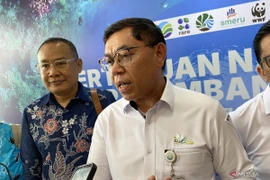
“Indonesia is the first country in the world to implement TFCCA specifically for coral reefs. This is the largest programme of its kind and will serve as a benchmark for future TFCCA initiatives in other countries”, Kurniawan said during the launch. Grant recipients include local communities, indigenous groups, civil society organisations, and legally recognised universities committed to coral reef conservation.
The first cycle of TFCCA in Indonesia will focus on three priority seascapes with high biodiversity: Bird’s Head in West Papua , Lesser Sunda (Bali, Nusa Tenggara Barat, and Nusa Tenggara Timur), and Banda (Maluku).
Indonesia is home to around 16% of the world’s coral reef areas and nearly 60% percent of global coral species./.
Indonesia trains coastal communities in Red and White Fishing Villages programme
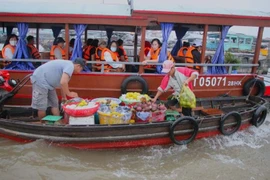
The Red and White Fishing Village programme aims to empower coastal communities while stimulating local economic growth. In addition to human resources development, the initiative places strong emphasis on infrastructure investment to support daily fishing activities, including the construction of docks, roads, drainage systems and electricity networks.