Hanoi (VNA) – Along the Mekong River, where fish underpin food security and livelihoods, a Lao startup is demonstrating how affordable technology can transform small-scale aquaculture and strengthen a sustainable blue economy.
Founded in 2023, Aquaculture of Lao was created to tackle one of the sector’s most persistent risks: sudden changes in water quality that can wipe out an entire production cycle overnight. For many small hatcheries in Laos, outdated infrastructure, limited technical guidance and the lack of early warning systems meant survival rates for fish eggs were often as low as 5%.
The startup has developed low-cost, easy-to-use water quality monitoring tools tailored to small hatcheries. Its solution was selected as one of 60 winning initiatives of the ASEAN Blue Innovation Challenge, supported by the United Nations Development Programme through the ASEAN Blue Economy Initiative, with funding from the Japanese Government.
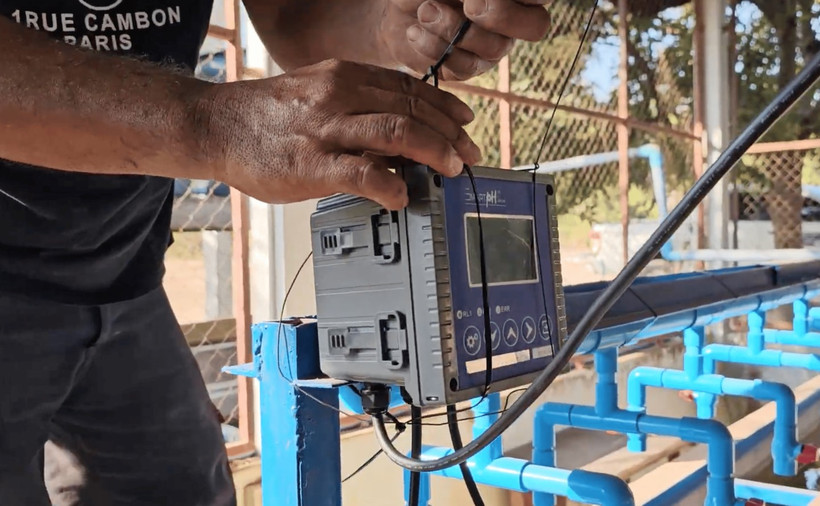
Working with the Living Aquatic Resources Research Center, Aquaculture of Lao piloted sensor-based systems at hatcheries along the Mekong. The sensors monitor temperature, dissolved oxygen, pH and turbidity – key factors determining the survival of fingerlings – and display data on a simple digital interface, enabling timely adjustments when conditions change.
Farmers used to rely mainly on experience, but environmental conditions are changing fast, the startup founder Aloun Phonvisay said, adding that access to data helps them make decisions with greater confidence.
Technology deployment was accompanied by hands-on training. Twenty-four hatchery owners and farmers received instruction in fingerling production and data-driven management, improving planning, daily operations and risk control.
Initial results have been striking. Survival rates at pilot hatcheries rose to between 40 and 60%, losses declined and production became more predictable. Aquaculture of Lao now supports the production of about two to three million fingerlings annually, supplying local farmers with stable and affordable stock.
Economic gains are also emerging. Improved survival and reduced waste are estimated to generate net economic value of around 267,000 USD over four years, with income retained within local communities. As operations scale up, annual output is expected to reach 15 million fingerlings, reducing dependence on costly imports.
The initiative also supports ecosystem protection./.