Malaysia, Singapore eye stronger economic ties

The JS‑SEZ was established on January 11, 2024, and a JS‑SEZ agreement was signed between the two countries on January 7, 2025. According to The Business Times, in the first nine months of 2025, the JS‑SEZ pact locked in 68 billion MYR (17 billion USD) in approved investments, marking a staggering leap from the 48.5 billion MYR recorded for the whole of 2024.

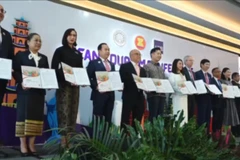
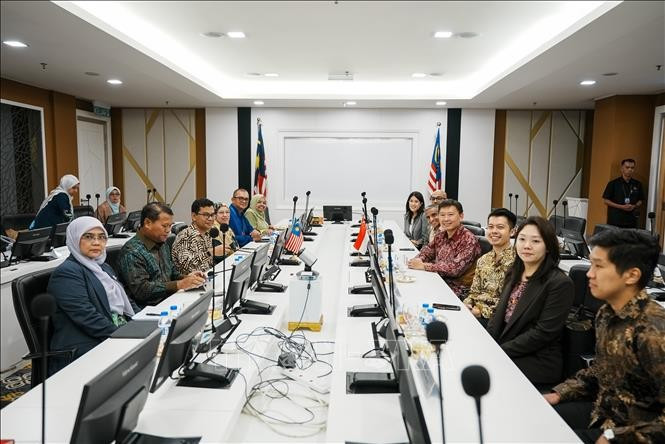
The meeting between Malaysian Minister of Economy Akmal Nasrullah Mohd Nasir and Singaporean Minister for National Development Chee Hong Tat on January 29. (Photo: VNA)

Kuala Lumpur (VNA) – Malaysia and Singapore reaffirmed the Johor-Singapore Special Economic Zone (JS-SEZ) as a key pillar of bilateral economic ties during a meeting between Malaysian Minister of Economy Akmal Nasrullah Mohd Nasir and Singaporean Minister for National Development Chee Hong Tat on January 29.

At the meeting, the two sides agreed that Johor-Singapore cooperation is a long-term partnership grounded in trust, policy continuity, and shared benefits.

They welcomed continued collaboration in high-value investments, digitalisation, sustainable development, and talent development, all of which support the JS-SEZ’s implementation.

The ministers said the initiative is moving from planning to implementation, combining Johor’s scale and resources with Singapore’s capital, technology, and global connectivity to attract high-value investments, strengthen supply chains, and create quality jobs on both sides of the Causeway.

The ministers also discussed strengthening the Johor-Singapore Cooperation Ministerial Committee (JSCMC) to provide clearer oversight and a sharper focus on economic cooperation, particularly under the JS-SEZ agenda. The final governance structure will be presented at the next JSCMC meeting in Singapore.

Malaysia is finalising the JS-SEZ Investment Blueprint and Masterplan, which will outline the long-term vision, priority sectors, key zones, and implementation roadmap, including governance, incentives, infrastructure, and talent plans. Malaysia is targeting an official launch in March 2026.

Nasir affirmed that with disciplined execution and sustained cooperation, the JS-SEZ and JSCMC will deliver tangible outcomes for businesses, workers, and communities in Malaysia and Singapore./.

The JS‑SEZ was established on January 11, 2024, and a JS‑SEZ agreement was signed between the two countries on January 7, 2025. According to The Business Times, in the first nine months of 2025, the JS‑SEZ pact locked in 68 billion MYR (17 billion USD) in approved investments, marking a staggering leap from the 48.5 billion MYR recorded for the whole of 2024.

However, Nasir noted that the greater challenge lies in how quickly authorities can turn approvals into actual projects and plans into concrete actions./.

VNA

See more

The Laos–Thailand Friendship Bridge. (Illustrative photo: laotiantimes.com)

Laos and Thailand strengthen cooperation to ensure border security

At the January 28 meeting, the two sides briefed each other on recent activities and exchanged views on a range of key issues, including ensuring that measures against illegal entry and exit are conducted in accordance with the laws of both countries, preventing illicit drug trafficking, and strengthening close coordination at all levels in border inspections to jointly safeguard security, safety and order in their respective border areas.

Thailand steps up preventive measures against election-related crime

Thailand steps up preventive measures against election-related crime

Police have been instructed to maintain heightened readiness ahead of both the advance voting on February 1 and election day on February 8, which will coincide with a national referendum, said deputy national police chief Pol Gen Samran Nualma, who also serves as director of the election security and order centre at the Royal Thai Police.

Malaysia's Minister of Economy Akmal Nasrullah Mohd Nasir. (Photo: Bernama)

Malaysia takes proactive steps to address population ageing

Malaysia’s population stood at 34.2 million in 2025 and is projected to rise to 36.4 million by 2030 and 38.3 million by 2035. However, marriage rates have shown a declining trend, falling from 6.6 marriages per 1,000 people in 2022 to 5.7 per 1,000 in 2023. This shift is expected to shorten reproductive periods and further contribute to lower fertility rates.

ADB approves 149 mln USD for sustainable development projects in Laos

ADB approves 149 mln USD for sustainable development projects in Laos

ADB Country Director for Laos Shanny Campbell stated that the bank is committed to partnering with the Lao government to achieve inclusive growth and sustainable development. The projects will focus on strengthening the food system, primary healthcare, skills training for a green economy, and responsible forest management.

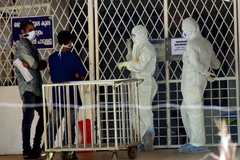
Medical staff work in an isolation ward at a hospital in Kochi, India. (Photo: ANI/VNA)

Philippines alerts public on Nipah virus

The Philippines Department of Health noted that proactive border screening measures continue to be enforced to protect the public from the entry of infectious diseases, including online health declarations before travel, on-arrival thermal scanning, and trained observation of travelers at ports of entry.

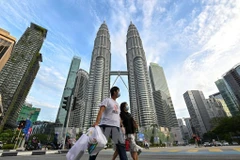
A street in Kuala Lumpur, Malaysia. (Photo: Xinhua/VNA)

Malaysia encourages MSMEs to adopt e-invoicing

The Malaysian government has also granted flexibility in the e-Invoicing implementation period for small traders, extending it from six months to 12 months, taking into account their capacity and readiness.

Thailand confronts economic headwinds

Thailand confronts economic headwinds

Vinit Visessuvanapoom, Director-General of the Fiscal Policy Office (FPO) and the ministry’s spokesperson, said the country’s GDP growth in the third quarter of 2025 came in at 1.2%, weaker than expected, pulling down the full-year average. The slowdown was attributed to weaker manufacturing output due to refinery maintenance shutdowns.