ASEAN rolls out 2026-2030 tourism roadmap

The ASEAN Sectoral Plan 2026-2030 is anchored on five priorities, including building a tourism sector that is resilient to crises and potential shocks.

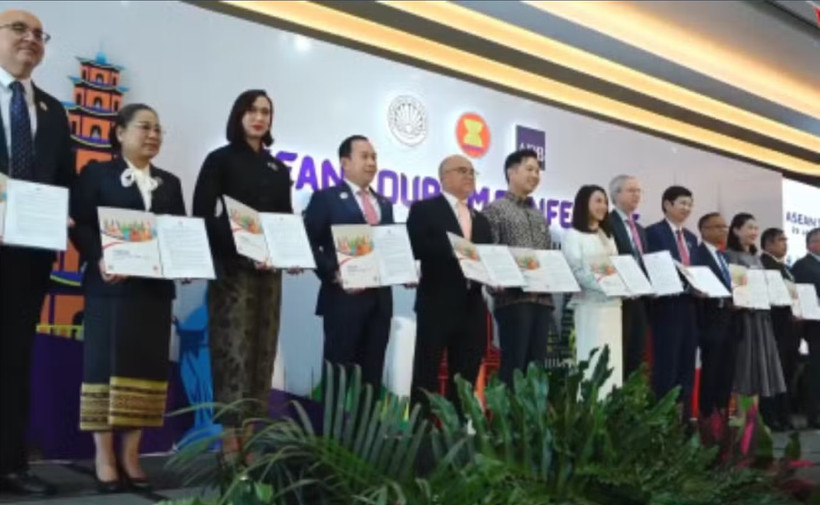
Tourism ministers of the Association of Southeast Asian Nations (ASEAN) member states launch the Declaration on the Implementation of the ASEAN Sectoral Plan 2026-2030 during the ASEAN Tourism Forum (ATF) in Cebu City on January 29. (Photo courtesy of ASEAN)

Hanoi (VNA) - The Association of Southeast Asian Nations (ASEAN) on January 29 launched its sectoral tourism plan, setting a goal of achieving seamless travel and market diversification across the region by 2030.

Tourism ministers of ASEAN member states, alongside ASEAN Dialogue Partners and the Asian Development Bank (ADB), unveiled the roadmap during the 2026 ASEAN Tourism Conference in Cebu city, the Philippines.

The ASEAN Sectoral Plan 2026-2030 is anchored on five priorities, including building a tourism sector that is resilient to crises and potential shocks.

It also focuses on tourism workforce development, seamless travel, digital transformation, product and market diversification, and sustainability.

Philippine Secretary of Tourism Christina Frasco said that together, these priorities reflect a shared understanding that the future of tourism lies not in scale alone, but in value for workers, for enterprises, for destinations, and for communities.

According to the latest data from ASEAN, tourism makes up 374 billion USD or 9.4% of the regional gross domestic products, bringing in an annual average of 127 million travellers into Southeast Asia./.

VNA

See more

Thai Prime Minister Anutin Charnvirakul speaks before Thai Parliament in Bangkok. (Photo: Xinhua/VNA)

Thailand plans tighter, targeted fiscal 2027 budget

Thailand's fiscal 2027 budget is projected at around 3.78 trillion THB (nearly 118 billion USD), a 2% increase from the previous year, with a focus on targeted spending and cutting unnecessary expenses, according to Prime Minister Anutin Charnvirakul.

Fitch downgrades Philippines’ outlook to ‘negative’. (Illustrative photo: Reuters)

Fitch downgrades Philippines’ outlook to ‘negative’

The Outlook revision reflects rising risks to the Philippines' strong medium-term growth prospects from recent disruptions to public investment, exacerbated in the near-term by elevated exposure to the ongoing global energy shock.

The Singapore Maritime Technology & Research Roadmap is aimed at advancing the sector’s efficiency and sustainability. (Photo: businesstimes.com.sg)

Singapore unveils new roadmap to boost innovation in maritime sector

The Singapore Maritime Technology & Research Roadmap is aimed at advancing the sector’s efficiency and sustainability. It highlights priorities – including digital technologies, decarbonisation and operational integration – to boost resilience, productivity and innovation in Singapore’s maritime ecosystem. It also addresses structural issues such as manpower, land and sea space limitations.

Malaysia considers establishing strategic petroleum reserve

Malaysia considers establishing strategic petroleum reserve

Malaysia, which was previously a net exporter, has now become a net importer due to declining domestic production and rising consumption, with demand estimated at around 800,000 barrels per day compared to production of about 400,000 barrels per day.

Indonesia to halt diesel imports from July

Indonesia to halt diesel imports from July

The move is part of the Indonesian Government’s efforts to strengthen national energy independence by utilising palm oil as an alternative fuel, said Agriculture Minister Andi Amran Sulaiman.

Malaysia’s growing microplastics crisis is largely self-inflicted, driven by domestic waste, weak recycling practices and everyday plastic use, said experts. (Photo: New Straits Times)

Malaysia seeks solutions to microplastic crisis

Microplastics originating from domestic waste and wastewater are increasingly entering the food chain, posing serious threats to seafood safety and the livelihoods of coastal communities.

The new mass emergency alert system SG Alert, which will be used during emergencies such as major fires, chemical or terror incidents, seen on an Apple and Android device on Apr 17, 2026. (Photo: CNA)

Singapore launches new national emergency alert system

SG Alert in Singapore uses cell broadcast technology, enabling alerts to be delivered within seconds without requiring mobile data or collecting personal information. Unlike conventional SMS, which may be delayed during network congestion or depend on internet connectivity, the system ensures fast and reliable message delivery. Alerts can be sent islandwide or targeted to specific affected areas.