Hanoi (VNA) – Vietnam has reaffirmed its commitment to working with other ASEAN member states on building a long-term tourism strategy aimed at enhancing the region’s competitiveness and resilience.
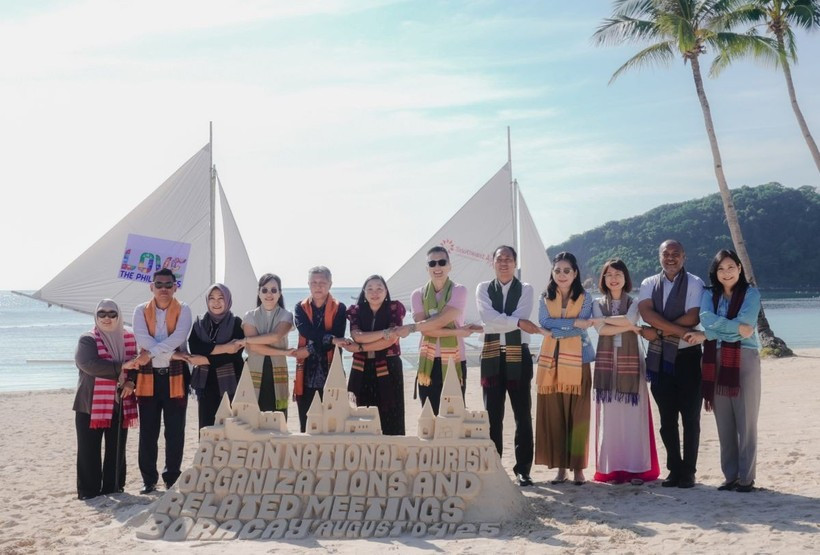
The pledge was made during the 62nd Meeting of the ASEAN National Tourism Organisations (NTOs), held in Boracay, the Philippines.
Delegates at the meeting emphasised the need to improve visitor experiences, ensure seamless regional connectivity, simplify visa procedures, and enhance price competitiveness through a review of tourism-related taxes and fees.
Verna C. Buensuceso, Undersecretary of the Philippine Department of Tourism and chair of the meeting, said that ASEAN remains united under one vision, one identity, and one caring, sharing community.
Representing Vietnam, Nguyen Thi Hoa Mai, Deputy Director of the Vietnam National Authority of Tourism, and other countries’ officials agreed to work actively to complete implementing the ASEAN Tourism Strategic Plan 2016–2025 and draft a regional sector plan that matches new goals.

She pledged the country’s close collaboration with other ASEAN members and the ASEAN Secretariat to carry out projects in the post-2025 period, especially in the fields Vietnam is strong at.
Vietnam currently chairs the ASEAN Tourism Resourcing, Monitoring and Evaluation Committee (ATRMEC). At the meeting, Mai presented the committee’s recent work, which includes building the ASEAN Tourism Sector Plan 2026–2030, drafting a regional tourism marketing strategy for the same period, and evaluating the implementation of the existing 2016–2025 plan.
Other ATRMEC activities in 2024–2025 include training in the building of regional cooperation projects, and supervision of activities marking the ASEAN-India Year of Tourism 2025.
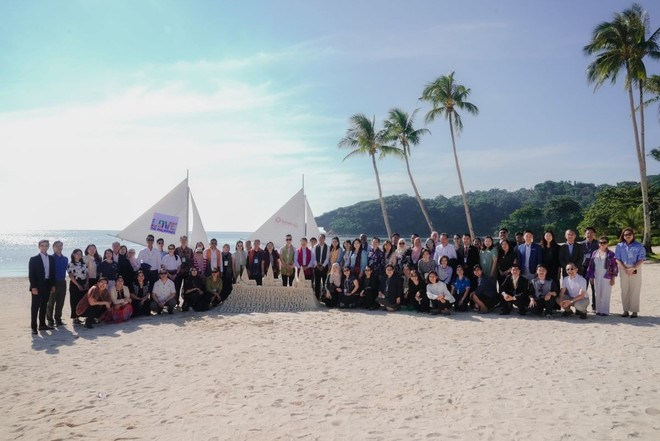
The Boracay meeting also reviewed preparations for several important regional forums. These include the ASEAN Ministerial Meeting on Tourism, to be held in September 2025 in Melaka, Malaysia, on the sidelines of the World Tourism Day celebrations. Participants also discussed preparations for the ASEAN Tourism Forum (ATF) 2026 in the Philippines, and the cooperation with dialogue partners such as China, the Republic of Korea, Japan, and India.
Sub-regional initiatives were also under review such as the Indonesia-Malaysia-Thailand Growth Triangle (IMT-GT), the Brunei-Indonesia-Malaysia-Philippines East ASEAN Growth Area (BIMP-EAGA), the Cambodia-Laos-Myanmar-Vietnam (CLMV) framework, and the Mekong-Lancang cooperation.
A report from UN Tourism showed that ASEAN welcomed 121 million international visitors in 2024, equal to 88% of the pre-pandemic level in 2019. The bloc accounted for 38% of international arrivals in Asia-Pacific and 8% of global tourist flows.
Thailand was the region’s top destination with 29% of arrivals, followed by Malaysia (21%) and Vietnam (14%). ASEAN countries remain crucial source markets as many of them, including Singapore, Malaysia, Indonesia, Thailand, and Vietnam, were among the 10 largest sources of foreign tourists to regional destinations in 2023.
Air connectivity is the main tourism driver of ASEAN’s tourism industry. According to the International Air Transport Association (IATA), 58% of international arrivals in ASEAN in 2023 were by air. That year, aviation generated 17 million jobs in the region, including 11 million in tourism, and contributed 210 billion USD to regional GDP.
IATA urged ASEAN governments to prioritise the traveller experience by streamlining visa requirements, reducing multiple transits, improving airport services, and reviewing fees and taxes that affect competitiveness.
One of the fastest-growing markets for Southeast Asia is India, which is emerging as a top source of visitors for Thailand, Vietnam, the Philippines, and Malaysia. With a large population, increasing incomes, and strong demand for overseas travel, India is becoming a driver of new tourism patterns.
")
Indian travellers often book trips at short notice, typically one to two months in advance—much shorter than the average planning time of Western tourists. They are also increasingly drawn to culturally immersive experiences, preferring authentic local stays and personalised tours over traditional hotel packages.
This trend is prompting ASEAN destinations and businesses to adapt, offering localised services, personalised itineraries, and digital-friendly booking options. Travel platforms have also developed India-focused loyalty programmes and expanded language support to better cater to this market.
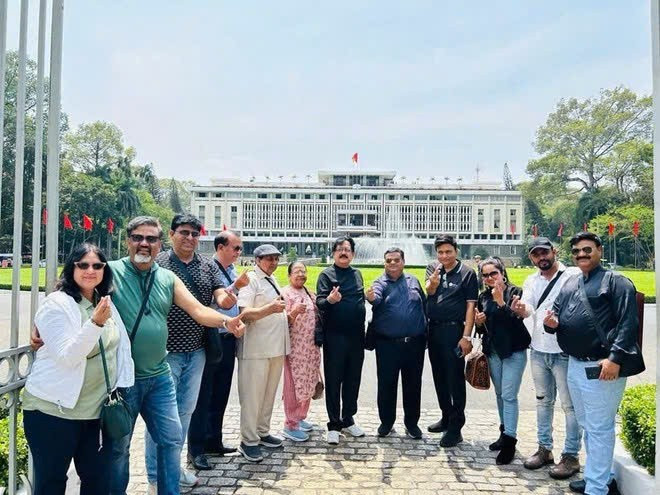
Vietnam is seizing the opportunity by integrating tourism with cinema to boost its profile in India. In September 2025, the Vietnam National Authority of Tourism will organise promotional programmes in Bengaluru and Hyderabad, two vibrant Indian cities known for film production. The events will bring together airlines, major travel companies, and filmmakers.
A highlight will be the “Namaste Vietnam” festival, which will introduce Vietnam’s destinations and cultural strengths to Bollywood studios, tourism enterprises, and airlines. The initiative underscores Vietnam’s intent to position itself as both a travel and film destination.
Vietnam sees the combination of cinema and tourism as crucial to bringing its image closer to Indian travellers, said Deputy Minister of Culture, Sports and Tourism Ho An Phong./.