Hanoi strengthens tourism connectivity to boost growth

Regional tourism connectivity has been identified as a core driver to expand development space, enhance visitor experiences and improve the capital’s competitiveness as a destination.

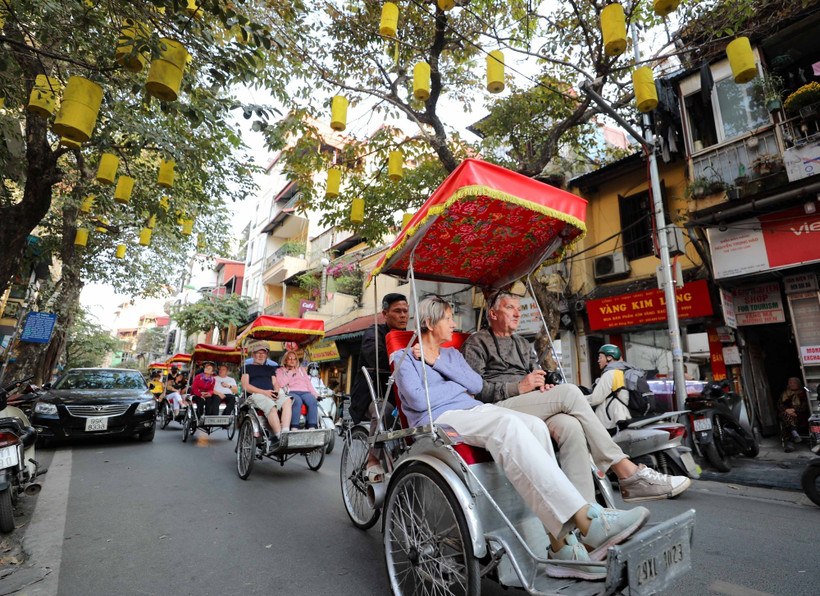
Foreign tourists visit Hanoi's Old Quarter. (Photo: VNA)

Hanoi (VNA) – The capital city of Hanoi aims to attract more than 35.8 million visitors by 2026, including over 8.6 million international arrivals, with total tourism revenue expected to exceed 160 trillion VND (around 6 billion USD), according to Tran Trung Hieu, Deputy Director of municipal Department of Tourism.

Regional tourism connectivity has been identified as a core driver to expand development space, enhance visitor experiences and improve the capital’s competitiveness as a destination.

Hanoi is projected to welcome more than 33.7 million visitors in 2025, up 20.87% from 2024, with tourism revenue estimated at over 134.46 trillion VND, a rise of 21.5% year on year. The figures underscore tourism’s role as a bright spot in the city’s economic recovery.

Under its development strategy, Hanoi is reinforcing its position as a regional hub linking major tourism corridors, such as Hanoi–Quang Ninh–Ninh Binh, Hanoi–Lao Cai–Tuyen Quang and Hanoi–Bac Ninh–Hung Yen, while expanding cooperation with localities across the northern, northern coastal, central and Central Highlands, and Mekong Delta regions.

Speaking at a forum on measures to boost international arrivals on December 17, Ha Van Sieu, Deputy Director of the Vietnam National Authority of Tourism, said tourism cooperation between Hanoi and major cities such as Da Nang and Ho Chi Minh City, as well as neighbouring provinces, needed to move beyond formal agreements. He stressed that linkages must be translated into concrete programmes, shared products and coordinated activities, with the direct involvement of tour operators and investors.

The official noted that developing connected tour routes, joint promotion and visitor exchanges would create stronger synergies for Vietnam’s tourism sector.

In recent years, Hanoi has rolled out a range of tourism promotion and cooperation programmes nationwide, contributing to regional tourism growth while generating new momentum for the capital.

A recent highlight was a tourism promotion and cooperation programme between Hanoi and Mekong Delta provinces, held in Vinh Long and Dong Thap provinces in early November. Hieu said the initiative reflected the determination of both sides to strengthen linkages and support the national tourism industry.

To improve effectiveness, Hanoi plans to intensify cooperation with the Mekong Delta to develop inter-provincial tourism product chains, focusing on themed offerings such as nature-based experiences, culinary tourism and shopping, and craft villages linked with river tourism. The capital will also support Mekong Delta provinces in organising promotional activities in Hanoi and in training tourism personnel.

Hanoi is also expanding cooperation with north-western provinces and the central and Central Highlands regions to diversify products and extend visitor stays. A recent survey to develop a Hanoi–Lai Chau tour route highlighted strong potential for international tourism products based on natural landscapes and cultural identity.

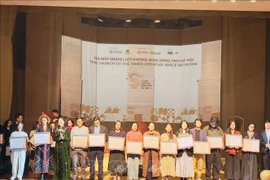
A signing ceremony for cooperation on inbound routes was held on December 17 between Hanoi and the localities of Lao Cai, Quang Ninh, Ninh Binh, Bac Ninh, and Tuyen Quang, within the framework of the forum./.
VNA

See more

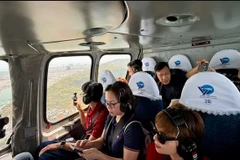
Visitors admire Ho Chi Minh City from above. (Photo: VNA)

Ho Chi Minh City launches helicopter sightseeing tours

Globally, helicopter tourism has become a popular offering in many major destinations. By introducing this experience, Ho Chi Minh City aims to expand its portfolio of high-end tourism products and further enhance its destination image.

The blending of culture, architecture and art on Phu Quoc is shaping a cosmopolitan city. (Photo: Sun Group)

Phu Quoc: Where the world meets through architecture

The presence of diverse international architectural styles across Phu Quoc, rather than a single traditional architectural system, is not accidental but rooted in the island’s unique development context. Unlike cities with centuries of urban heritage such as Hoi An or Hue, Phu Quoc is a tourism destination that has grown rapidly over just the past few decades, without a clearly layered architectural legacy to inherit.

The luxurious resorts ecosystem contribute to elevating Phu Quoc's image in the eyes of international media. (Photo: Sun Group)

Phu Quoc and its luxury resorts "take the leaderboard by storm" in DestinAsian rankings

On March 6, 2026, the prestigious travel magazine DestinAsian officially announced its list of the top 10 islands in Asia for 2026 as part of its Readers' Choice Awards. Not only was it the sole representative from Vietnam, but Phu Quoc also made a remarkable impression by climbing to the runner-up position, continuing an impressive three-year upward trend.

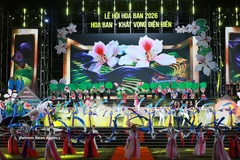
A view of the opening ceremony of the Ban Flower (Bauhinia) Festival 2026 in Dien Bien province on March 8 evening. (Photo: VNA)

Government leader attends Ban Flower Festival 2026 in Dien Bien province

Themed “Hoa Ban – Khat vong Dien Bien,” the festival was a highlight of the Dien Bien Culture and Tourism Week running from March 6 – 12. The annual event celebrated the beauty of the iconic Ban flower and promoted the culture, history and tourism potential of the Northwestern region.

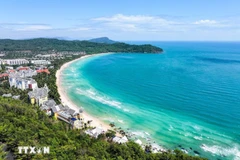
Khem beach in Phu Quoc island of An Giang province. (Photo: VNA)

Phu Quoc strengthens appeal as international arrivals soar in early 2026

Phu Quoc special zone is increasingly affirming its strong appeal to international visitors with impressive growth, positioning the “pearl island” as a standout destination in Southeast Asia and a direct competitor to renowned resort islands such as Bali in Indonesia and Phuket in Thailand.

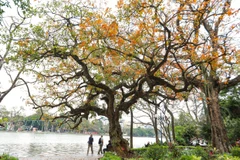
Leaves of loc vung (Barringtonia acutangula tree) change colour beside Hoan Kiem Lake (Photo: VNA)

Hanoi named among world’s 50 most beautiful cities by Condé Nast Traveler

Hanoi’s appearance within the global media ecosystem of Condé Nast Traveler is expected to provide a significant boost to the city’s tourism appeal. Beyond enhancing its credibility as a travel destination, the recognition could also help attract high-end tourism services and encourage higher spending by international visitors.

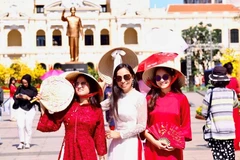
Overseas Vietnamese in traditional ao dai explore Nguyen Hue flower street. (Photo: qdnd.vn)

Overseas Vietnamese amplify Ho Chi Minh City’s tourism appeal

With their understanding of both local traditions and international contexts, OVs are proving to be an effective “soft bridge” in promoting the city globally, contributing to rising international arrivals and reinforcing Ho Chi Minh City’s position as a creative, globally integrated and culturally rich urban tourism destination

Smoke rises following US and Israeli airstrikes on Tehran, Iran, on March 1. (Photo: XINHUA/VNA)

Hanoi urges suspension of tours to Middle East conflict zones

Vietnamese citizens have been advised not to travel to Iran, Israel, and other countries in the Middle East at present due to ongoing conflicts and complicated security developments, according to an official dispatch sent by the department to the above-mentioned units on March 3.

A representative of a Vietnamese enterprise shows it products at ITB Berlin 2026. (Photo: VNA)

Vietnamese firms promote tourism at ITB Berlin 2026

Vietnam’s exhibition area stands out with spacious and visually striking booths featuring businesses' most outstanding products as well as Vietnam's cultural icons such as cyclo models and traditional ao dai attire while a Vietnamese cuisine counter has drawn long queues of visitors.

International tourists are increasingly choosing Phu Quoc over giants like Bali and Phuket, driven by the freshness that Phu Quoc offers (Photo: Sun Group)

US media explains why Phu Quoc is becoming a tourism phenomenon

In 2025, international arrivals to Phu Quoc surged by nearly 60%, marking a new breakthrough cycle. As 2026 begins, during the Lunar New Year alone, the island welcomed nearly 366,000 visitors (a 30% increase year-on-year), with international guests accounting for nearly 93,000 (up 24.3%).

The crystal-clear waters and powdery white sands of Kem Beach are especially appealing to visitors (Photo: Fabl Belek)

Australian magazine hails Phu Quoc as a worthy alternative to Bali

In its list of “the best Bali alternatives worth exploring,” published by Australia’s leading travel site Escape, Phu Quoc is highlighted as a standout Southeast Asian destination, thanks to its appealing blend of reasonable costs, striking scenery, and diverse experiences.

Young locals explore Co Loa Citadel in digital space (Photo: nhandan.vn)

Hanoi festivals embrace digital tools to modernise management

During spring festival season 2026, Hanoi's major celebrations have aggressively adopted digital technologies across management, organisation, communications and promotion, presenting a more orderly and civilised image for traditional events.