Hanoi (VNA) – In a move to reduce air pollution and promote green mobility, Hanoi has approved a plan to deploy 5,000 public electric bicycles, alongside restrictions on petrol- and diesel-powered vehicles in the city’s central area.
At its 28th session, the 16th Hanoi People’s Council for the 2021–2026 term adopted a resolution to restrict the circulation of petrol- and diesel-powered vehicles during certain hours within Ring Road 1. From July 1, 2026, the capital will establish a low-emission zone, initially on a pilot basis in selected areas inside Ring Road 1, with the aim of reducing emissions and improving air quality.
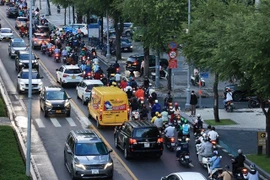
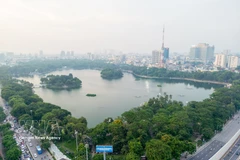
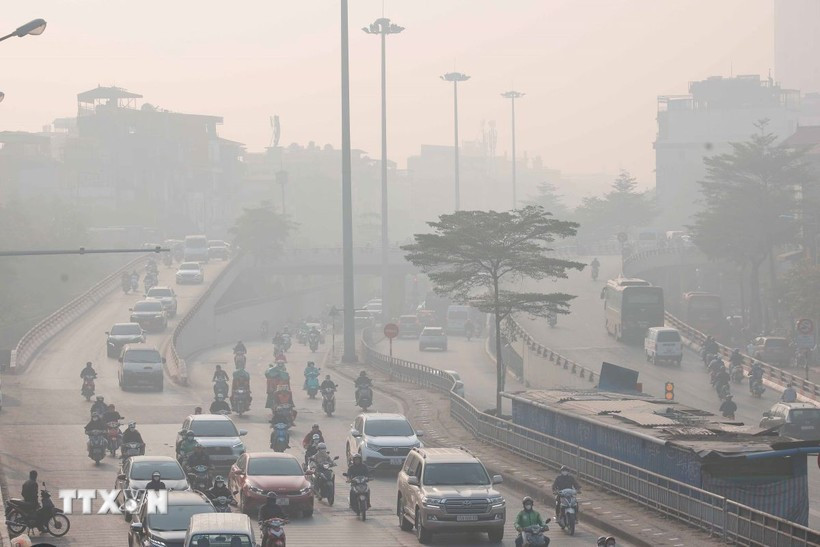
Meanwhile, earlier this month, Hanoi repeatedly appeared on the list of the world’s most polluted cities. In many inner-city areas, the Air Quality Index (AQI) commonly ranged from 200 to 300, and at times surged to around 350, classified as “hazardous”. Average concentrations of fine particulate matter PM2.5 were recorded at levels exceeding 250 µg/m³, posing serious risks to public health.
To address air pollution, the municipal People’s Committee issued Directive No. 19/CT-UBND, calling for urgent measures to control air pollution across the city.
These include intensified street washing, a temporary suspension of permits for road and pavement excavation during periods of severe pollution, except for emergency repairs, and advisories urging residents to limit outdoor activities when air quality deteriorates sharply.

Earlier, the city had also mapped out a roadmap to restrict and eventually phase out petrol-powered motorbikes in inner-city wards by 2030. With AQI readings at many monitoring stations frequently falling into the “poor” or “bad” categories, and occasionally exceeding warning thresholds, the development of zero-emission mobility has become an inevitable trend.
One such solution is the public electric bicycle model being rolled out by the Tri Nam Digital Transport JSC (TNGo) since early December. This new form of public passenger transport features docking stations across central districts, directly linked with bus stops and the Cat Linh–Ha Dong and Nhon–Hanoi Station urban railway lines.
According to Do Ba Quan, Chairman of TNGo’s Board of Directors, from December through the first quarter of 2026 the company will deploy more than 5,000 electric bicycles across expanded inner-city areas and public spaces, including tourist sites. The plan has been approved by the Hanoi People’s Committee, with relevant departments tasked with guiding implementation. In the initial phase, 500 bicycles have been placed at 130 licensed stations, mainly in Ring Road 1, before expansion to Ring Roads 2 and 3.
All bicycles meet the city’s technical standards, are waterproof, and can remain submerged for up to 30 minutes while still operating. A dedicated operation and maintenance team is on hand to assist users or arrange bike replacement if incidents occur. The company also plans preferential pricing policies for students in the near future.
Early feedback shows strong public interest and positive assessments of the model’s advantages. Many users highlight its convenience, smooth operation, and ease of access through a mobile app, with flexible hourly, daily, and monthly rental packages approved by authorities. Each bicycle is equipped with a standard helmet and GPS tracking to ensure safety.
Urban transport expert Khuong Kim Tao said that introducing public electric bicycles alongside restrictions on petrol vehicles in Ring Road 1 aligns with global trends among major cities. Suitable for short trips of 1–5 km, electric bicycles can effectively complement buses and urban railways, helping to build a modern, multimodal transport network and significantly reduce private vehicle use.
Associate Professor Dr. Hoang Anh Le from the University of Science under the Vietnam National University, Hanoi, noted that transport is a major emission source in the capital. Large-scale deployment of public electric bicycles, he said, would help cut CO₂, NOx, SO₂ and PM2.5 emissions. If 10–15% of residents in Ring Road 1 adopt the service, air quality could improve markedly in the coming years.
Experts agree that, if maintained and expanded while being well integrated with other public transport modes, the public electric bicycle system could become a cornerstone of Hanoi’s emission-reduction strategy through 2030, contributing to a greener, smarter and more sustainable city./.