Ministry calls for drastic solutions to reduce air pollution

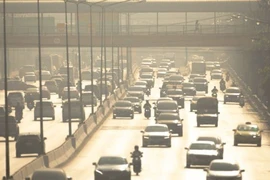
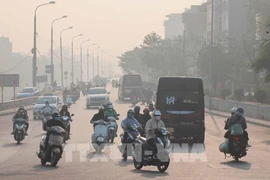
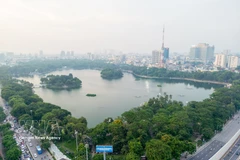
Hanoi and HCM City have the highest and most frequent levels of air pollution in the country.

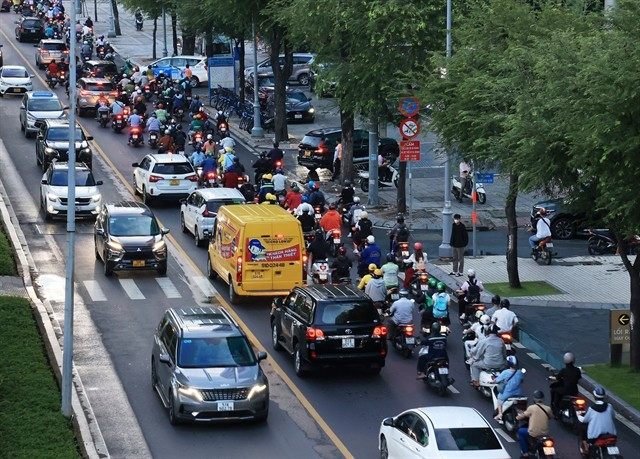
Vehicles on Ton Duc Thang Street in HCM City's Ben Nghe ward. (Photo: VNA)

Hanoi (VNS/VNA) - The Ministry of Agriculture and Environment (MAE) has asked provinces and cities to rapidly implement solutions to control air pollution in the last few months of the year.

In a letter sent to localities, the MAE stated that monitoring results over the past several years show air pollution levels, especially for fine particulate matter (PM2.5), tend to increase from October to the end of March. This poses serious risks to public health and socio-economic activities.

Hanoi and Ho Chi Minh City have the highest and most frequent levels of air pollution in the country.

The MAE has asked these cities and other localities to implement several measures simultaneously to mitigate pollution, with a focus on controlling emission sources.

Local authorities should inspect and deal with factories with major emissions, such as cement, thermal power and steel plants, as well as other high-risk manufacturing facilities, according to the MAE.

As for transport, provincial and city authorities are directed to develop low-emission zones in major urban areas and promote public transportation, clean and green energy, and control uncovered freight vehicles carrying construction materials that generate dust.

Similarly, in the construction sector, 100% of projects must comply with dust and emission reduction measures such as covering sites, spraying water and washing vehicles when entering and exiting sites. Construction sites with repeated violations must be temporarily suspended.

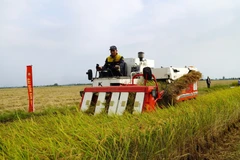
Open burning activities must also be stopped. Local authorities are asked to strengthen communication, supervision and handling to end the illegal burning of trash and agricultural waste. They should also create solutions for the collection and reuse of agricultural residue through circular economy models.

Provinces and cities should ensure stable operation of automatic air quality and emissions monitoring stations without interruptions in data collection, the ministry noted.

The MAE also urged localities to increase measurement frequency in high-risk pollution areas and develop synchronised investment projects for monitoring stations in accordance with Prime Minister’s Decision 224/QD-TTg, issued on March 7, 2024.

The daily Air Quality Index (AQI) should be publicly released via press, electronic portals and mobile apps, accompanied by public health protection recommendations.

If the AQI exceeds 300 (a hazardous level), localities must immediately implement emergency measures to reduce pollution.

For Hanoi and HCM City specifically, the MAE requested maximum resources to develop and implement detailed roadmaps for controlling vehicles and accelerating clean public infrastructure projects, such as urban railways and electric buses.

The two largest cities should also implement pollution control measures in inner city rivers, canals and residential areas by relocating polluting production facilities away from these zones.

The MAE has pledged close coordination with localities to implement necessary actions and asked that local authorities submit work plans and results (if any) before October 15 for consolidation and reporting to the Prime Minister./.
VNA

See more

Tram Chim National Park and the Mekong Conservancy Foundation (MCF) organise the workshop on sustainable restoration of wetland ecosystems in the Mekong Delta on March 24. (Photo: VNA)

Solutions sought to restore Mekong Delta wetland ecosystems

Experts at the workshop described wetlands as the “ecological heart” of the Mekong Delta, playing a vital role in water storage and regulation, climate moderation, carbon sequestration, biodiversity conservation, and livelihoods for millions of people through aquaculture, agriculture, and ecotourism. These ecosystems also help reduce disaster risks and enhance climate resilience.

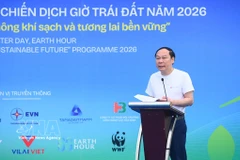
Deputy Minister of Agriculture and Environment Le Cong Thanh speaks at the ceremony to launch major environmental campaign. (Photo: VNA)

Vietnam calls for collective action on water, air, climate and sustainable future

Deputy Minister of Agriculture and Environment Le Cong Thanh underscored that water, climate, and energy are fundamental pillars of sustainable development. In Vietnam, water resources and weather patterns influence every aspect of life, from food and water security to livelihoods, ecosystem stability, and economic growth.

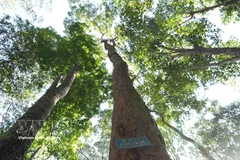
The population of trac (Dalbergia cochinchinensis) trees is strictly protected in the Dak Uy special-use forest. (Photo: VNA)

Vietnam highlights forests’ role in sustainable growth on International Day of Forests

According to Director of the Forestry and Forest Protection Department Tran Quang Bao, forests hold a strategic position in Vietnam’s development. They provide livelihoods for millions of people, particularly ethnic minorities and communities living in mountainous and forested areas, while contributing to environmental protection and disaster prevention.

The World Meteorological Day 2026 carries the theme “Observing Today, Protecting Tomorrow”. (Photo: VNA)

Ministry guides response to World Meteorological Day, World Water Day 2026

The Ministry of Agriculture and Environment urged ministries, agencies, local authorities, embassies, and international organisations to hold practical and effective activities aligned with the themes. Suggested activities include displaying eco-friendly banners, posters, and billboards in public spaces, streets, government offices, and other suitable venues to raise public awareness of the events’ importance.

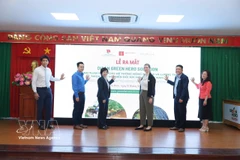
Delegates launch the Green Hero Solution project in Ho Chi Minh City on March 12, 2026. (Photo: VNA)

Vietnam, Denmark cooperate to pilot circular food model

Under the “Green Hero Solution” project, organic food waste will be collected from partner organisations and businesses and processed into compost. The compost will then be used at two Food Bank community gardens, where fresh vegetables will be grown to support disadvantaged households.

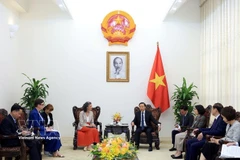
Deputy Prime Minister Tran Hong Ha meets with UNDP Resident Representative Ramla Khalidi and WHO Representative in Vietnam Angela Pratt in Hanoi on March 11. (Photo: VNA)

Vietnam steps up partnership with UNDP, WHO in tackling air pollution

Highlighting Vietnam’s close partnership with the two UN agencies, Deputy PM Ha highly appreciated their important contributions to the country’s development over the years, particularly in policy consultation, institutional reform and promoting sustainable development initiatives.

The groundbreaking ceremony for the Phu Cu waste-to-energy plant project in Doan Dao commune, Hung Yen province, on March 6 (Photo: VNA)

Hung Yen breaks ground on 4 trillion VND waste-to-energy plant

With a population of about 3.5 million, Hung Yen generates around 1,850 – 2,000 tonnes of household waste each day, along with about 1,000 tonnes of waste from production and business establishments, posing a major challenge for the locality.