Cuc Phuong national park targets becoming natural “wildlife gene bank” by 2050

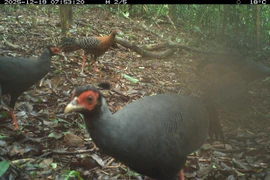
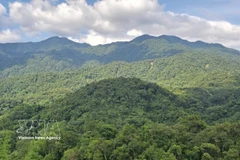
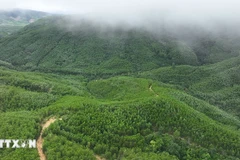
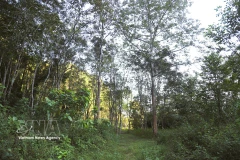
Under the Cuc Phuong Rewilding Action Plan 2026–2035, with a vision to 2050, the initiative aims to transform the park into a natural gene bank capable of supplying wildlife populations to other protected areas nationwide.

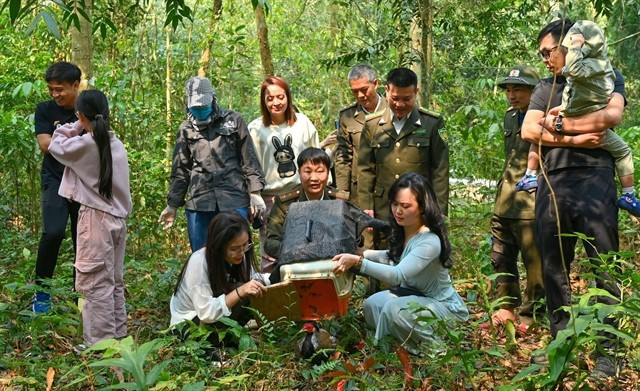
Wild animals are released back into their natural habitat. (Photo: Courtesy of Department of Forestry and Forest Protection)

Hanoi (VNA) – Cuc Phuong National Park and Save Vietnam’s Wildlife (SVW) have launched Vietnam’s first national park rewilding action plan, outlining measures to restore wildlife and rebuild ecosystems at the country’s oldest protected area.

Under the Cuc Phuong Rewilding Action Plan 2026–2035, with a vision to 2050, the initiative aims to transform the park into a natural gene bank capable of supplying wildlife populations to other protected areas nationwide.

The ultimate objective is to return wildlife to their rightful habitats so they can perform their ecological functions, the park’s Director Nguyen Van Chinh said at the launch held on March 20.

Over the 2026–2035 period, the park will focus on four pillars: scientific research and habitat restoration, priority reintroductions, post-release monitoring, and a One Health approach linking ecosystem, animal and human health to reduce the risk of zoonotic disease transmission.

Rewilding efforts will extend beyond the park’s 22,400 hectares to an interprovincial corridor linking Ninh Binh, Thanh Hoa and Phu Tho, covering more than 50,000 hectares to enhance habitat and genetic connectivity, organisers said.

A flagship campaign, Cuc Phuong Snare-Free, aims to remove more than 95% of cable snares in release zones before animals are returned to the wild, supported by sustained patrols and surveillance. Local communities play a central role in the plan, participating in patrols and monitoring while promoting sustainable livelihoods such as ecotourism. Results-based payment pilots will test mechanisms to share conservation benefits with residents.

SVW Director Nguyen Van Thai said partnerships between NGOs and national parks are essential and pledged financial and technical support aligned with IUCN standards.

Doan Hoai Nam, Deputy Director of the Department of Forestry and Forest Protection, praised the park for leading the initiative and said the department would continue supporting rescue, conservation and rewilding efforts, while issuing technical guidelines to improve implementation./.
VNA

See more

Quang Tri recently received two endangered pangolins from local resident. (Photo published by VNA)

Two pangolins handed over to authorities in Quang Tri

At around 8:30 pm on April 12, Le Thanh Tung, a resident of Thuong Nghia hamlet in Cam Lo commune, and his friend spotted the two pangolins, weighing over 4 kg, while working near the Cam Lo–La Son Expressway.

A view of Phong Nha - Ke Bang National Park in Da Nang city (Photo: VNA)

Phong Nha – Ke Bang: untapped biological treasure in Truong Son mountains

Unlike ecosystems where species inventories are largely complete, Phong Nha–Ke Bang National Park remains scientifically “open,” with each survey revealing new findings. Recent studies - from local research projects to international collaborations - have recorded additional bird species and identified the rare parasitic plant Sapria himalayana, which only survives in intact primary forests.

The interface of Vietnam Weather KTTV mobile application (Photo: baochinhphu,vn)

Application of dangerous weather warning introduced

All unusual weather events, from widespread thunderstorms, lightning strikes, landslides, flash floods, tropical depressions to strong winds at sea, are continuously updated from official data sources of the NCMHF and meteorological stations and prominently displayed on the main interface.

An overview of the kick-off meeting for the “Sustainable Management of Substances Controlled by the Montreal Protocol” project (Photo: VNA)

Vietnam launches 13 mln USD project to phase out ozone-depleting substances

Funded by the Multilateral Fund for the Implementation of the Montreal Protocol and implemented through the World Bank (WB) and the United Nations Environment Programme (UNEP), the project aims to help Vietnam meet its international commitments in managing and phasing out controlled substances. It will run from 2026 to 2031 with a total budget of over 13 million USD.

Tram Chim National Park and the Mekong Conservancy Foundation (MCF) organise the workshop on sustainable restoration of wetland ecosystems in the Mekong Delta on March 24. (Photo: VNA)

Solutions sought to restore Mekong Delta wetland ecosystems

Experts at the workshop described wetlands as the “ecological heart” of the Mekong Delta, playing a vital role in water storage and regulation, climate moderation, carbon sequestration, biodiversity conservation, and livelihoods for millions of people through aquaculture, agriculture, and ecotourism. These ecosystems also help reduce disaster risks and enhance climate resilience.

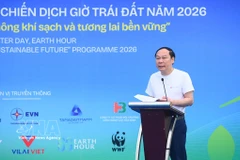
Deputy Minister of Agriculture and Environment Le Cong Thanh speaks at the ceremony to launch major environmental campaign. (Photo: VNA)

Vietnam calls for collective action on water, air, climate and sustainable future

Deputy Minister of Agriculture and Environment Le Cong Thanh underscored that water, climate, and energy are fundamental pillars of sustainable development. In Vietnam, water resources and weather patterns influence every aspect of life, from food and water security to livelihoods, ecosystem stability, and economic growth.