Hanoi (VNA) – The theme of World Meteorological Day 2026, “Observing Today, Protecting Tomorrow,” delivers a clear global call to action: invest in observation systems to better forecast hazards, strengthen resilience, and safeguard sustainable development.
In his message marking the occasion, UN Secretary-General António Guterres warned that climate chaos is rewriting the rules of weather, with record heat, longer droughts, rising seas and ever more frequent and extreme disasters.
He urged governments, development banks, and the private sector to scale up investment in global global observing backbone, from surface stations to satellites, and ensure data is shared openly and equitably. And people must accelerate Early Warnings for All so that, by 2027, every person is protected by life-saving alerts. Investing in observation pays many times over, strengthening peace, security, resilience and sustainable development.
“By observing today, we can protect tomorrow for people, for planet, for prosperity and for generations to come,” he said.
The global observation system, coordinated by the World Meteorological Organisation (WMO) and national meteorological services, forms a vast network spanning land, oceans, the atmosphere, and outer space. However, significant gaps remain, especially in least developed countries and small island developing states, where limited infrastructure undermines forecasting and early warning capacity.
WMO Secretary-General Celeste Saulo highlighted the indispensable role of the global meteorological community in delivering essential services. She noted that behind every weather forecast accessed via smartphones or television lies the processing of millions of data points collected through a unified international observation network.
According to Saulo, these systems underpin billions of dollars’ worth of decision-making across sectors, from aviation and flood control to energy planning, healthcare, agriculture, and infrastructure development. She also emphasised that while artificial intelligence is advancing rapidly, its effectiveness ultimately depends on high-quality, human-generated data. Closing data gaps and ensuring universal access to modern observation systems remain critical priorities.
Vietnam strengthens observation capacity
In response to World Meteorological Day 2026's theme, Vietnam’s hydrometeorological sector has reaffirmed that weather and climate know no borders, underscoring the importance of maintaining and developing a robust national observation network as part of the global system.
Nguyen Thuong Hien, head of the Meteorological and Hydrological Administration under the Ministry of Agriculture and Environment, said Vietnam is undergoing a strong phase of modernisation, aligned with technological innovation and international integration.
The Government has implemented multiple investment programmes to upgrade observation equipment, expand station networks, and enhance the application of digital technologies in data acquisition, transmission, and processing. Notably, automation has been accelerated through the deployment of automatic weather, rainfall, and hydrological stations. At the same time, the country is strengthening its weather radar systems and leveraging satellite data to better monitor hazardous phenomena such as storms, heavy rainfall, and thunderstorms.
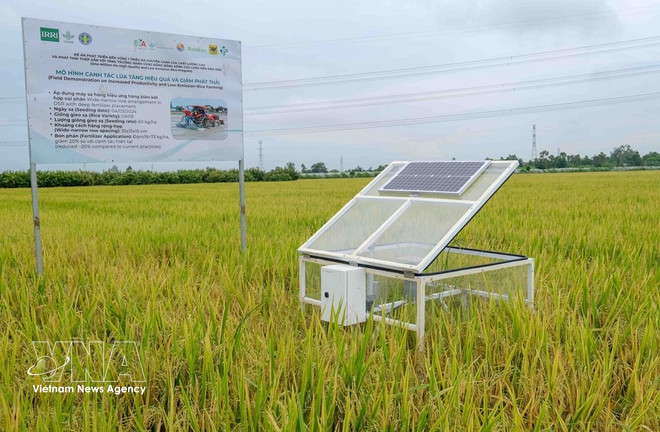
Vietnam has also made significant strides in digitising observation data management, enabling real-time transmission from stations to forecasting centres. International cooperation, particularly within WMO frameworks and regional data-sharing initiatives, has been further intensified.
Currently, the national hydrometeorological network comprises 2,871 stations, including surface and upper-air meteorological stations, hydrological and marine stations, weather radar sites, rainfall gauges, lightning detection systems, and climate monitoring facilities. These stations are increasingly covering key climate-sensitive areas such as major river basins, coastal zones, islands, and disaster-prone regions.
Alongside network expansion, modernisation and automation have been strongly promoted. Many manual stations have been converted into automated ones equipped with advanced sensors and real-time data transmission systems. Automation has improved both the frequency and accuracy of observations while reducing reliance on manual operations. In the coming years, automation rates for several types of stations are expected to exceed 95%, bringing Vietnam closer to the standards of more advanced countries in the region.
Real-time data provision has also improved markedly. Through telecommunications networks and digital platforms, observation data can now be transmitted continuously to operational and forecasting centres. In many areas, ground-based data are integrated with radar, satellite information, and numerical models to generate quantitative rainfall maps, flash flood warnings, and early alerts for dangerous weather events.
This real-time capability has significantly shortened data processing time, enhancing forecasting accuracy and supporting timely decision-making in disaster risk management, water resource governance, and socio-economic planning.
Challenges and future directions
Despite these achievements, Vietnam’s observation network still faces multiple challenges. Climate change is increasing the complexity and extremity of weather patterns, while rapid urbanisation, hydropower development, and transport infrastructure expansion are placing additional pressure on observation systems. Moreover, building and maintaining a modern network requires substantial financial resources and highly skilled personnel.
To address these issues, Vietnam has outlined clear development orientations under key national policies, including the master plan for the hydrometeorological station network for 2021–2030, with a vision to 2050, as well as broader programmes on disaster prevention, climate change adaptation, and digital transformation.
Key priorities include further expanding and optimising the observation network to enhance coverage and monitoring capacity nationwide; accelerating the adoption of advanced technologies and real-time data transmission systems; and building an integrated national meteorological database that can be shared across sectors.
Policies also emphasise greater data sharing among ministries, localities, and research institutions to maximise the value of hydrometeorological information in various fields.
In terms of financing, Vietnam is moving towards diversifying investment sources. In addition to state budget funding, the Government encourages private sector participation, international cooperation, and mechanisms such as the Systematic Observations Financing Facility (SOFF), which aims to close critical weather data gaps.
Encouraging businesses and organisations to invest in specialised observation stations, while connecting their data to the national system, is also seen as a practical approach to expanding coverage and improving resource efficiency.
As Hien underlined, investment in observation systems is not merely a cost but a long-term, intergenerational investment, one that protects lives, assets, and sustainable development in the face of an increasingly volatile climate./.